
Sony Patents a System That Fixes Display Colors Based on Your Viewing Angle
Every screen looks slightly different depending on where you're sitting relative to it. Sony's new patent describes a way to detect that angle and automatically correct the colors before the image ever reaches your eyes.
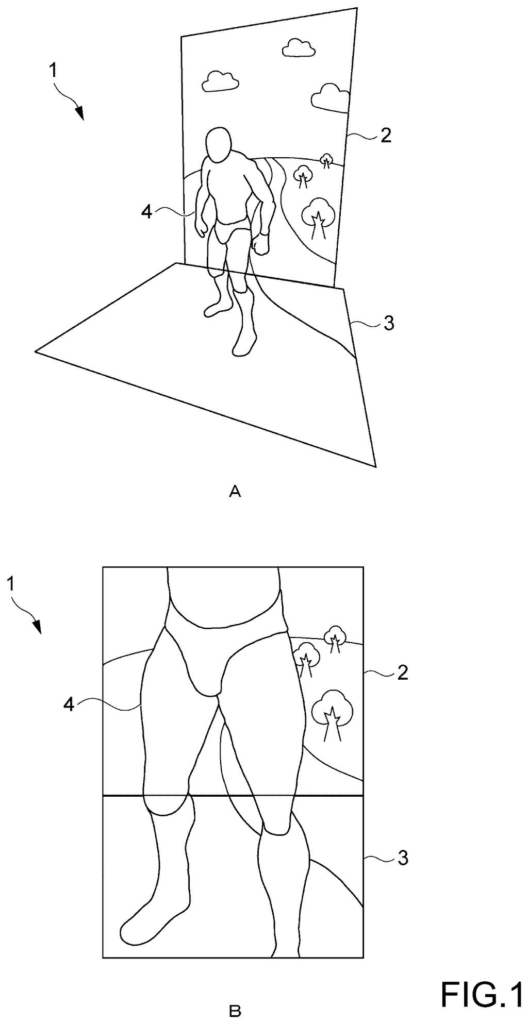
What Sony's viewing-angle color fix actually does
Ever noticed how a TV screen looks perfectly vivid when you're sitting straight in front of it, but the colors wash out or shift when you move to the side? That's a real limitation built into how most display panels work, and Sony is filing patents to address it.
This patent describes a method where a graphics processor figures out the angle at which you're looking at the screen, then looks up a pre-built table of brightness values (called a corrective luminance texture) for that angle. It uses both pieces of information to build a small math formula, called a color transformation matrix, that nudges each pixel's color and brightness to compensate for the distortion your viewing position would otherwise cause.
The end result is that the image you see is corrected before it reaches your eyes, rather than hoping the display hardware handles it perfectly on its own. Sony's patent frames this as a way to make the process more efficient, meaning it could run in real time without slowing down whatever you're watching or playing.
acquire a corrective luminance texture including a luminance value associated with a visually recognizing angle of a user with respect to at least one display panel …
Translation: The system figures out the exact angle you are looking at the screen from.
How the GPU corrects brightness and color per viewing angle
The patent covers three linked steps that run on a graphics processing unit (GPU).
- Angle detection: The system determines the "visually recognizing angle" (the exact direction the user's eyes are pointed relative to the display panel). In a VR headset, for example, this could come from head-tracking sensors; on a flat TV, it might come from a camera or a user-defined setting.
- Texture lookup: It retrieves a corrective luminance texture (think of this as a pre-calculated map of how brightness behaves across different angles on that specific panel). Each entry in the map corresponds to a brightness value for a given angle.
- Matrix generation and correction: Using the angle and the brightness map together, the GPU builds a color transformation matrix (a small grid of numbers that mathematically shifts colors and brightness values). That matrix is then applied to the rendered image, adjusting both luminance (how bright things are) and chromaticity (the hue and saturation of colors).
The efficiency claim in the abstract comes from doing this correction on the GPU rather than relying on separate display-side hardware, and from encoding the correction data as a texture (a format GPUs already process extremely fast) rather than running per-pixel calculations from scratch.
… correcting luminance and chromaticity of a rendering image based on the color transformation matrix generated …
Translation: It adjusts the brightness and colors so the picture always looks right.
What this means for VR headsets and flat-panel displays
For everyday TV viewers, this kind of correction is mostly a quality-of-life improvement: colors stay consistent whether you're in the center seat or off to the side. But the patent's framing around a "user's visually recognizing angle" and a real-time GPU pipeline points more directly at VR and AR headsets, where your eyes are always at a specific, trackable angle relative to each tiny display panel, and even small color errors feel wrong and immersive-breaking.
If granted in its current form, the claim is broad enough to cover any GPU-driven pipeline that combines angle data with a pre-built brightness map to produce a correction matrix. That scope could matter to other headset and display makers building similar per-angle calibration systems.
Sony's 89th filing in the Display patents we cover since May follows a wrist-rotating expandable screen and a projector that dodges obstacles.
Claim 1 is written at a high level of abstraction. It doesn't specify what kind of display, what tracking method determines the viewing angle, or how the corrective texture is built. That breadth is intentional from a drafting standpoint, but it also means the claim would need to survive prior-art challenges from the long history of display calibration research.
The core idea (use the viewer's angle to look up a correction, then apply a matrix) is not a new concept in display science. What this filing adds is a specific framing around doing it on a GPU using a texture as the lookup mechanism, which is a practical engineering choice rather than a fundamental invention. Whether that's enough to distinguish it from existing art is the real question for examination.
For readers watching Sony's hardware lineup, Sony's bet on display-adjacent patents makes sense given its position in both consumer TVs and PlayStation VR. This patent covers the image pipeline side of that problem, and that's a narrower piece of the puzzle than the headline scope of claim 1 might suggest.
There are more where this came from
We read every patent application Big Tech publishes and send you the ones worth knowing. Plain English, free, every week.
The drawings
15 drawing sheets from US 2026/0288235 A1 · click any drawing to enlarge


Want this weekly breakdown for a company we don't cover? Patentlyze Pro →
Be the first to weigh in