
Nvidia Patents an AI That Shows How Objects Age Over Time
Nvidia has filed a patent for an AI system that can generate images showing how an object would look after time passes, using photos of a completely different object as its reference. Think of it as a visual aging machine trained on before-and-after examples it has never directly seen.
What Nvidia's time-lapse image AI actually does
Imagine you have a photo of a brand-new car, and you want to see what it would look like after ten years of sun, rain, and road wear. Normally, you'd either wait a decade or hire an artist to mock it up by hand.
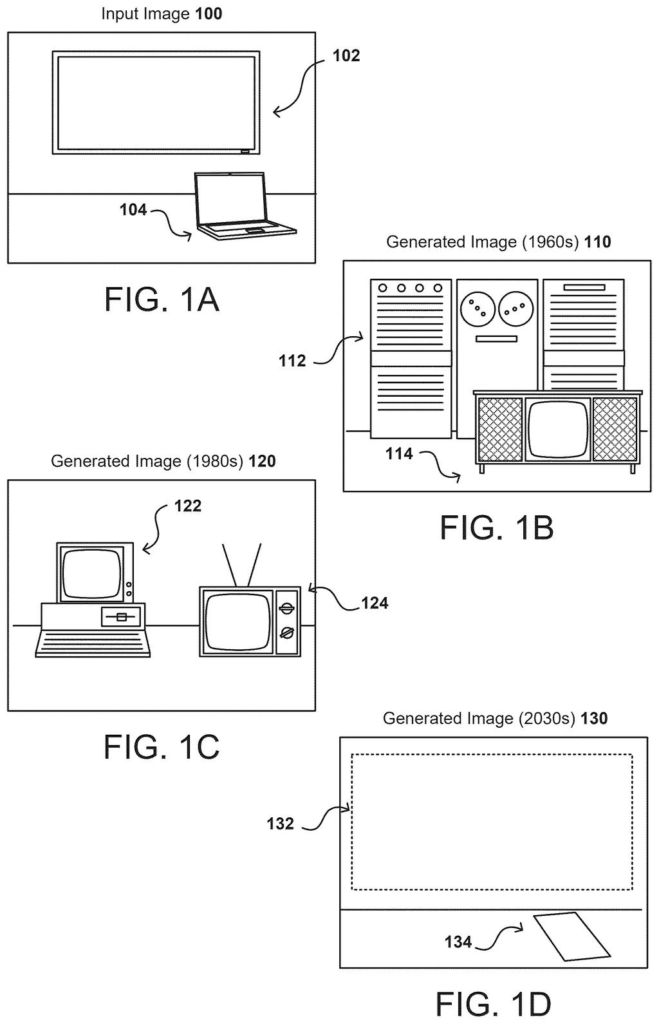
Nvidia's patent describes an AI system that skips both options. You give it images of one object showing how it ages or changes over time, and the system uses that as a template to predict how a different object would age, even one it has never seen before. So the AI learns what "weathering" looks like from old photographs, then applies that understanding to a fresh image.
The filing covers both still images and video, which suggests Nvidia is thinking about more than just single snapshots. Whether this ends up in a design tool, a simulation engine, or something else entirely, the core idea is straightforward: train the AI on one thing's history, and let it predict another thing's future.
How the neural network transfers aging across objects
The patent describes a system built around one or more neural networks (software models that learn patterns from large amounts of data) working together to produce what the filing calls time-lapsed images.
The key step is a kind of knowledge transfer. The system takes images of a first object that show change over time, such as a material degrading, a surface aging, or a structure wearing down. It learns the visual rules of that change. Then it applies those learned rules to generate new images of a second, different object, predicting what that object would look like after similar time has passed.
The claim covers both images and video, so the output could be a single frame or a moving sequence. The patent also notes this works with multiple neural networks in combination, which hints at a pipeline where different models handle different parts of the problem, perhaps one for understanding the aging pattern and another for rendering it realistically onto the new subject.
- Input: images of a reference object showing change over time
- Processing: neural networks extract and generalize the aging pattern
- Output: synthesized images or video of a different object with that pattern applied
What this means for design, simulation, and visual AI
For designers, engineers, and simulation teams, this kind of AI could cut down the time it takes to visualize long-term wear or change. Instead of physically aging a prototype or paying for custom visual effects work, you could feed the system a photo and get a plausible aged version back quickly.
For everyday users, the impact depends entirely on where Nvidia deploys this, inside a creative tool, a game engine, or an industrial simulation platform. Right now it lives at the patent stage, so there is no product to point to. But Nvidia's run of generative image and video filings suggests this is part of a broader effort to make AI-generated visuals more physically grounded, not just aesthetically convincing.
Nvidia's 25th filing we've tracked in the AI photo editing race since May adds to a run that includes a confidence-based photo blending patent and a shot-by-shot video compression one.
If you work in construction, automotive, or product design, you currently spend weeks running physical tests or commissioning manual visualizations just to see how something will look after years of wear. This patent describes a system that could produce those aging simulations from photographs alone.
The moment you would notice it is when a review meeting that once required months of prep gets handled in an afternoon. That is the whole payoff: a decision you can make sooner with less money spent getting there.
The patent language is broad and some of its original claims have been withdrawn, so how much of this ambition makes it into an actual product remains to be seen. But the underlying problem it is solving is expensive for the people who deal with it daily, and any meaningful reduction in that cost shows up immediately in their schedules and budgets.
There are more where this came from
We read every patent application Big Tech publishes and send you the ones worth knowing. Plain English, free, every week.
The drawings
46 drawing sheets from US 2026/0289296 A1 · click any drawing to enlarge


Want this weekly breakdown for a company we don't cover? Patentlyze Pro →
Be the first to weigh in