
Nvidia Files Patent for Video Streaming That Cleans Up Blocky Frames
Streaming video turns into smudgy squares when the connection is weak. Nvidia's filing has an AI write small correction notes for each frame and ride them along inside the same stream.
What Nvidia's video cleanup patent actually does
A soccer match streams to a phone over weak train Wi-Fi. The ball turns into a cluster of gray squares every time it moves, and the grass smears into mush. That blockiness is what happens when a video is squeezed hard to fit through a slow connection.
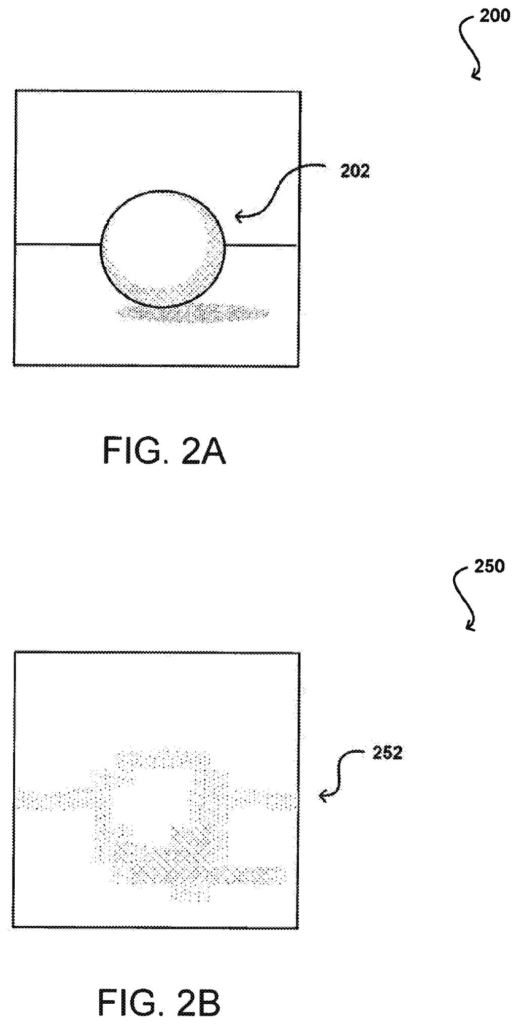
Nvidia's filing describes a two-step fix. First the video is shrunk the usual way, using a standard format your phone already understands. Then an AI model compares the squeezed frame with the original and writes a small set of correction notes, which travel inside the same stream.
On your end, the phone reads those notes and nudges the blocky pixels back toward what the camera actually saw. Some of your limited bandwidth now goes to the notes instead of the picture, and the patent argues that bargain comes out ahead.
… use one or more neural networks to generate image enhancement data for the one or more images including second residual information determined in a neural network feature space; …
Translation: It relies on artificial intelligence to figure out how to improve picture quality.
How the AI writes corrections for each frame
The claim covers a processor that builds a video frame's encoding from two kinds of leftover information. A residual is the difference between the original frame and the squeezed version, in other words the detail that got thrown away.
- Pixel-domain residual: subtract the compressed frame from the original, pixel by pixel.
- Feature-space residual: a neural network first turns images into "features" (its own internal summary of edges, textures and shapes), then takes the difference there. The result is the enhancement data.
- Final encoding: both residuals feed into the output.
The description says the network is trained with a scoring formula that rewards similarity to the original (a measure called SSIM) and penalizes data used (bits per pixel), balanced by a weighting number. In one example, a 1 Mbps connection gives 900 kbps to the standard video and 100 kbps to the enhancement data.
The enhancement data is placed in an extra-message slot in the stream (called an SEI message) so the stream stays compliant with the video standard. The filing says the approach can cut bitrate by at least 15% to 20% while improving image quality.
… one or more images are generated based, at least in part, upon one or more compressed images and image enhancement data generated using one or more neural networks.
Translation: The system rebuilds video frames by combining compressed data with AI enhancements.
Why blocky streaming video is worth fixing
If you stream on a phone or a shaky home connection, this targets the flaw you notice most: blocky edges around moving objects like a ball. The pitch is better-looking video from the same amount of data, or the same look from less of it. The filing puts the savings at 15% to 20% of the bitrate (the data sent per second).
For Nvidia, the idea ties AI to something every video service pays for. The filing is a follow-up to an application first filed in March 2022, so the idea has been around a while. The benefit also depends on the receiving device running the AI step, so players and TVs would need to go along.
Nvidia's 27th patent application we've tracked since May in the AI photo editing race follows earlier work on fixing multi-camera seams and showing how objects age.
Blocky, smeared video is a small annoyance for you and a large expense for streaming services, which pay for the data they send. The problem is real because squeezing video harder is the easiest way to save money, and picture quality is what pays for it.
Nvidia's answer is to spend a slice of the data budget on AI-written corrections. The filing's own figure of a 15% to 20% drop in data with better quality suggests the trade is sized well for the problem. The claim itself is broad, covering any processor that builds an encoding from both kinds of leftover information.
The open question is the receiving end: every phone or TV would need to run the AI step to get the improvement. That is a big ask, but the payoff of cleaner video at lower cost is large enough to justify the effort.
Get our take in your Top Stories
Liked this breakdown? Add Patentlyze as a preferred source on Google, and our plain-English take shows up more often in your Top Stories the next time Nvidia patent news breaks.
There are more where this came from
We read every patent application Big Tech publishes and send you the ones worth knowing. Plain English, free, every week.
The drawings
56 drawing sheets from US 2026/0311380 A1 · click any drawing to enlarge


Want this weekly breakdown for a company we don't cover? Patentlyze Pro →
Be the first to weigh in