
Adobe Patents a Fix for the Flickering That Plagues AI-Generated Video
If you've ever watched an AI-generated video where the lighting or style seems to jump awkwardly between scenes, you've hit the problem Adobe is trying to solve. A newly published patent describes a generation method that deliberately double-processes certain frames to keep the whole video looking consistent.
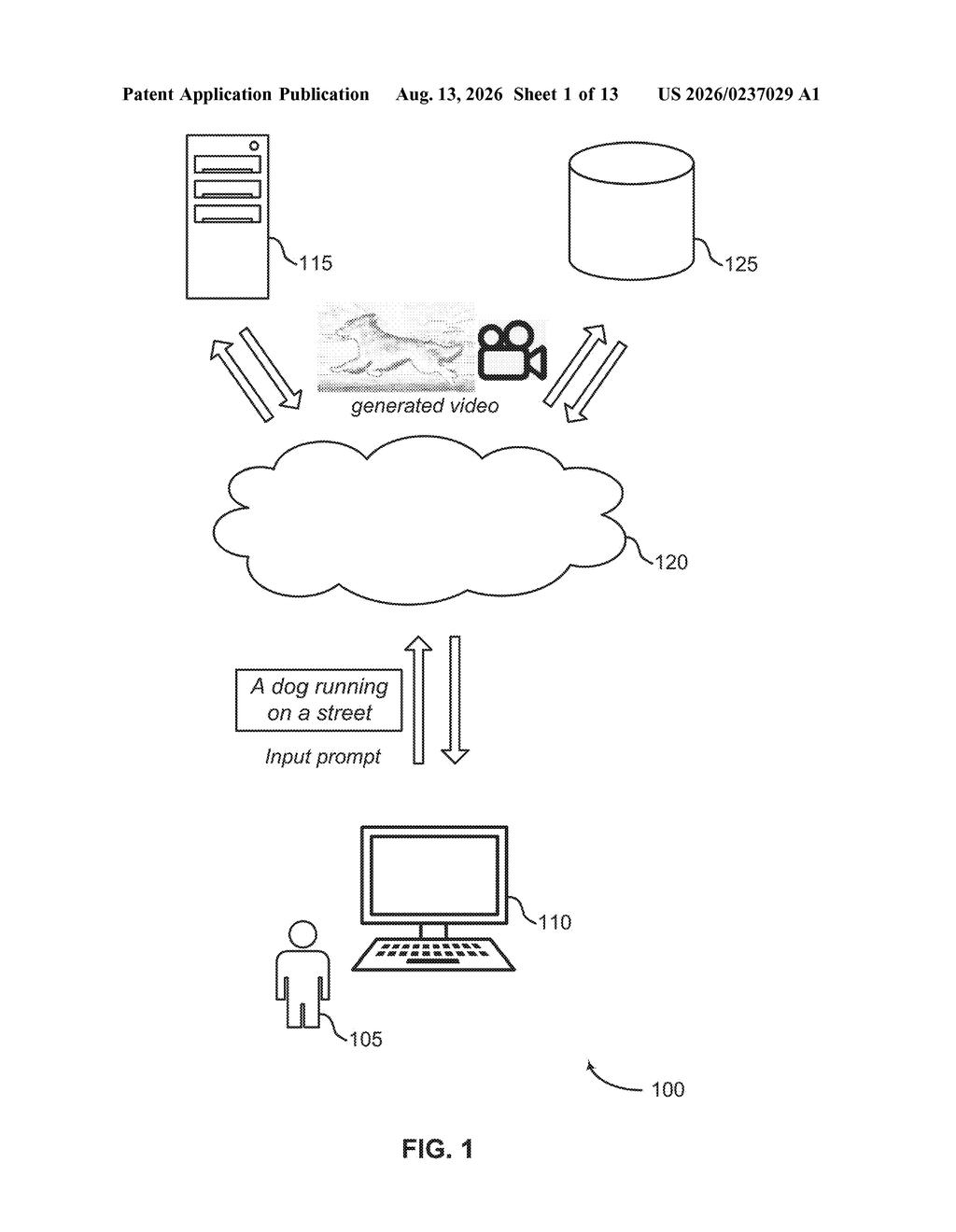
Why Adobe's AI videos flicker, and how this fixes it
Every time an AI video tool renders a long clip, it secretly chops the job into smaller pieces called chunks, processes each one, then stitches them together. The problem is that the stitch is often visible: colors shift, edges stutter, and a person's face might look slightly different from one chunk to the next.
Adobe's patent tackles this by making sure that the frame sitting at the boundary between two chunks gets processed twice, once as the last frame of the first chunk and again as the first frame of the second. That overlap gives the AI a shared reference point on both sides of the seam, so the two chunks agree on what that moment in the video is supposed to look like.
The result, in theory, is a video that flows naturally from start to finish without the visual hiccups that currently make AI video feel unfinished. You'd notice it most in longer clips where a character moves continuously or where light stays steady across a whole scene.
obtaining an input prompt describing a scene; generating, using a video generation model, a set of frame tokens including a first frame chunk and a second frame chunk based on the input prompt …
Translation: The system starts by taking a text prompt and splitting the video creation process into distinct chunks of data.
How overlapping frame chunks smooth the seams
The patent describes a video generation model that works in overlapping segments rather than clean, non-overlapping cuts. When the model is given a text prompt describing a scene, it generates a sequence of frame tokens (mathematical representations of individual video frames) organized into chunks.
The key mechanism is intentional token sharing: a frame that sits at the boundary of two chunks is assigned a token in both chunks simultaneously. That shared token acts like a handshake between the two segments of the video, forcing the model to keep its output consistent at the join point.
The claim is deliberately broad about the model architecture, but the structure implies an autoregressive or transformer-style generator (one that predicts each frame based on the ones before it). Overlapping the chunks means the model has already "seen" the boundary frame before it generates the next segment, reducing the chance that colors, textures, or motion drift between segments.
Practically, this is an inference-time fix, meaning it changes how the model runs rather than how it is trained. That distinction matters because it could potentially be applied to existing video models without retraining them from scratch.
… wherein the first frame chunk includes a first token corresponding to a video frame and the second frame chunk includes a second token corresponding to the same video frame as the first token.
Translation: Multiple data chunks are assigned to represent the exact same video frame to keep it visually stable.
What this means for AI video tools like Adobe Firefly
Flickering and temporal inconsistency are among the most common complaints about AI video tools today. They are what make AI-generated clips look "off" even when individual frames look fine. A fix that works at the generation stage, before any post-processing, would raise the baseline quality of every clip a user exports.
Adobe's Firefly family of generative tools is the obvious home for this, particularly as the company pushes deeper into video generation for its Premiere Pro and After Effects workflows. This patent sits alongside the latest Big Tech patents in AI video generation, an area where Adobe, OpenAI, and Google are all racing to make longer, more stable clips that hold up across full commercial productions.
For anyone who uses AI video tools in real work, temporal flickering is the single most frustrating output artifact because it cannot be fixed in post without frame-by-frame manual work. Adobe's overlapping-chunk approach is a practical engineering answer to that specific failure, and if it ships in Firefly Video, users would notice the difference on their very first long-form export. The catch is that the patent claim is broad and the implementation details are thin, so whether this actually eliminates flicker or merely reduces it will depend entirely on execution.
There are more where this came from
We read every patent application Big Tech publishes and send you the ones worth knowing. Plain English, free, every week.
The drawings
13 drawing sheets from US 2026/0237029 A1 · click any drawing to enlarge


Want this weekly breakdown for a company we don't cover? Patentlyze Pro →
Be the first to weigh in