
Google Files Patent for Training Speech Recognition With Blanked-Out Slices of Sound
Google's training trick for speech recognition is surprisingly simple: cover random strips of a sound's picture and make the software guess the words anyway. The filing says this beats editing the raw audio.
What Google's blanked-out sound slices actually do
You're dictating a text while walking down a busy street, and a bus rumbles past in the middle of a word. Software that copes with moments like that has to learn from practice, and lots of it.
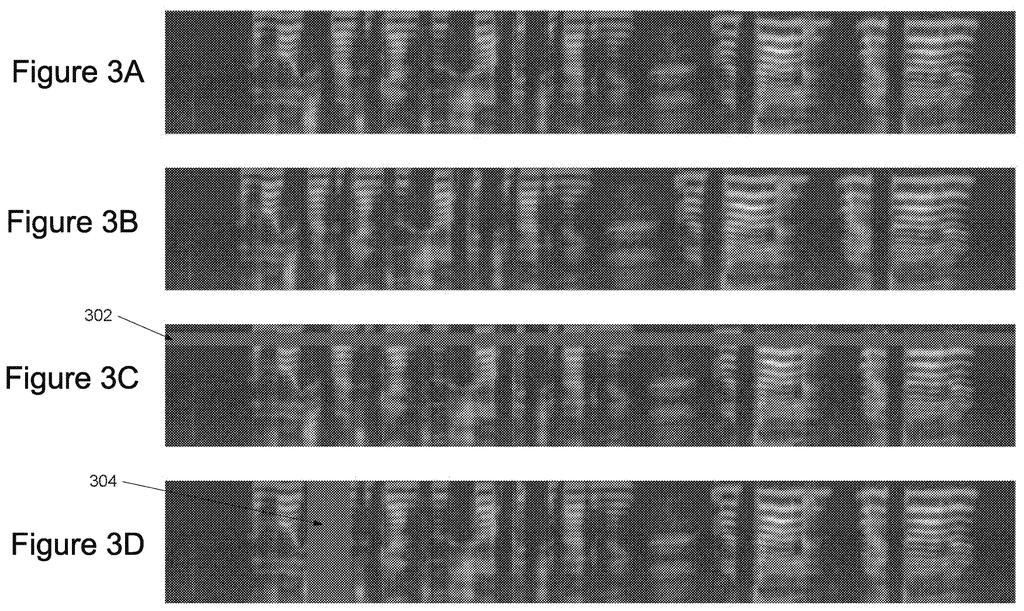
Google's patent covers a training trick. Speech software learns from recordings, which can be turned into a picture: a graph showing which pitches are loud at each moment. The patent blacks out random strips of that picture, some hiding a slice of time and others hiding a band of pitches, and the software must still work out the words.
Because the trick edits the picture instead of the raw recording, Google says it is simpler and cheaper to run, and it needs no extra noise recordings. One recording can then serve as many slightly different practice examples.
… generating one or more augmented images based on masking one or more blocks of consecutive pixel values along a time or frequency axis, the quantity of the one or more blocks of consecutive pixel values defined by a hyperparameter, each respective block having a respective width and a respective location; …
Translation: The system blacks out specific chunks of the sound image to create modified training examples.
How the patent hides blocks of time and pitch
The starting material is an audiographic image: a picture of a sound, such as a spectrogram (a graph where one axis is time, the other is pitch, and each pixel's brightness shows how loud that pitch is at that moment).
For each picture, the system makes a changed copy by masking blocks of consecutive pixels, meaning it overwrites a strip with a flat value. A strip can run along the time axis (hiding a short stretch of the recording) or the frequency axis (hiding a band of pitches), and a single image can get both. The number of blocks comes from a hyperparameter (a setting engineers choose before training starts).
Each block has its own width and location. The dependent claims describe picking them at random:
- Width drawn evenly between zero and a maximum, which can be tied to the image size and an upper-limit ratio.
- Location drawn evenly from anywhere the block still fits inside the image.
The altered images then train a model to output text transcriptions. The model's guesses are scored by an objective function (a formula that measures how wrong they are), and its internal settings are adjusted to shrink that error. The description also covers other edits, such as warping time, and a controller model that learns which edits work best.
Why cheaper training matters for voice typing
If you dictate messages, caption videos or talk to a voice assistant, you depend on software trained on mountains of recorded speech. Recordings are expensive to collect, so a cheap way to stretch each one into many practice versions can mean better accuracy without more data. Google says its tests showed models trained this way outperformed ones trained on edited raw audio.
The filing is a continuation of applications that trace back to 2018, so the idea has been in the pipeline for years. Because the masking can be done on the fly during training, teams can skip a separate prep step. That saves time for the people building speech tools, though you would never see it directly, only the results.
Google's 51st filing we've tracked in Voice & speech AI since May adds to a run that includes filling task details mid-conversation and tracking speakers in long recordings.
Every shortcut gives something up, and here the price is information. Blacking out a random strip means the model sometimes trains on a recording with a key syllable missing. Set the strips too wide and the practice examples turn to mush, which is why the filing caps the width and leaves the number of strips as a setting to tune.
Those costs look small next to what you get. The editing is cheap, needs no extra recordings, and the worst case is a training run that did not help. For a trick this simple, the trade reads as a good one.
Get our take in your Top Stories
Liked this breakdown? Add Patentlyze as a preferred source on Google, and our plain-English take shows up more often in your Top Stories the next time Google patent news breaks.
There are more where this came from
We read every patent application Big Tech publishes and send you the ones worth knowing. Plain English, free, every week.
The drawings
7 drawing sheets from US 2026/0310968 A1 · click any drawing to enlarge


Want this weekly breakdown for a company we don't cover? Patentlyze Pro →
Be the first to weigh in