
IBM Files Patent for Spotting Tiny Defects in Photos of Factory Parts
Factory photos are huge and the flaws can be a couple of pixels wide, so IBM filed for a system that finds them after training on only a few dozen good parts.
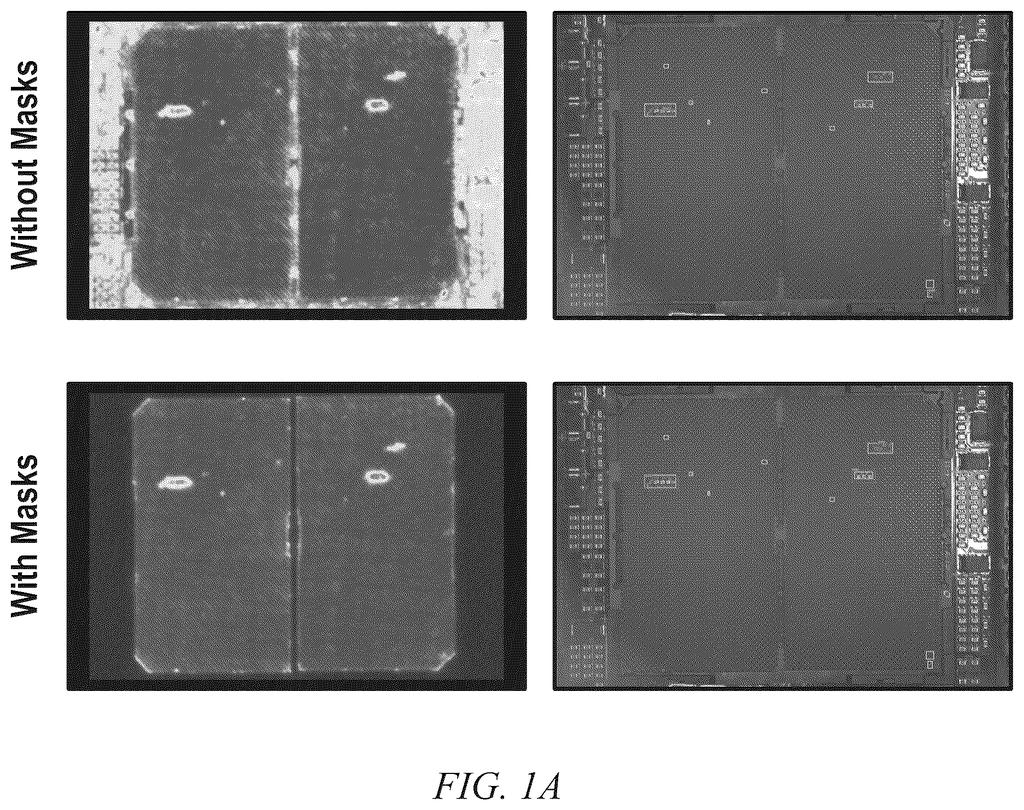
What IBM's factory defect spotter actually does
Today, spotting a flaw in a factory part from a photo is harder than it sounds. The pictures are enormous, the flaws can be a couple of pixels wide, and the clutter behind the part keeps fooling the software. Most systems also want thousands of training examples, and a factory usually has only a handful.
IBM's filing describes a setup that first cuts the part out of its background. A person scribbles on a few sample photos to show the software what the part looks like. The software then learns what a normal part looks like from just a few dozen examples, and paints a heat map over anything that looks off.
Finally, it picks its own cutoff for what counts as a defect, so you aren't stuck guessing at a setting. The result can trigger an action on the real part: accept it, reject it, or send it back for rework.
performing visual prompting to isolate an object of interest in an original image to generate a pre-processed image; generating a score map by processing the pre-processed image with a masked multi-scale reconstruction model; …
Translation: The system highlights the target part and runs it through an AI model to spot potential flaws.
How the model hides patches to find flaws
The claims cover a method with four main steps, ending in a real-world action on the physical part. It starts with visual prompting (a person scribbles on a few reference photos, and the software then finds the same kind of object in every other photo) to isolate the part from its background.
From there the pipeline works like this:
- Remove the background. The claims allow this on the cut-out photo or on the final result. The description replaces the background with a plain, uniform one.
- Shrink and tile. Very large images can be scaled down and sliced into tiles, such as 512 by 512 pixels, so ordinary graphics hardware can handle them.
- Score the image. A masked multi-scale reconstruction model hides about 40% of the image's patches, guesses what was there, and compares its guesses to a frozen reference model. Areas it cannot match get a high anomaly score.
- Pick a cutoff. The system chooses the threshold that maximizes Region Intersection-over-Union (a standard overlap score for how well flagged areas line up with real defects), then draws boxes over the original image.
The model trains only on normal samples. The filing reports tests on circuit cards and pinboards: Region overlap up 37 to 42%, 13 times more true detections, and up to 13 times fewer missed defects than a conventional technique. Those are the filing's own figures.
A Region Intersection-over-Union threshold is applied to the generated score map to perform anomaly localization and superimposing the score map on the original image.
Translation: It maps the exact defect locations directly onto a picture of the factory part.
Why factories with few samples should care
The practical payoff is for factories that don't have piles of defect photos. Defective parts are rare by nature, so a system that learns from a few dozen normal samples and a few scribbles is far easier to set up. The filing says the tool is aimed at domain experts who are not AI specialists, and it can run on lower-end hardware by shrinking images first.
For you, the benefit would show up indirectly. Fewer false alarms means fewer good parts thrown away, and fewer missed flaws means fewer defective products reaching a store shelf or a server room. The patent names no product, so this stays a description of a method.
IBM's 41st filing in the AI training & infrastructure work we've tracked since May adds to a run that includes one on repeating mainframe jobs and crash recovery for training.
If this works as described, you would notice it only indirectly: fewer laptops and servers shipping with a flawed circuit board. The failure it targets is concrete. Inspection software that cries wolf wastes good parts, and software that misses a scratch lets a bad one through.
The practical wins are in the setup. A few dozen normal samples and a few scribbles is a low bar for a factory floor. Letting the software pick its own cutoff takes a chore off the person running it.
The evidence is IBM's own tests on two part types, circuit cards and pinboards. Until results hold up on a wider mix of parts, treat the big numbers as early results. It is a sensible piece of industrial engineering that most readers will benefit from without ever seeing it.
Get our take in your Top Stories
Liked this breakdown? Add Patentlyze as a preferred source on Google, and our plain-English take shows up more often in your Top Stories the next time IBM patent news breaks.
There are more where this came from
We read every patent application Big Tech publishes and send you the ones worth knowing. Plain English, free, every week.
The drawings
4 drawing sheets from US 2026/0320746 A1 · click any drawing to enlarge


Want this weekly breakdown for a company we don't cover? Patentlyze Pro →
Be the first to weigh in