
Nvidia Files Patent for AI That Learns Traffic Patterns From Camera Footage
Nvidia has a patent application for a camera system that lets software sort cars into groups by how they move, before anyone labels a thing by hand. A small AI model then learns those groups and recognizes them in new footage.
What Nvidia's traffic-sorting AI actually does
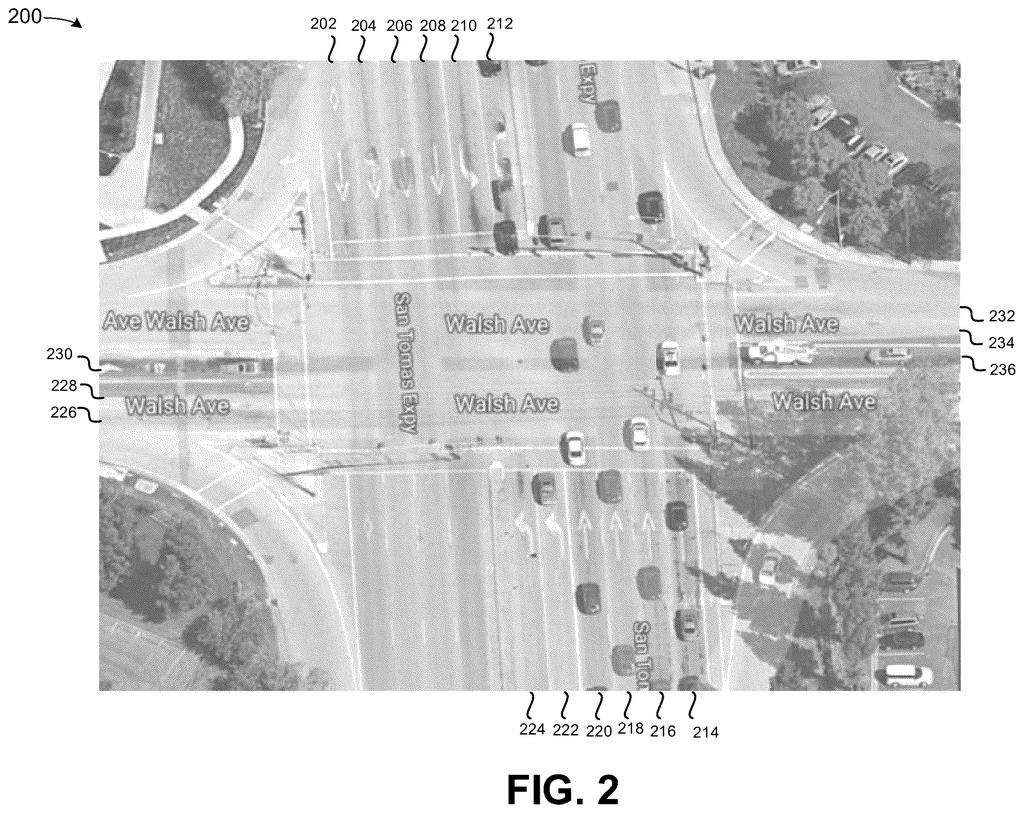
Ever watched traffic at a busy intersection and noticed that cars really only do a handful of things? Some go straight in the right lane, some swing left, some turn onto the cross street. A camera sees all of that, but a computer doesn't know which is which unless someone tells it.
Nvidia's patent application skips the telling. Software first traces each car's path from video and groups paths that look alike, with no human involved. Each group gets a simple label, like group 2. Then a small AI model is trained on those labeled paths, so when a new car shows up, the model can say which group it belongs to almost instantly.
The same idea could apply to people walking through a store, since the system only cares about how things move, not what they are.
generating, from trajectory data indicating motions of one or more objects, one or more clusters of the one or more objects exhibiting one or more motions determined to be similar; generating one or more labels corresponding to the one or more clusters; …
Translation: The system groups similar vehicle and pedestrian movements together and gives them descriptive labels.
How the patent labels cars before training
The system starts with video from a fixed camera, such as one pointed at an intersection. An object tracker (software that finds each car or person in the frames) turns every moving object into a trajectory: a list of coordinates over time, anywhere from 5 to 100 points long.
Next comes the sorting step, which needs no human labels. The system builds a pairwise distance matrix, a table scoring how far apart every two paths are. One measure the filing names is the directed Hausdorff distance (roughly, how far one path strays from the closest points on another). A density-based clustering method called HDBSCAN (it finds crowds of similar paths without being told how many crowds to look for) then groups the paths. The settings are tuned so the number of groups lands in a chosen range.
Each group gets a label such as C1, C2 or C3. A small neural network (a fully connected one, in the example) is then trained to take a path and output its label. Once trained, the clustering step is not repeated for new footage. The network just answers.
The filing says the network can be under 1 megabyte and reports 97 to 99 percent accuracy at matching paths to groups. It can be trained per camera or per location, and retrained when traffic patterns change, for example after a lane closes. The claims cover this train-by-clustering method as processors, a system and a method, with vehicles as one example.
… grouping one or more sets of neural network training data according to behaviors of one or more objects within one or more images represented by the training data.
Translation: The AI learns by categorizing how objects act in camera footage.
What this means for traffic and store cameras
The filing lists plain uses: counting vehicles by lane, finding lanes from how cars actually move, spotting parked cars, and flagging odd behavior. It also mentions grouping shoppers by how they move through a store and spotting suspicious activity at retail locations, which touches your everyday life more than road counts do.
Nvidia sells the chips that train and run this sort of software, so cheaper video analysis fits naturally. For you, the main questions are where such cameras get pointed, and what happens when the labels they assign are wrong.
Nvidia's 91st filing we've tracked since May joins earlier work on filling in blind spots and catching road bumps early in our self-driving sensing race watch.
Cameras produce far more footage than anyone can label by hand. Every intersection has its own lane layout, so a model trained for one spot rarely works at the next, and somebody has to teach it all over again. That cost grows with every camera added.
Nvidia's answer matches the size of that problem. Let software sort the paths into groups, then train a small model on those groups so new footage is handled quickly. The filing describes 97 to 99 percent agreement with the groups and a model under a megabyte, small enough to give fast answers.
The limits are plain too. The groups are only as good as the sorting step, and a person still has to say what group 2 means on a real street. For a problem this large and this repetitive, though, a method that cuts the manual work is the right size of fix.
Get our take in your Top Stories
Liked this breakdown? Add Patentlyze as a preferred source on Google, and our plain-English take shows up more often in your Top Stories the next time Nvidia patent news breaks.
There are more where this came from
We read every patent application Big Tech publishes and send you the ones worth knowing. Plain English, free, every week.
The drawings
56 drawing sheets from US 2026/0320156 A1 · click any drawing to enlarge


Show the other 48 sheets


Want this weekly breakdown for a company we don't cover? Patentlyze Pro →
Be the first to weigh in