
Qualcomm Files Patent to Speed Up Calculations That Power Camera AI Features
Qualcomm has a trick for a slow piece of camera AI: instead of adding numbers one after another, it rewrites the job as a single multiplication that chips already do very fast.
What Qualcomm's running-total rewrite actually does
You're pointing your phone at a busy street, and the camera app is boxing in every car and person it sees. Behind the scenes, the AI keeps adding up long strings of numbers from the image, one running total after another. That step turns out to be surprisingly slow on a phone chip.
Qualcomm's filing describes a tool that reads an AI program's instructions, spots those running-total steps, and swaps them for a different kind of math: matrix multiplication, which is multiplying big grids of numbers together. Phone chips have dedicated hardware built to do exactly that, and it is much quicker than adding numbers in sequence.
The swap also helps with a nasty bug. Running totals can grow past what the chip can store, and the number wraps back to zero. The rewrite is meant to keep that from happening.
… identifying a target operation in the set of program code, the target operation including at least a cumulative summation operation; reformulating the target operation in the set of program code using a first matrix multiplication operation to produce a reformulated target operation; …
Translation: The system finds running totals in code and rewrites them as matrix math to make them run faster.
How a grid of ones replaces step-by-step adding
The patent covers a software step that a compiler (a program that translates an AI model into instructions a chip can run) would carry out. It receives the model's code, finds an operation called a cumulative summation (cumsum, a running total where each output is the previous output plus the next input), and rewrites it as a matrix multiplication.
The key trick is a triangular matrix, a grid with ones on one side of a diagonal line and zeros on the other. Multiplying your data by that grid gives the same answer as the running total, but uses the chip's matrix hardware instead of the slower vector hardware.
The filing describes several extras:
- Fusing the rewritten step with a neighboring convolution or matrix multiplication, so two steps become one.
- Computing parts of the result ahead of time, when the model is built, instead of every time a new image arrives.
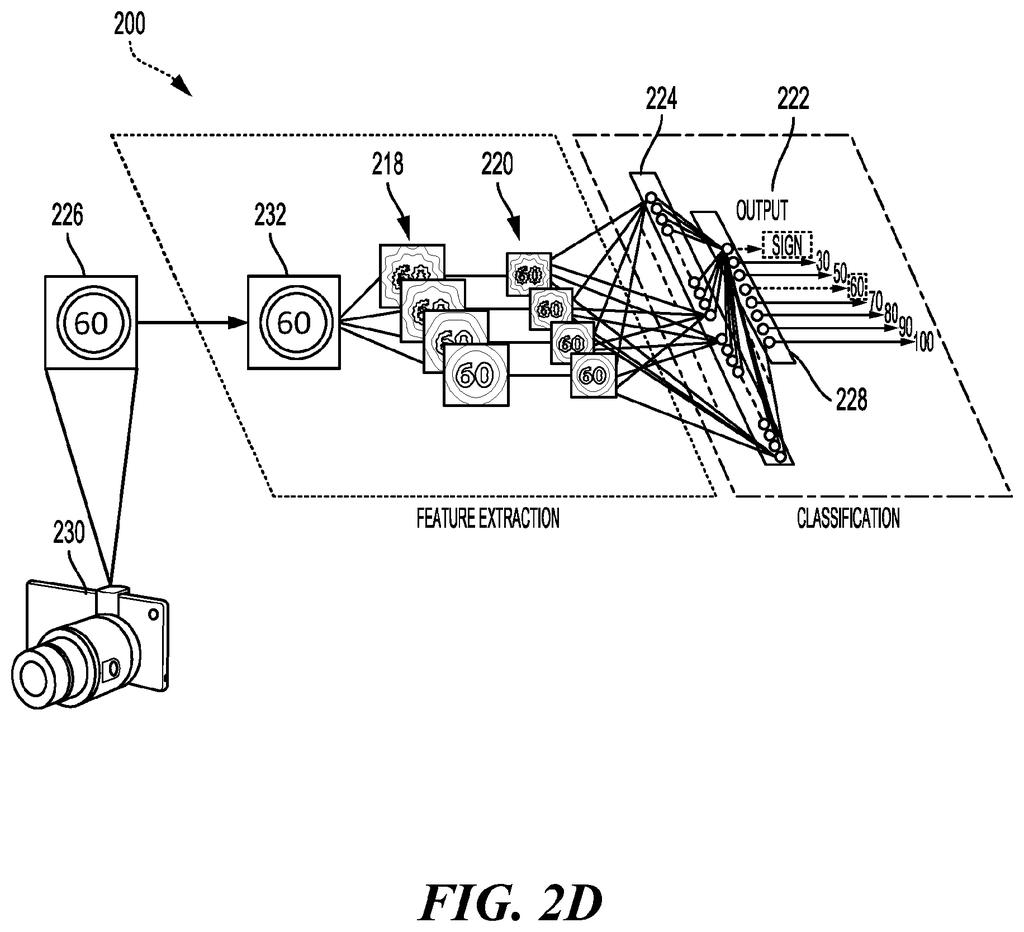
- For object detection, flattening the image data and multiplying it by one precomputed matrix to get features of a bounding box directly.
The description gives monocular 3D object detection (judging 3D objects from a single camera) in autonomous vehicles as one use case.
A processor-implemented method for reformulating cumulative summation operation in an artificial neural network includes receiving a set of program code. A target operation in the set of program code is identified.
Translation: Software changes how running math totals are calculated inside AI networks to speed up processing.
Why this matters for phone and car cameras
If it works as described, you would feel it as smoother, faster camera features: higher frame rates for object detection, and less battery drain, on phones, cars and robots. The filing lists speed, lower power use and fewer overflow errors as the goals, though it gives no measured numbers.
The bigger picture is about squeezing more out of chips that already exist. Qualcomm makes the processors in many phones and cars, so a compiler-level trick like this could speed up AI models without any new hardware. Nothing here names a specific product.
Qualcomm's 60th filing we've tracked since July in our AI chip competition watch adds to earlier applications like one on pre-arranging AI data and one on skipping unnecessary chip work.
For you, the payoff would be invisible when it works: a camera app that keeps up with fast motion, or a car's vision system that doesn't lag. Nobody buys a phone for a faster running total, but everybody notices a laggy camera.
The idea is clever and practical. It rewrites old math in a form the chip's strongest hardware already handles, so the benefit comes from software alone.
The filing offers no benchmark numbers, so how much faster things get is unknown. Still, the failure it targets is real: totals that overflow and corrupt results. Fixing that would matter most in safety-related uses like driving.
Get our take in your Top Stories
Liked this breakdown? Add Patentlyze as a preferred source on Google, and our plain-English take shows up more often in your Top Stories the next time Qualcomm patent news breaks.
There are more where this came from
We read every patent application Big Tech publishes and send you the ones worth knowing. Plain English, free, every week.
The drawings
7 drawing sheets from US 2026/0329963 A1 · click any drawing to enlarge


Want this weekly breakdown for a company we don't cover? Patentlyze Pro →
Be the first to weigh in