
Qualcomm Patents a Way to Merge AI Models on a Chip Without Slowing Them Down
Every time your phone runs an AI feature, the chip has to carefully juggle numbers from different sources. Qualcomm has filed a patent for a way to skip one of the most repetitive and power-hungry steps in that juggling act.
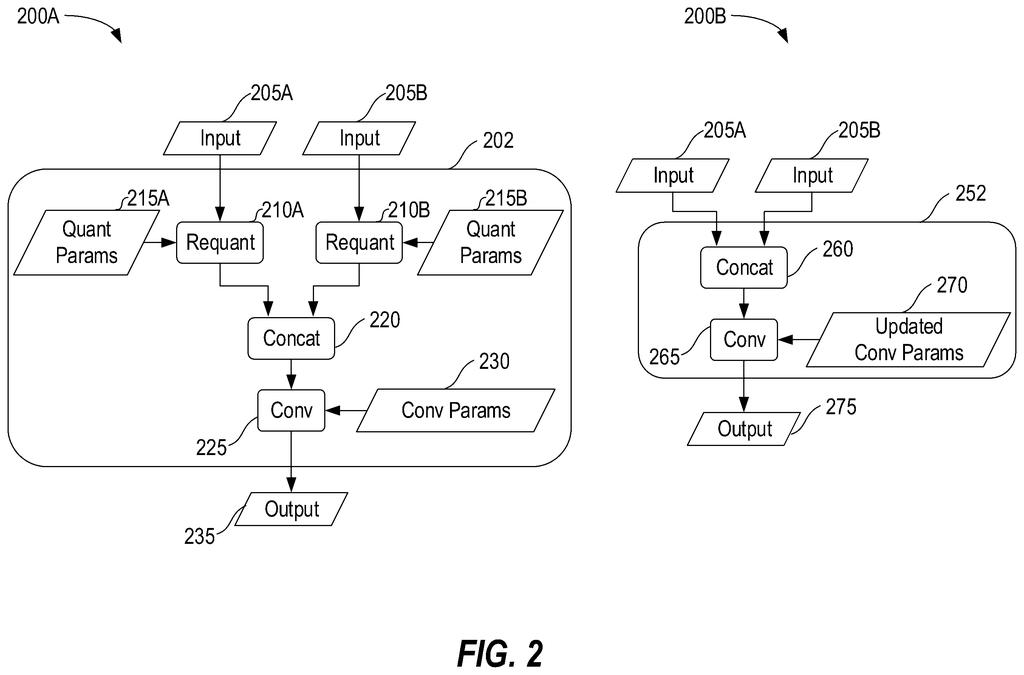
What Qualcomm's AI model-merging trick actually does
Every time a chip runs two AI tasks back-to-back, the numbers from each task often come in different scales, like one person measuring in inches and another in centimeters. Before the chip can combine those numbers, it normally has to stop and convert them into a common format, a step called requantization that eats up time and energy.
Qualcomm's patent describes a shortcut. Instead of converting the data after it arrives, the system bakes the conversion math directly into the AI model's internal filter settings before any processing happens. By the time your device starts running the AI task, the filter weights have already been adjusted to handle the mismatched number scales on their own.
The result is that two AI models can share their work on the same chip without the usual pause for number-crunching housekeeping. For you, that means less drain on the processor and, in theory, a more responsive experience when your phone is doing something AI-powered in the background.
concatenating a first quantized tensor quantized according to a first set of quantization parameters and a second quantized tensor quantized according to a second set of quantization parameters to generate a concatenated tensor …
Translation: The system combines two different sets of compressed data into one single block so the processor can handle them together.
How Qualcomm adjusts filter weights to skip rescaling
Modern AI chips often run multiple models whose internal data is encoded at different numerical scales, a technique called quantization (compressing numbers into a smaller range to save memory and speed things up). When you concatenate, or stitch together, the outputs of two models running at different scales, the chip normally needs a requantization step: a mini-calculation that rescales everything to a common format before the next layer can proceed. That step is repeated constantly during inference.
This patent proposes eliminating that step by pre-adjusting the convolution parameters (the learned filter weights that transform data as it passes through each layer of a neural network). Specifically, the first model's filter weights are mathematically modified using both sets of quantization parameters from the two input tensors. A tensor, in plain terms, is just a structured block of numbers representing the model's data at a given layer.
The modified weights absorb the scale difference themselves, so when the concatenated tensor arrives, the convolution (the core math operation that extracts features in a neural network) produces a correctly scaled output without any runtime rescaling pass.
- Input: two quantized tensors with different scale factors
- Modification: filter weights adjusted offline to account for both scales
- Output: correctly scaled convolution result, with no requantization at runtime
A first set of convolution parameters ( 270 ), generated for at least one layer of a first machine learning model based on the first and second sets of quantization parameters ( 215 A, 215 B) and a second set of convolution parameters ( 230 ) for at least one layer of a second machine learning model ( 202 ), is accessed.
Translation: The chip calculates new settings that allow it to run two different AI models using the same combined data.
What this means for AI processing on mobile chips
On a smartphone or wearable, every avoided computation translates directly into battery life and heat. Requantization operations are not dramatic individually, but they run inside every layer of a neural network, dozens of times per inference pass. Removing them from a concatenation step that links two separate AI models is the kind of optimization that can shave meaningful milliseconds off response time and reduce the thermal load that causes a phone to throttle its processor during sustained AI tasks.
Qualcomm sits at the center of the mobile AI chip market, supplying the processors inside a large share of Android flagship phones. A technique that makes multi-model inference cheaper to run on-device points toward more capable on-device AI without requiring more powerful, more power-hungry hardware. This filing fits the pattern of chip-level AI efficiency work covered among the newest Big Tech patents, where squeezing more out of existing silicon is increasingly where the real competition happens.
Qualcomm's 37th filing we've tracked since July in the AI chip wars adds to earlier work on compressing model data and choosing which tasks run first.
Most people will never notice this fix exists, but they would feel its absence as a slightly warmer phone, a slightly shorter battery day, or a brief stutter when an AI feature kicks in. Baking size adjustments into a set of math rules once, at the factory, rather than calculating them fresh every second on your phone, is a real everyday win for anyone whose phone runs constant AI work like live translation, always-on voice commands, or instant photo touch-ups.
Whether you actually notice the improvement depends on how heavily the chip inside your phone, made by a company called Qualcomm, relies on running several AI tasks back to back, handing results from one to the next like an assembly line.
There are more where this came from
We read every patent application Big Tech publishes and send you the ones worth knowing. Plain English, free, every week.
The drawings
9 drawing sheets from US 2026/0244903 A1 · click any drawing to enlarge


Want this weekly breakdown for a company we don't cover? Patentlyze Pro →
Be the first to weigh in