
Meta Files Patent for Glasses That Record Your Walks as 3D Memories
Most smart glasses record flat video from a single camera. A new Meta patent application describes glasses with cameras spread around the frame, built to capture a scene you can step back into later.
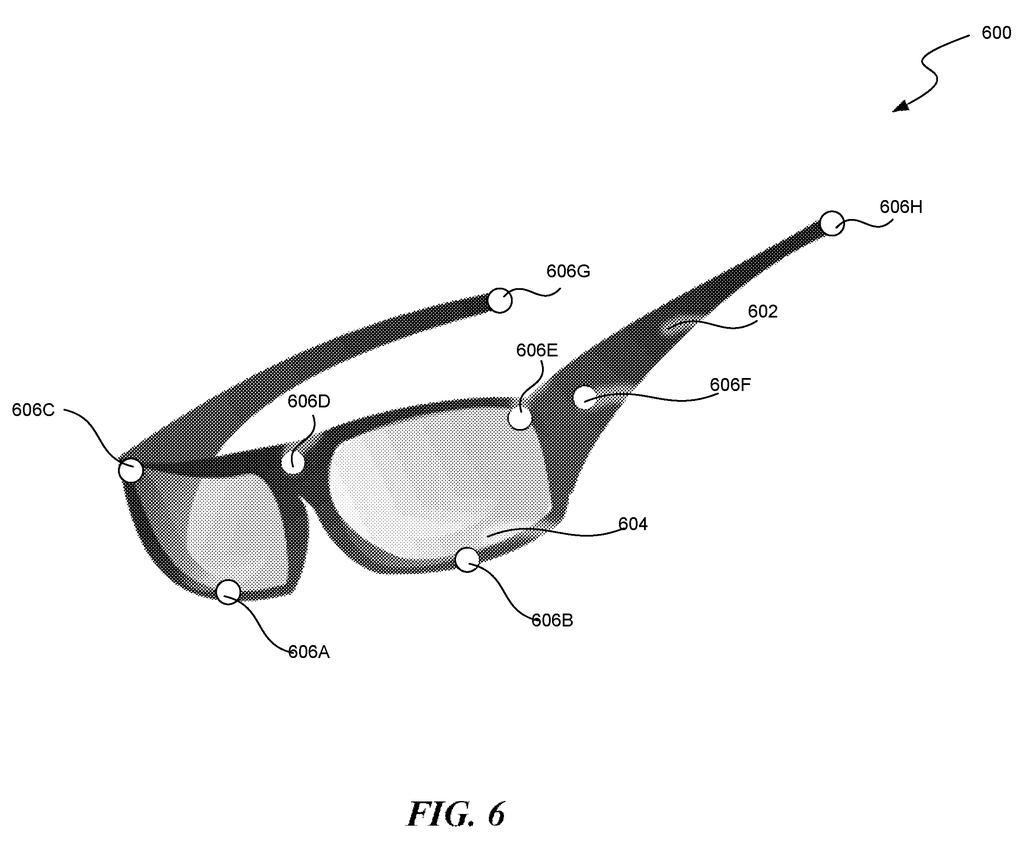
What Meta's multi-camera glasses actually record
You're strolling through a park on a sunny afternoon, and you wish your friend across the country could see exactly what you're seeing. A flat video clip only goes so far. You want them to feel the path stretching ahead and the fountain sitting off in the distance.
Meta's patent application describes a pair of smart glasses built for that moment. Instead of the single camera on most glasses today, this design carries several cameras spread around the frame, plus sensors that measure how far away things are. The glasses combine all of it into one 3D video.
Your friend, wearing a VR headset, can then look around and watch the scene unfold with real depth, almost live. You could also save the walk and step back into it months later as a 3D memory.
obtaining multiple images of a real-world environment, wherein the multiple images were contemporaneously captured from multiple perspectives by multiple cameras disposed at spatially disparate locations on an extended reality system; …
Translation: The glasses use several built-in cameras to snap photos from different angles at the exact same time.
How the glasses stitch camera views and depth
The claims describe a four-step pipeline. First, cameras placed at different spots on an extended reality (XR) device, such as smart glasses, capture images of the surroundings at the same moment. The filing suggests a window of about 10 milliseconds, which keeps moving people and objects from smearing when the views are combined.
Second, depth sensors measure how far away things are. The filing lists three types: time-of-flight (timing how long infrared light takes to bounce back), structured light (projecting a known pattern of dots and watching how it warps), and LiDAR (scanning with laser pulses). It also says depth can be estimated from the camera views themselves.
Third, the system pairs each pixel with a distance, producing RGB-D images (color plus depth). Fourth, it stitches those images into one 3D scene for every frame:
- Find matching landmarks, like the corner of a couch, in overlapping views.
- Work out where each camera sat, optionally by building a map of the room (known as SLAM, short for simultaneous localization and mapping).
- Blend the views into one shared 3D space, repeated frame by frame.
Dependent claims add extras: pulling in cameras on a hat or other wearable, streaming to a headset, and shifting the viewpoint to match where your eyes actually sit behind the frame.
In some implementations, additional cameras can be provided on other wearable devices in communication with the XR system, such as a hat.
Translation: You could potentially connect extra cameras mounted to a hat to capture even more angles.
Why 3D memories could change how you share video
If you own smart glasses today, your videos are flat, and sharing them with someone in a headset means a rectangle floating in space. This filing points toward glasses that capture a scene with depth, so a friend could stand inside your walk, or you could revisit a living room or a trip years later. The description also names gaming, education and training as uses.
The practical hurdle is hardware. Several cameras and depth sensors cost battery, weight and money, so the filing describes handing the heavy stitching work to a phone or a server. Meta already sells both glasses and VR headsets, so a pipeline linking the two fits its lineup. Still, this is a patent application, and nothing in it says a product is coming.
This is the 82nd filing from Meta we've tracked in our smart glasses watchlist since May, following applications like a tiny vibrating mirror and a wrist-rolling cursor band.
Claim 1 is wide. It asks for multiple cameras at different spots on an XR system, depth sensors on that same system, depth added to the images, and a stitched 3D video that a playback system renders. Nothing in that wording requires smart glasses, streaming, a hat, or any particular way of matching the views.
Those narrower details live in the dependent claims, which leaves claim 1 as a basic recipe: several cameras, distance readings, one stitched result. If granted as written, it would reach a lot of headsets and glasses that capture 3D video from multiple viewpoints, however they do the stitching.
That breadth is the appeal for Meta, and the narrower claims give it fallback positions if the wide one gets trimmed. The idea itself is easy to grasp and useful: record your life once, replay it in 3D.
Get our take in your Top Stories
Liked this breakdown? Add Patentlyze as a preferred source on Google, and our plain-English take shows up more often in your Top Stories the next time Meta patent news breaks.
There are more where this came from
We read every patent application Big Tech publishes and send you the ones worth knowing. Plain English, free, every week.
The drawings
12 drawing sheets from US 2026/0342951 A1 · click any drawing to enlarge


Show the other 4 sheets


Want this weekly breakdown for a company we don't cover? Patentlyze Pro →
Be the first to weigh in