
Google Files Patent for a Watch That Can Tell When Its Band Is Too Loose
Google has filed a patent for a smartwatch that can tell the difference between being worn snugly, worn loosely and sitting in your bag, and it will tell you when to tighten the band.
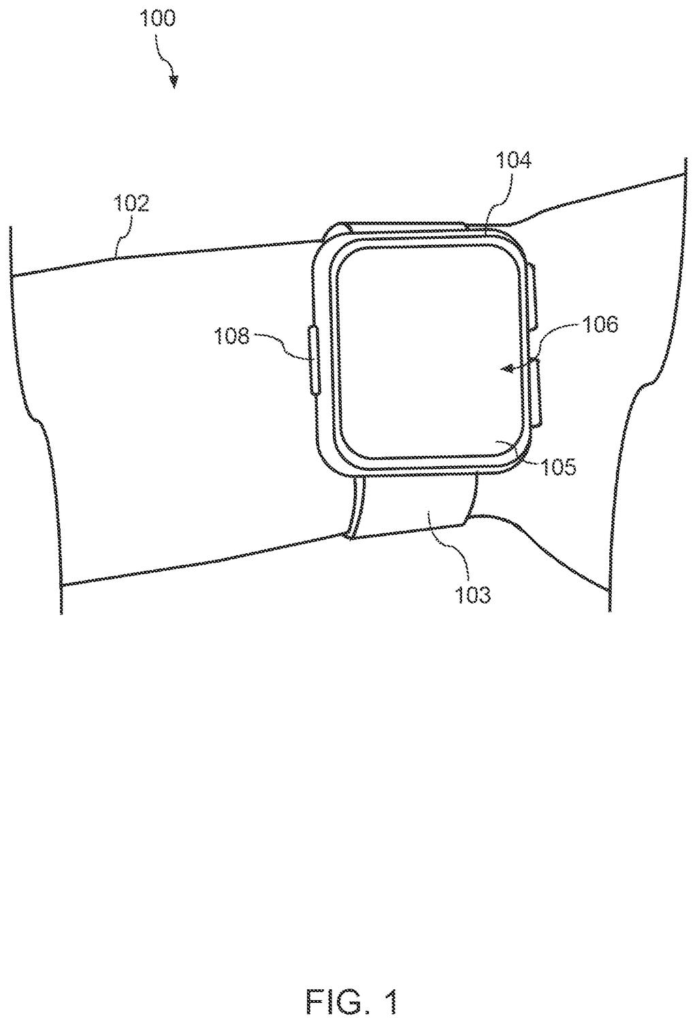
What Google's wear-detection check actually does
Every time you slide your smartwatch on in the morning, it has to settle one question: is it actually on your wrist, and is it snug enough to read your pulse? Right now that is a shaky guess. If the band is loose, your sleep score and workout numbers can come out wrong. If the watch is sitting in a bag next to your keys, it might think it is being worn.
Google's patent filing describes a two-step check. A light sensor first notices that something is close by. Only then does the watch switch on a second sensor that measures the electrical feel of skin, which a bag or a tabletop can't fake.
If the watch senses something close but no skin contact, it can tell you the band is too loose and ask you to shake your wrist to check the fit.
… activating, via the one or more processors, an impedance sensor of the wearable computing device based, at least in part, on the first proximity data; …
Translation: The watch turns on an electrical sensor only after the initial proximity sensor detects something nearby.
How the light sensor wakes the skin sensor
The watch carries two sensors that work as a team. A proximity sensor (in the filing, usually the same light sensor used to read your pulse) measures reflected light to tell whether something is close. An impedance sensor uses small metal electrodes on the back of the watch to measure how easily a tiny electrical signal passes through whatever they touch. The filing also talks about admittance, which is simply the inverse of impedance.
To save battery, the electrodes stay off until the light sensor notices something nearby. Then the watch combines both readings and sorts itself into one of three states:
- Off-wrist: nothing close, no skin contact.
- On-wrist with contact: something close and the electrodes are touching skin.
- On-wrist without contact: something close, but the electrodes are not touching skin, as with a loose band.
In the loose state, the watch can show a message such as 'Band is too loose' and ask you to shake and rotate your wrist for 3 seconds so it can check again. It can also mark data gathered during that time as less reliable.
The filing also describes variations: four electrodes around the sensor that can show when a watch is only partly seated, and a tint layer over the sensors that turns opaque when you take the watch off.
… determining that the wear state of the wearable computing device corresponds to one of an off-wrist state, an on-wrist with contact state, or an on-wrist without contact state based, at least in part, on the impedance data and the second proximity data.
Translation: It figures out if you are wearing the watch loosely, tightly, or not at all.
Why a loose watch band is a data problem
If you wear a smartwatch to bed or to the gym, the numbers it gives you are only as good as the fit. A watch that notices a loose band, and asks you to fix it before a sleep or workout session starts, could save you from a blank sleep report or a wrong heart rate. The same check could stop a watch in a bag from thinking it is on your wrist, which matters for features like payments and fall alerts.
The filing is a patent application. The examiner's first review rejected the claims as filed, which is routine and usually followed by amendments, so the final scope may change. The ideas here target data quality and battery life.
This is the 22nd Google filing we've tracked since May in our wearables reading your body watchlist, which already includes one on predicting health from blood and one on gesture controls learning from mistakes.
Claim 1 covers a specific order of operations. A proximity sensor goes first, that reading switches on a second sensor that checks for skin contact, and the watch then lands in one of three states. A watch that skips the first step, or never sorts itself into those three states, would sit outside that claim.
Claim 20 is much wider. It needs only one sensor reading, turned into an admittance value (a measure of how easily electricity passes through whatever touches the watch), plus any 'control action' based on whether the watch is on or off the wrist. A control action could be almost anything, from disabling payments to showing a message, so that claim would reach far beyond this particular design if it survived.
The loose-band reminder, the wrist-shake test and the see-through electrodes show up only in narrower dependent claims. A fit reminder is a small feature that would help anyone whose sleep score has ever looked wrong.
Get our take in your Top Stories
Liked this breakdown? Add Patentlyze as a preferred source on Google, and our plain-English take shows up more often in your Top Stories the next time Google patent news breaks.
There are more where this came from
We read every patent application Big Tech publishes and send you the ones worth knowing. Plain English, free, every week.
The drawings
18 drawing sheets from US 2026/0339434 A1 · click any drawing to enlarge


Show the other 10 sheets


Want this weekly breakdown for a company we don't cover? Patentlyze Pro →
Be the first to weigh in