
Waymo Files Patent for Self-Driving Cars That Zoom In on Brake Lights
A self-driving car does not need to study every pixel of a camera image to spot a brake light. Waymo's patent has the car's other sensors mark where to look first.
What Waymo's crop-the-image patent actually does
A camera on a self-driving car sees everything at once: the road, the signs, the cars ahead, the traffic light. Finding one small brake light in all of that takes time and computing power, and the car needs the answer fast.
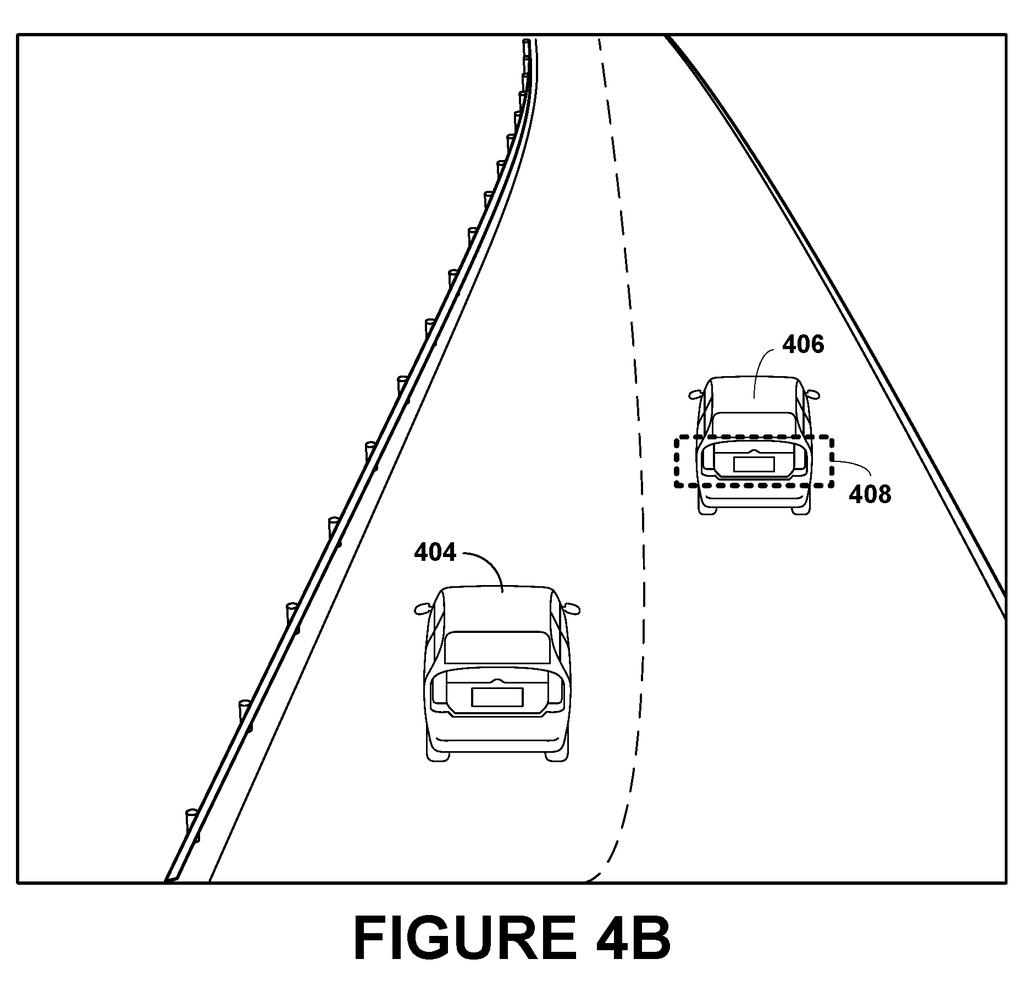
Waymo's patent describes a shortcut. Before the camera image gets studied, the car's other sensors (radar and lidar, which bounce radio waves and lasers off objects) already know roughly how far away the car ahead is, how big it is and how fast it moves. The computer uses that to work out which patch of the photo shows the vehicle, then looks only at that patch.
If the brake lights are on, the car can slow down or change lanes. The filing even describes a traffic light turning from green to yellow as a cue to go check nearby cars for brake lights.
… determine, using the state of the first object and the sensor data, an approximate location of a second object within an image captured by the camera; identify, based on the approximate location, a portion of the image depicting the second object; process the portion of the image to determine a feature of the second object …
Translation: The car uses general sensor data to pinpoint where a specific detail is in a camera photo and analyze it closely.
How radar and lidar point the camera at a target
The claims build around two objects. Sensors such as lidar (lasers that measure distance) and radar (radio waves that measure distance and speed) tell the car's computer the state of one object, for example a traffic signal changing color. Using that state plus the sensor data, the computer estimates where a second object, such as the car ahead, sits inside a camera image.
From there the steps run like this:
- Map the object's real-world position onto the image's pixels with a camera projection matrix (a math recipe for how a 3D scene lands on a flat photo).
- Pick out the patch of the image showing that object.
- Process only that patch, leaving the rest of the image alone, to read a feature: a brake light or turn signal, its speed, whether it is moving, or even a license plate number, vehicle model or body color.
- Choose a control strategy (the car's driving plan), such as braking or changing lanes.
The filing also covers occlusion reasoning, which means working out what blocks what. In its example, a traffic light 100 meters ahead and a vehicle 20 meters ahead overlap in the image, and the distance data tells the computer the nearer vehicle is the one in front. Another example has a fence hiding part of a car. A traffic signal can also send its state to the car wirelessly.
… the computing device may use information from sources to determine portions of the image to focus upon that may allow the computing device to determine a control strategy based on portions of the image.
Translation: The autonomous system zeroes in on specific parts of a picture to decide how the vehicle should react.
Why faster brake-light reading matters for Waymo
The practical payoff is reaction time. A car that reads brake lights and turn signals on the vehicles around it can slow down or change lanes sooner, and the description says leaning on other sensors can lower the processing power the computer needs for each image.
The filing is the latest in a family that traces back to an application filed in 2013, so this is a long-running idea for Waymo rather than a new one. It is a patent application, not a product announcement, and it names no specific vehicle or launch.
Google's 76th filing we've tracked since May in our Waymo robotaxi sensing watchlist builds on earlier applications like finding stops without painted lines and filtering out small sensor glitches.
The trade here is trust for speed. By cropping the image to a patch that radar and lidar picked out, the car saves effort, but it now depends on those sensors and on the math that lines their readings up with the camera. If the patch lands slightly off, the brake light sits outside the frame and the car never sees it.
Skipping the rest of the image also means skipping anything unexpected in it. The description softens that risk by saying some images can still be processed without the extra help, so the crop reads as an add-on to normal camera processing.
For brake lights and traffic signals, where the car already has a good idea of where to look, the trade is worth making. How it holds up in rain or headlight glare is something the filing does not test.
Get our take in your Top Stories
Liked this breakdown? Add Patentlyze as a preferred source on Google, and our plain-English take shows up more often in your Top Stories the next time Google patent news breaks.
There are more where this came from
We read every patent application Big Tech publishes and send you the ones worth knowing. Plain English, free, every week.
The drawings
7 drawing sheets from US 2026/0351003 A1 · click any drawing to enlarge


Want this weekly breakdown for a company we don't cover? Patentlyze Pro →
Be the first to weigh in