
Waymo Files Patent for Cars That Label Distant, Stationary Objects on Their Own
A self-driving car's lasers see a traffic light clearly up close, but its cameras can spot that same light from much farther away. Waymo's patent reuses the close-up label on those distant photos, with no person drawing it by hand.
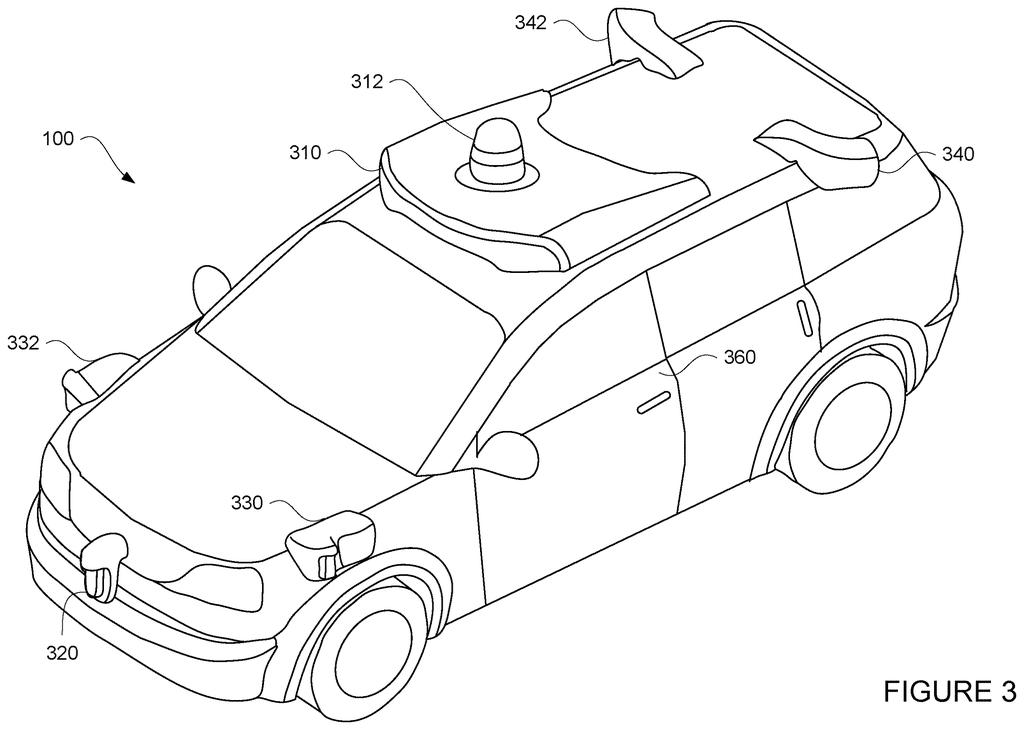
What Waymo's label-sharing patent actually does
Every time a self-driving car rolls past a traffic light, it sees that light again and again: first as a tiny speck far down the road, then clearly as it gets close. To train the software that spots things like this, someone has to mark each sighting with a label that says, in effect, traffic light, right here.
Waymo's patent skips most of that marking. When the car's laser sensor gets a clear look at an object and it receives a label, the system checks that the object never moved. If it stayed put, the same label gets copied onto other moments, including camera photos taken from farther away or earlier in the drive, where the lasers couldn't make out much.
The system also checks that nothing was blocking the view, so a label doesn't land on a photo of the side of a truck. The payoff is a large pile of labeled examples without paying people to draw every one.
… automatically generating, by the one or more processors based on a label for the object associated with the first point in time, another label for the object for the second point in time.
Translation: The car copies the object label from the first sighting over to the second one.
How a laser label ends up on a camera photo
The patent covers a method for copying a label from one piece of sensor data to another. A label here is usually a 3D bounding box (an invisible box drawn around an object to mark where it sits in space). First, a laser-based sensor called LIDAR (it bounces laser pulses off the surroundings to build a 3D picture) detects an object, and the object gets a label. Earlier or later, a second sensor on the same car, such as a camera, captures the object from a different spot.
Before copying anything, the system confirms the object is static, meaning it did not move between the two moments. The filing describes checking that the object's position stays within a small error margin the whole time the laser saw it, or checking radar returns for any movement. Then, using the car's recorded position and angle at each moment, the 3D box is projected onto the flat camera image to make the new label.
The filing describes several cleanup steps:
- Discard camera images that don't contain the object.
- Discard images where the projected label is too small, meaning too few pixels to be useful.
- Check the object isn't hidden at that moment, by casting a virtual ray from the car to the object on a 3D map, by asking a human reviewer, or by using a trained model.
The two moments can be as little as 0.1 or 0.5 seconds apart, and the copy can go forward or backward in time. The new label can even mark an object beyond the laser's range. The filing describes all of this as an offline process on servers, not something the car does while driving.
Based on the determination that the object is a static object, the first label may be used to automatically generate a second label for the second sensor data.
Translation: Once the vehicle confirms the target is not moving, it reuses the original label for the new sensor reading.
Why this matters for driving in fog and rain
Behind every self-driving system is a huge stack of labeled examples, and Waymo's own description calls hand labeling slow and costly. Copying labels automatically could produce far more training examples, including ones for objects too distant for lasers to reach, or for fog, rain and snow, when laser range shrinks. The filing says better training data should mean fewer missed objects and fewer phantom ones.
For you, the effect would be indirect: a car that could spot a signal or sign sooner in bad weather. The filing also says labels copied from a close, clear view can be more trustworthy than ones made directly from a distant or partly blocked view. They can also be used to check how accurate human labelers or the car's own position estimates are. This application continues earlier Waymo filings in the same family, two of which have already been issued as patents.
Google's 69th filing we've tracked since May on our robotaxi sensing work watchlist follows applications like spotting the wrong rider and letting trailing cars pass as Waymo keeps building out how its cars perceive their surroundings.
As a path to something shippable, this one is short. It needs no new hardware, no new car parts and nothing on the road. Waymo's description puts the whole process on servers, working on sensor recordings the cars already collect.
What has to exist first is a fleet that records laser and camera data and a first round of labels, and the filing assumes both are in place. The shortest route to use is a script inside the company's data pipeline, and you would never see it as a feature.
The hard part is the occlusion check. If a truck blocks a traffic light, copying the label onto that photo teaches the software something false, which is why the filing lists three ways to verify visibility: a 3D map check, a human reviewer, or a trained model. Overall this reads as sensible, practical plumbing. Its value shows up only if cars end up spotting distant things more reliably.
Get our take in your Top Stories
Liked this breakdown? Add Patentlyze as a preferred source on Google, and our plain-English take shows up more often in your Top Stories the next time Google patent news breaks.
There are more where this came from
We read every patent application Big Tech publishes and send you the ones worth knowing. Plain English, free, every week.
The drawings
13 drawing sheets from US 2026/0320334 A1 · click any drawing to enlarge


Show the other 5 sheets


Want this weekly breakdown for a company we don't cover? Patentlyze Pro →
Be the first to weigh in