
Google
Google · Cell phone · Filed May 7, 2025 · USPTO published Nov 12, 2026 · This week's release
Google Patents a Phone Camera That Slows Itself Down Before Overheating
Google's filing describes a phone camera that eases off its own video speed before heat forces something worse, like a shutdown. It even tries to guess how hot the phone will be in the next 5 to 10 seconds.
- Publication number
- US 2026/0361990 A1(US20260361990A1)
- Applicant
- Google LLC
- Filed · Published
- May 7, 2025 · Nov 12, 2026
- Inventors
- Mohsen Heidarinejad, Chunwei Yu, Arpit Mittal
- Status when we published
- Examiner raised objections; the company can respond
- Document
- 20 claims
- US classification
- 348/222.1
- Examiner
- TRAN, NHAN T (Art Unit 2638)
What Google's cooling-off camera patent does
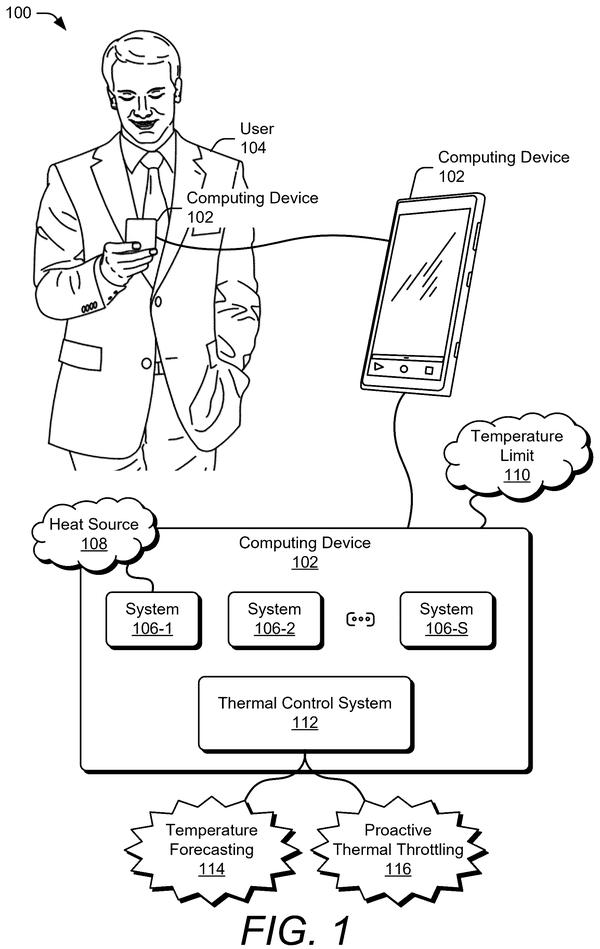
Film a long video on a hot day and your phone heats up, because the camera keeps its main chip busy. Many phones answer with fixed rules that ignore what you are actually doing, Google says, so they either slow down for no reason or react too late and shut features off.
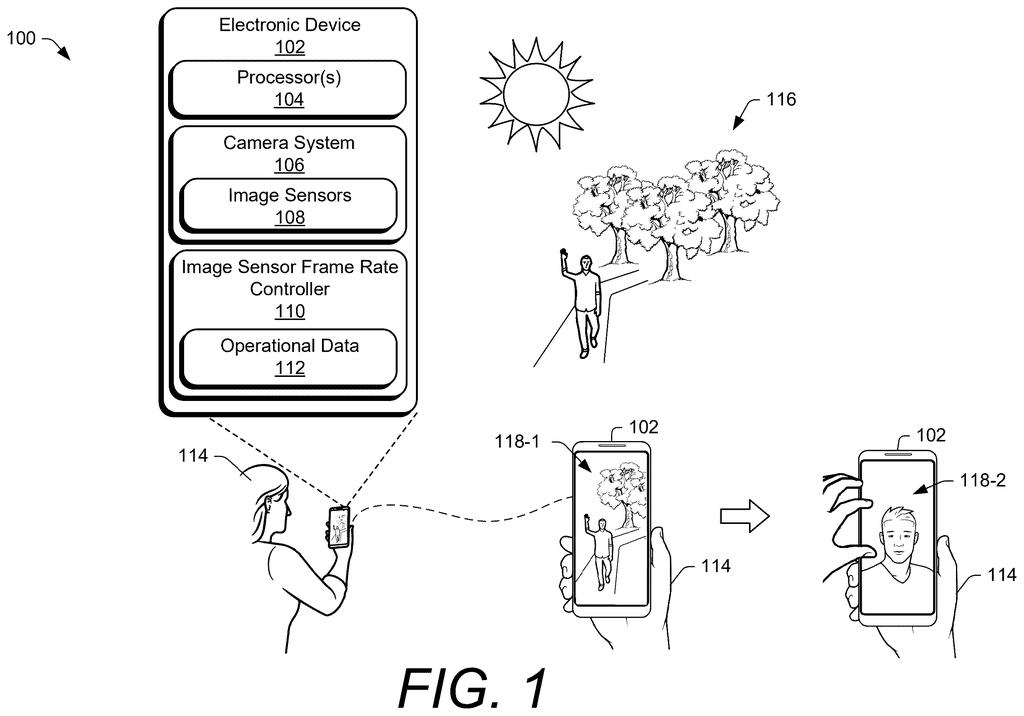
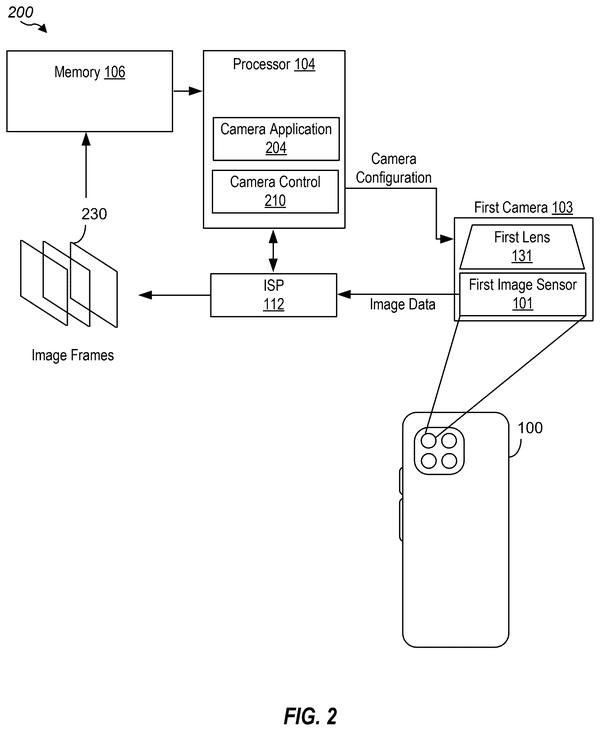
Google's patent application describes a gentler approach. Thermometers inside the phone, plus readings of power use, feed small helper programs. Each one suggests how much to lower the camera's frame rate (the number of still pictures it snaps each second to make video), and a central controller settles on the final number.
The changes are meant to come in small steps, so you are not hit with a sudden drop in video quality. When the phone cools down, the camera can ramp back up.
… determining, by the first image sensor control module, a first frame rate adjustment for the image sensor based on the indication of the first operational data …
Translation: A control module calculates how much to slow down the camera based on hardware conditions.
How the frame rate controller picks a winner
The patent application splits the job in two. Small control modules each watch one kind of data from the phone and suggest a frame rate adjustment. A single frame rate controller collects those suggestions and sets the camera's final frame rate.
The filing describes three kinds of module:
- Chip temperature: watches the peak heat of the system-on-chip (SoC, the phone's main processor) along with the camera's current frame rate.
- Prediction: uses current temperature and power use to estimate what comes next, such as whether a thermal limit will be crossed within 5 to 10 seconds.
- Shell temperature: watches how hot the phone's outer enclosure gets and cuts the frame rate to keep it comfortable to hold.
To avoid visible jumps, the description lists several techniques. Proportional scaling lowers the rate gradually as heat climbs. Hysteresis bands (a buffer zone, so the setting doesn't flip back and forth around one temperature) keep changes from happening too often. Time-based interpolation glides between rates, and a restoration mode raises the rate again once the phone cools.
The controller can also enforce a minimum frame rate tied to image quality or to a model of what human eyes can perceive, so video never drops below an acceptable level. In one version, it simply picks the lowest of the suggested rates.
… predict future device operational states, including component temperatures and power consumption, to enable frame rate adjustment determinations …
Translation: The system anticipates how hot the phone will get before deciding to lower the video speed.
Why your phone camera may dial itself back
Heavy camera use makes the processor work hard, and video is where you feel it. A system that trims frame rate early could mean longer recordings, a phone that stays comfortable in your hand, and fewer sudden slowdowns. The filing says the same idea applies to tablets, watches, smart glasses and AR/VR headsets, where heat against your skin matters even more.
The trade-off is slightly less smooth video whenever the phone decides it needs to cool off. The filing names no product and gives no release plan, and the examiner's first review rejected the claims as filed, which is routine at this stage and usually followed by amendments.
Google's 38th filing we've tracked in our cell phone patents since May follows earlier applications like a magnet-based foldable hinge and self-predicting overheating.
Source: US 2026/0361990 A1 at the USPTO (PDF). Full patent text and figures are in the official publication.
Get our take in your Top Stories
Liked this breakdown? Add Patentlyze as a preferred source on Google, and our plain-English take shows up more often in your Top Stories the next time Google patent news breaks.
Add Patentlyze on Google
One click.
There are more where this came from
We read every patent application Big Tech publishes and send you the ones worth knowing. Plain English, free, every week.
The drawings · 10 sheets
10 drawing sheets from US 2026/0361990 A1 · click any drawing to enlarge


Show the other 2 sheets


More from Google
All 1,079 Google patents →
More in Cell phone
All 485 Cell phone patents →
Samsung
Samsung Patents a Phone That Cuts One Connection to Keep Calls Running When Overheating
Samsung
Samsung Patents a Redesigned Phone Frame That Doubles as a More Precise Antenna
Qualcomm
Qualcomm Files Patent to Shrink the Black Bar Around Your Phone Camera in Sunlight
Qualcomm
No comments yet