
Sony
Sony · AI / ML · Filed May 21, 2026 · USPTO published Nov 12, 2026 · This week's release
Sony Patents Footage Trimming That Helps Game AI Learn When to Dodge
Sony's idea for teaching game AI to dodge: keep plenty of video frames right around the key moment, then space them further apart the further back you look.
- Publication number
- US 2026/0360128 A1(US20260360128A1)
- Applicant
- Sony Interactive Entertainment Inc.
- Filed · Published
- May 21, 2026 · Nov 12, 2026
- Inventors
- Ryan Spick, Timothy Bradley, Guy Moss, Pierluigi Vito Amadori, Ayush Raina
- Status when we published
- Waiting for an examiner
- Document
- 20 claims
- US classification
- 382/159
- Parent application
- Continuation of 18/430,733 (filed Feb 2, 2024)(18430733)
What Sony's frame-skipping patent does for game AI
You're playing a fighting game and an enemy sprints at you, winds up a punch, and you roll clear at the last instant. If a computer is learning to copy that dodge, it needs to see the sprint and the wind-up, not just the roll. Otherwise it waits for the fist to start moving and gets hit.
The catch is that video is heavy. Feeding a learning program every frame from several seconds of play eats memory, and keeping every second or third frame can blur the fast moments that matter. Sony's patent picks frames with a growing gap: frames sit close together near the key moment, then spread out the further back you go.
The program gets sharp detail around the dodge and still sees the run-up, without a bigger pile of data to carry around.
determining a sample value that represents a number N of the sequential image frames that are to be skipped before selecting an image frame of the sequential image frames for inclusion in the training data set, the number N increasing with each iteration …
Translation: The system figures out how many video frames to skip, and that skipped gap gets bigger each time.
How the gaps between chosen frames keep growing
The patent is about imitation learning (teaching a computer program to copy what a player does by showing it recorded examples). To learn timing, the program needs the lead-up to an action as well as the action itself, but feeding it every video frame uses a lot of memory.
The claimed method stores incoming video frames and picks a target frame, the key moment. It then repeats a loop. Each round it works out a number N of frames to skip and selects the frame N steps from the last one chosen. N grows every round, so the picked frames sit close together near the key moment and far apart later on. The filing's examples include skipping 1, then 2, then 3 frames, a Fibonacci sequence (each number is the sum of the previous two), and a formula that raises the round number to the power of 1.35.
The filing also describes several options:
- Frames can come from before the target, after it, or both.
- The target can be tagged by a player, flagged by controller inputs or event codes, or spotted from the frame's data size or image content.
- What is on screen, such as an incoming attack versus a standing jump, can set how fast the gaps grow.
- On a game console, a circular buffer (a rolling store of recent frames that overwrites the oldest) can be mined before a useful moment disappears.
… a subset of stored image frames, the subset providing contextual data relating to the target image frame for the machine learning model; wherein the selecting unit is configured to successively generate sampling values, wherein a difference between successive sampling values increases with each successively generated sampling value …
Translation: It grabs a group of stored video frames to give the AI context, while steadily increasing the gaps between the frames it picks.
What this means for game characters that learn
If you've ever fought a game bot that reacts a beat too late, this is the problem the filing goes after. Training a bot to copy human play depends on showing it the build-up to a move, and this approach fits that build-up into a manageable amount of data. That matters because the filing notes that excess memory use can hurt the performance of the system running the AI.
The filing mentions training on footage from quality testers or beta players, and even refining a trained agent on one person's play so it mimics their style. Those are options the filing describes, and nothing here says a product is coming. The PlayStation 5 appears only as an example machine that could run the method.
Sony's 18th filing in the AI training and infrastructure work we've tracked since June adds to a run that includes one avoiding repeated training data and one using synthetic faces.
Source: US 2026/0360128 A1 at the USPTO (PDF). Full patent text and figures are in the official publication.
Get our take in your Top Stories
Liked this breakdown? Add Patentlyze as a preferred source on Google, and our plain-English take shows up more often in your Top Stories the next time Sony patent news breaks.
Add Patentlyze on Google
One click.
There are more where this came from
We read every patent application Big Tech publishes and send you the ones worth knowing. Plain English, free, every week.
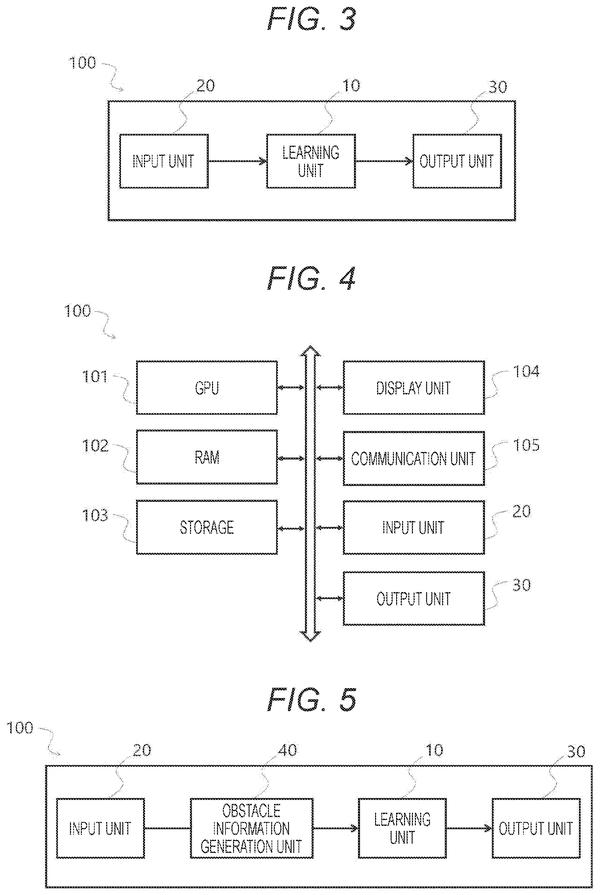
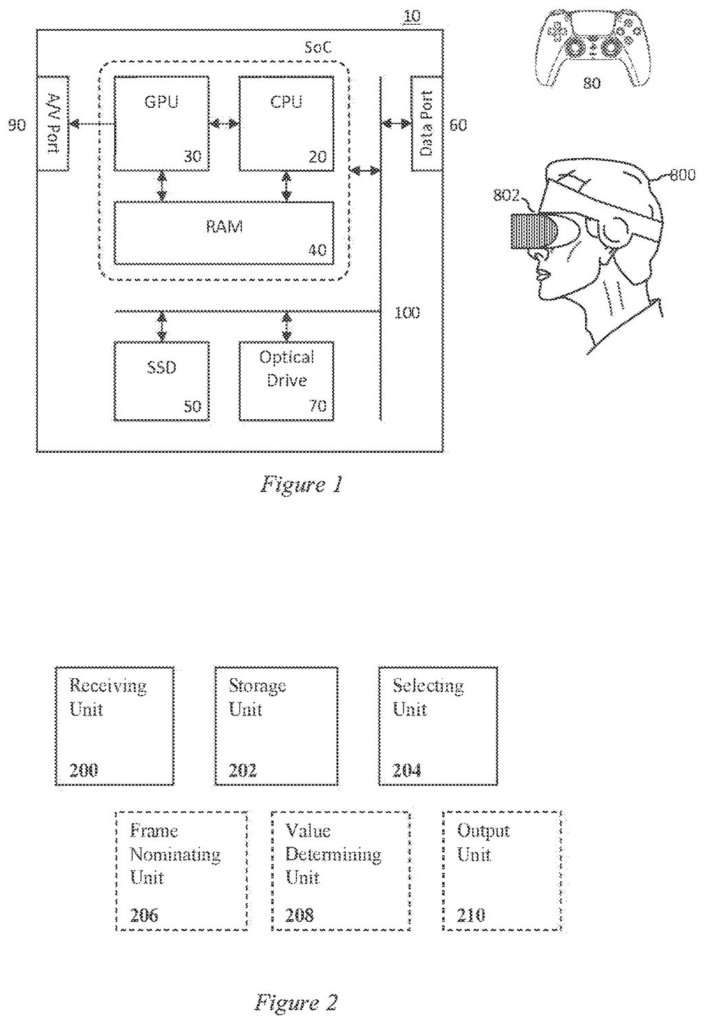
The drawings · 5 sheets
5 drawing sheets from US 2026/0360128 A1 · click any drawing to enlarge


More from Sony
All 707 Sony patents →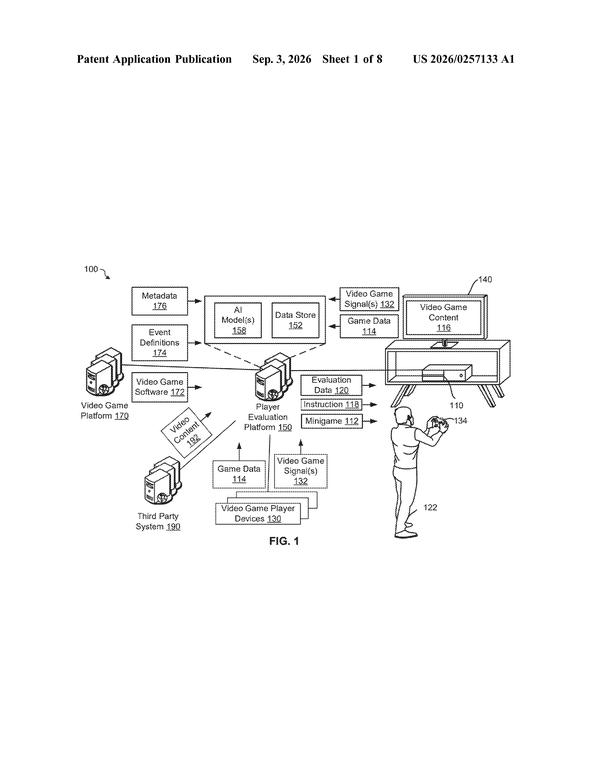
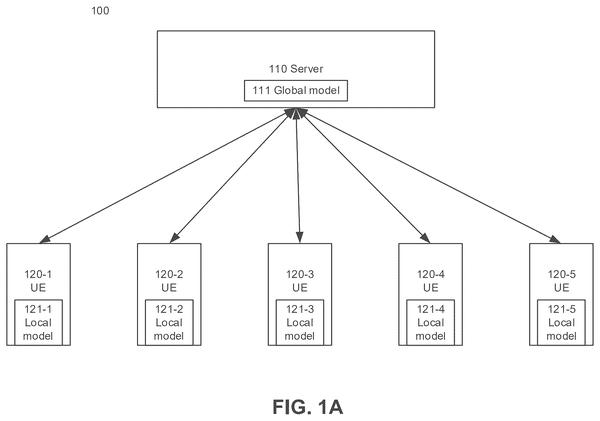
More in AI training & infrastructure
All 316 AI training & infrastructure patents →
Microsoft
Microsoft Wins a Patent for Training AI on Your Gaming PC's Idle Time
IBM
IBM Files Patent for an AI That Quizzes Itself and Learns From Expert Corrections
Samsung
Samsung Files Patent for Giving AI Services Only as Much Computing Power as They Need
Microsoft
No comments yet