
Samsung
Samsung · AI / ML · Filed Jun 23, 2026 · USPTO published Nov 12, 2026 · This week's release
Samsung Files Patent for Rewriting Your Vague AI Questions With Your Own Phone Data
Samsung's patent application describes a helper that rewrites a short, vague question into a detailed one, borrowing facts from your calendar and messages. You type five words, and the AI gets a full paragraph.
- Publication number
- US 2026/0359328 A1(US20260359328A1)
- Applicant
- Samsung Electronics Co., Ltd.
- Filed · Published
- Jun 23, 2026 · Nov 12, 2026
- Inventors
- Jaemin RYU, Soonsang PARK, Gajin SONG, Taieui SONG, Heejae LEE, Dongchoon HWANG
- Status when we published
- Waiting for an examiner
- Document
- 15 claims
- US classification
- 707/767
- Parent application
- Continuation of PCT/KR2024/020941 (filed Dec 23, 2024)(PCTKR2024020941)
What Samsung's question-rewriting helper does
Every time you ask a chatbot for a vacation idea, you type a few words and hope it guesses the rest. Ask "Recommend a travel destination" and you get a generic list, because the AI doesn't know where you're headed, when, or who's coming along.
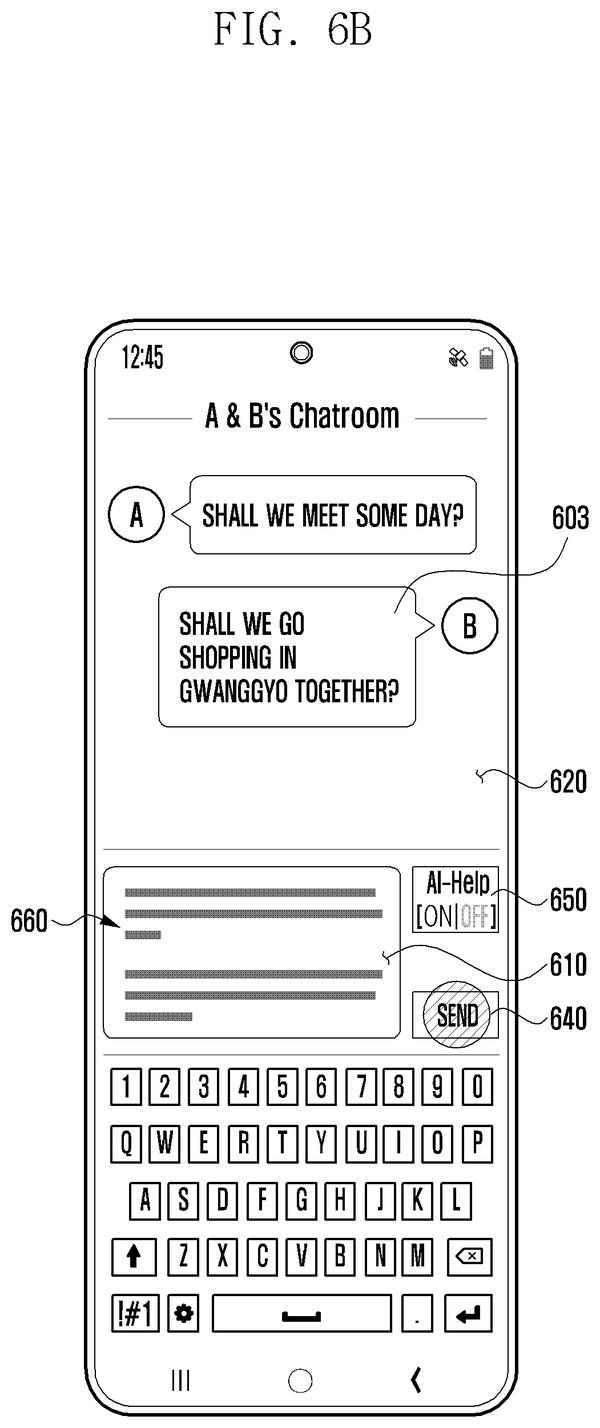
Samsung's patent application describes a helper that sits between you and the AI. It keeps a library of fill-in-the-blank question templates, picks the one that fits your topic, and fills the blanks with your own words first. Anything still missing comes from data on your phone, such as your calendar, your messages, and the language you use. If a blank is still empty, it asks you.
So your short question could reach the AI as: "Recommend three overseas travel destinations with beautiful natural scenery that are good to visit in August." If you already wrote a detailed question, the system leaves it alone.
… identify, among input fields included in the selected prompt template, at least one input field that is fillable using information included in the received user input and at least one input field that is not fillable using the information included in the user input …
Translation: The system figures out what details are missing from your initial question.
How the blanks get filled in, step by step
The system starts when you ask an AI model something, by typing or speaking. It works out the topic of your question (travel, weather, translation) and picks a matching prompt template, which is a stored sentence with blanks in it, such as "Recommend travel destinations worth visiting in (duration) in (location). Please answer in (output language)."
Next it sorts the blanks into two piles. Some can be filled from your own words, so "Southeast Asia" goes in the location slot and "4 nights and 5 days" goes in the duration slot. The rest are filled from user data stored on the device, such as a departure date from your calendar or messages, or your answer language from the language you use on your phone.
The filing adds three more pieces:
- A skip rule: the device counts how many useful details your question already has (reader level, response length, perspective, format, language). If the count reaches a reference number, which you can set, your question goes to the AI untouched.
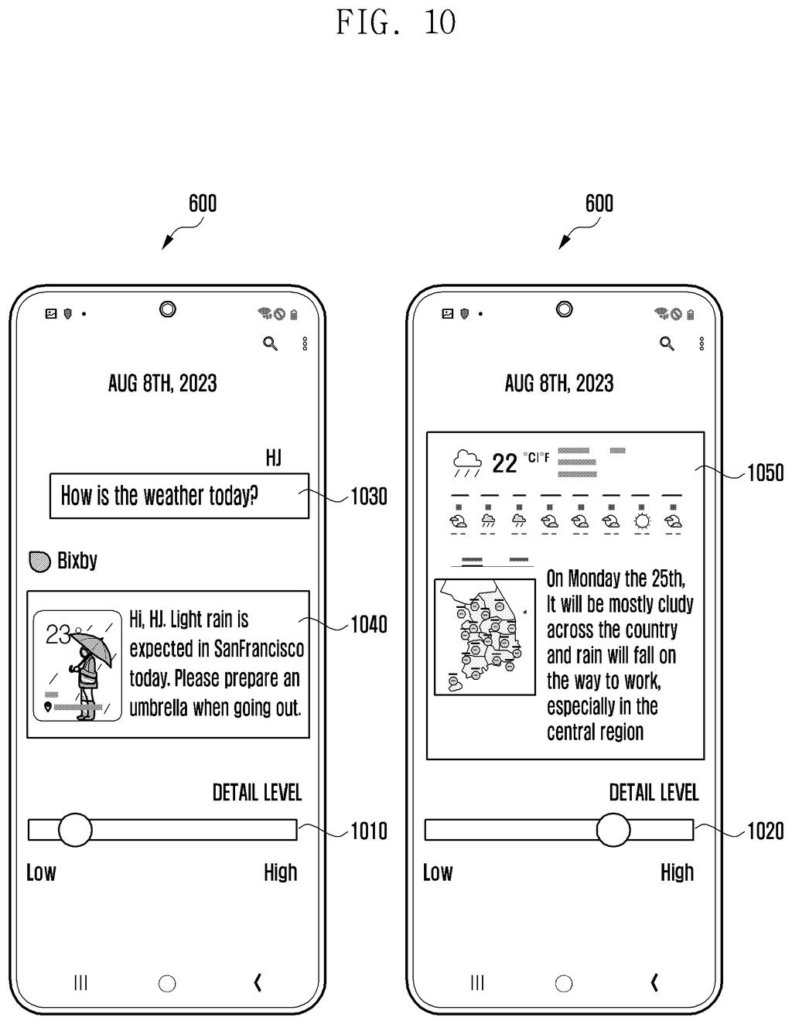
- A detail dial: a low, middle or high setting changes which template is used, from short ones to long ones with a role, a headcount and a style.
- An ask-back screen: if a blank is still empty, a guide screen asks you for the missing piece.
Templates can give the AI a role, set a format for a task, or include worked examples. The finished question can go to an AI on the phone, on a server, or from a third party.
Why your chatbot questions may get better answers
If this reached a phone, you could ask short questions and get answers shaped to you: the right language, the right length, details that fit your trip. You would also skip the tricks people use to coax better answers out of chatbots, like assigning the AI a role or pasting in examples.
For Samsung, the filing describes a layer that sits on top of any AI model and decides what to send. That layer would fold details from your calendar and messages into your questions, so where the finished question ends up matters. The filing lets the device show you the generated question and lets you set how often it steps in, which gives you some control.
Samsung's 31st filing we've tracked since June on assistants that remember you follows a search suggestion patent and a voice memory patent.
Source: US 2026/0359328 A1 at the USPTO (PDF). Full patent text and figures are in the official publication.
Get our take in your Top Stories
Liked this breakdown? Add Patentlyze as a preferred source on Google, and our plain-English take shows up more often in your Top Stories the next time Samsung patent news breaks.
Add Patentlyze on Google
One click.
There are more where this came from
We read every patent application Big Tech publishes and send you the ones worth knowing. Plain English, free, every week.
The drawings · 17 sheets
17 drawing sheets from US 2026/0359328 A1 · click any drawing to enlarge


Show the other 9 sheets


More from Samsung
All 1,629 Samsung patents →
More in AI / ML
All 2,637 AI / ML patents →
Microsoft
Microsoft Patents an AI System That Builds Web User Profiles From Scattered Browsing Data
Microsoft
Microsoft Patents a System That Reads Your Document and Suggests What's Missing
Google
Google Patents AI That Recommends Products Through Natural Conversational Dialogue
Google
No comments yet