
Qualcomm
Qualcomm · AI / ML · Filed Sep 23, 2025 · USPTO published Nov 12, 2026 · This week's release
Qualcomm Files Patent for Small AI Models That Fix Broken Code Edit by Edit
Qualcomm's patent application teaches an AI to debug code the way a person does: change one thing, run it, read the result, repeat. It does this with a text editor that reports back after every edit.
- Publication number
- US 2026/0359720 A1(US20260359720A1)
- Applicant
- QUALCOMM Incorporated
- Filed · Published
- Sep 23, 2025 · Nov 12, 2026
- Inventors
- Corrado RAINONE, Tim Boudewijn BAKKER, Michael DEFFERRARD, Roland MEMISEVIC
- Status when we published
- Waiting for an examiner
- Document
- 20 claims
- US classification
- 717/106
- Parent application
- Claims priority from a provisional application 63803623 (filed May 10, 2025)
What Qualcomm's edit-by-edit code fixer does
Ever had a program crash and fixed it by changing one line, running it, and checking again? That loop of tweak, test, and look is how most people debug.
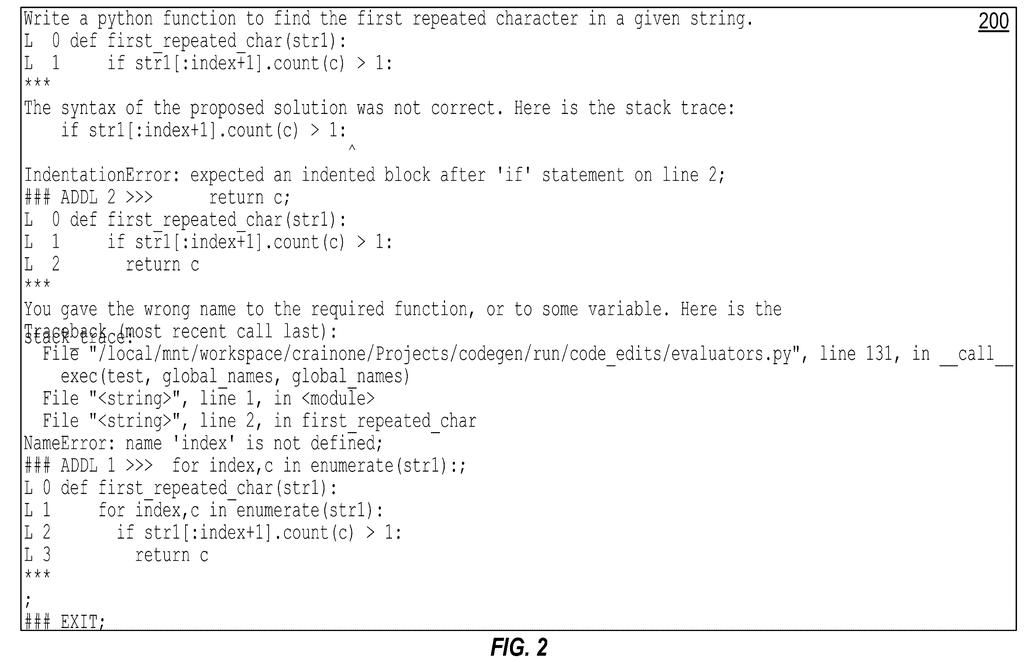
Qualcomm's patent application teaches an AI model to work the same way. Instead of writing a whole new program in one shot, the model gets the broken code along with the error message, then makes one small edit, such as adding, deleting, or replacing a single line or word. The code runs again, the model sees the new result, and it makes the next edit.
It keeps going until the code passes its checks, then signals that it is done. The filing says this step-by-step setup lets relatively small AI models get good at fixing code, and that the resulting models did better than ones trained to write out long reasoning in plain language.
… send a first editing command from the trained generative machine learning model to the text editor, based on processing the first feedback using the trained generative machine learning model, for the text editor to modify the program code with the first content …
Translation: The AI model sends instructions back to the text editor to fix the code after reviewing the error feedback.
How the model and text editor trade turns
The core claim covers a loop between a trained generative model (an AI that produces text, here computer code) and a text editor that can also run the code. The model sends code to the editor, and the editor runs it and returns a "state": the code itself plus feedback from running it, such as a note that it failed. The model reads that feedback and replies with an editing command.
The commands come from a small custom domain-specific language (a mini vocabulary built for one job). Examples in the filing:
- ADDL, DELL, REPL: add, delete, or replace a whole line
- ADDW, DELW, REPW: do the same for a single word
- EXIT: stop, used once the feedback comes back empty because every test passed
Training has three stages. First, the model learns basic one-shot code repair. Next, it practices on synthetic demonstrations: correct code is deliberately broken between 1 and 5 times, and the edits that undo the damage are recorded. Finally, reinforcement learning (trial and error with rewards) scores the model on whether unit tests (small automatic checks that code does its job) pass.
The filing calls these edit sequences "chains of edits." It says the same idea could apply to math, logic, and sequences of actions, though it focuses on repairing Python code.
… sending the code with the first content from the model to a text editor for execution of the code with the first content …
Translation: The system runs the AI generated code inside a standard text editor to see if it works properly.
Why small code-fixing AI matters for Qualcomm
If you use AI to write code, you know the first draft often breaks. This patent application describes a way for the AI to check its own work by running tests and fixing problems in small steps, which is how a careful human debugs. Fewer broken drafts would mean less time you spend as the one doing the repair.
The strategy angle is size. The filing focuses on relatively small models, a modest size for modern AI (up to about 8 billion adjustable settings, called parameters), and says they did better than models trained to write out long reasoning. Smaller models cost less to run, and the filing lists a mobile device among its claims. It is a patent application, not a product, and the tests it describes use basic programming puzzles.
Qualcomm's sixth filing in the Language AI work we've tracked since June builds on earlier applications, including stopping AI drafts going wrong and reading images without the cloud.
Source: US 2026/0359720 A1 at the USPTO (PDF). Full patent text and figures are in the official publication.
Get our take in your Top Stories
Liked this breakdown? Add Patentlyze as a preferred source on Google, and our plain-English take shows up more often in your Top Stories the next time Qualcomm patent news breaks.
Add Patentlyze on Google
One click.
There are more where this came from
We read every patent application Big Tech publishes and send you the ones worth knowing. Plain English, free, every week.
The drawings · 9 sheets
9 drawing sheets from US 2026/0359720 A1 · click any drawing to enlarge


Show the other 1 sheets

More from Qualcomm
All 624 Qualcomm patents →
More in AI / ML
All 2,637 AI / ML patents →
IBM
IBM Files Patent for Letting Anyone Question a Database in Plain English
Google
A New Google Patent Teaches Software to Spot Glare on Scanned Documents
Google
Google Files Patent for Search That Learns From Your Circled Photo Corrections
Microsoft
No comments yet