
Google
Google · AI / ML · Filed May 12, 2025 · USPTO published Nov 12, 2026 · This week's release
Google Patents Video Calls That Translate Everyone Into Their Own Language
On a call with colleagues in several countries, Google's patent has each person hear the meeting in the language they picked, all at the same time. Nobody has to touch a setting mid-call.
- Publication number
- US 2026/0359582 A1(US20260359582A1)
- Applicant
- Google LLC
- Filed · Published
- May 12, 2025 · Nov 12, 2026
- Inventors
- Maria Josefin Karlsson, Huib Victor Kleinhout, Carolien Postma, Henrik Porseland, Esbjörn Dominique
- Status when we published
- Waiting for an examiner
- Document
- 20 claims
- US classification
- 704/2
- Examiner
- SANGHERA, SEAN AHRENDEEP-SI (Art Unit 2653)
What Google's per-listener translation does
Every time a video call includes someone who speaks a different language, the same slowdown happens. The conversation stalls while people wait for an interpreter, or they get a translation in the wrong language.
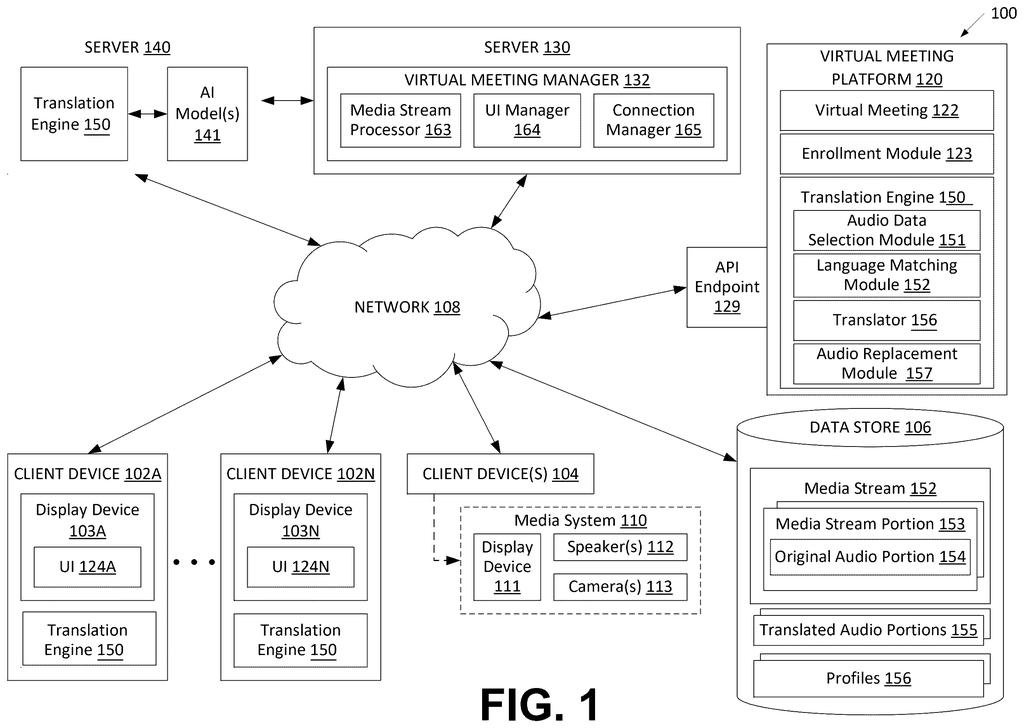
Google's filing describes a meeting platform that handles this for you. You tell it once which languages you speak and which you understand. When someone talks, the platform works out what language they're using, checks everyone's settings, and gives each listener either the original voice or a spoken translation in their preferred language.
If you already understand English, you hear the speaker as is. If one coworker needs Russian and another needs French, both translations are made at the same time. Only people who have agreed to translation get it.
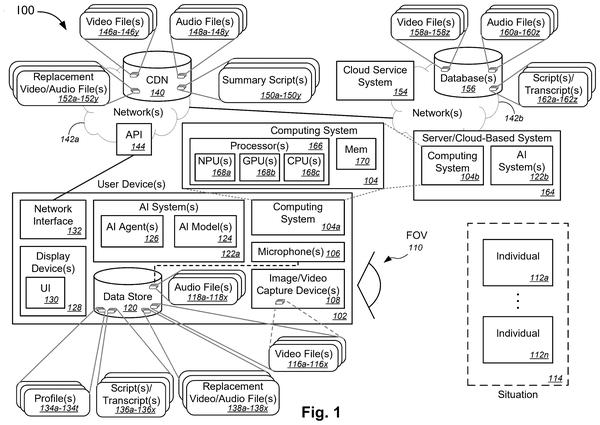
Systems and methods for providing simultaneous translation with dynamic language adaptation during a virtual meeting.
Translation: This technology translates video call audio into different languages in real time as the conversation happens.
How the platform decides who hears what
The claims describe a method run by the meeting service's servers. When someone speaks, their audio stream reaches the platform, and the system works out which language is being spoken. An AI model (software trained on lots of examples) does that job. It can also spot the exact point where a speaker switches languages, so the translated clip ends there.
Then the system checks the profile of each listener:
- Language settings: the languages you speak and the languages you understand when listening, kept separately.
- Consent: only people who opted in are translated. Users under an age limit, or in places that ban live speech translation, can be left out.
- Translation condition: met when the speaker's language matches none of your listening languages.
For everyone who meets that condition, an AI model takes the speech plus the list of target languages and produces spoken translations for all of them at once. The description says some versions go straight from speech to speech, with no written transcript in between. The translation is added to your stream. It can replace the original voice or play over it while the original is turned down or muted.
Routing updates live. If a Russian-listening participant adds English to their settings mid-call, the Russian translation stops for them and they get the original voice.
What this means for multilingual video calls
If you work with people in other countries, this would let a meeting run in several languages without a human interpreter and without each person fiddling with audio settings. You say what you speak and understand, and the platform sorts out the rest as people join, leave or change their minds.
The filing also pitches efficiency. The system only creates the translations someone actually needs, so a call with one French listener does not produce a pile of unused Spanish audio. That matters most in big meetings, where the description says over a hundred devices can connect. The consent, age and location checks show the company expects speech translation to raise privacy and legal questions. A patent application is not a product, though, and the filing names no launch.
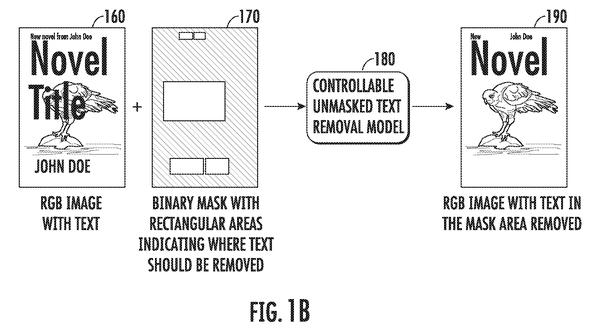
Google's 121st filing in the Language AI work we've tracked since May follows earlier applications like one translating on-screen text and an AI sorter for video filters.
Source: US 2026/0359582 A1 at the USPTO (PDF). Full patent text and figures are in the official publication.
Get our take in your Top Stories
Liked this breakdown? Add Patentlyze as a preferred source on Google, and our plain-English take shows up more often in your Top Stories the next time Google patent news breaks.
Add Patentlyze on Google
One click.
There are more where this came from
We read every patent application Big Tech publishes and send you the ones worth knowing. Plain English, free, every week.
The drawings · 7 sheets
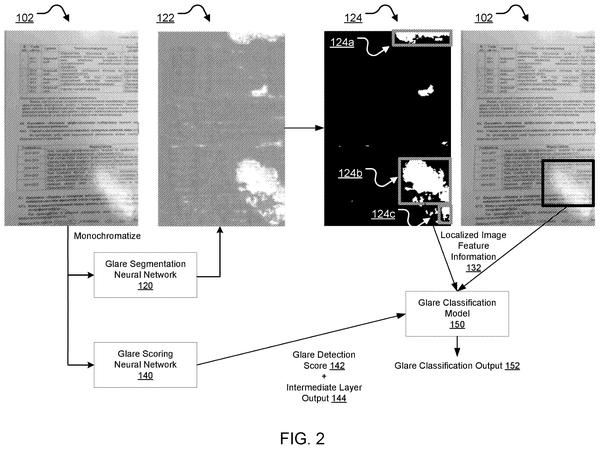
7 drawing sheets from US 2026/0359582 A1 · click any drawing to enlarge


More from Google
All 1,079 Google patents →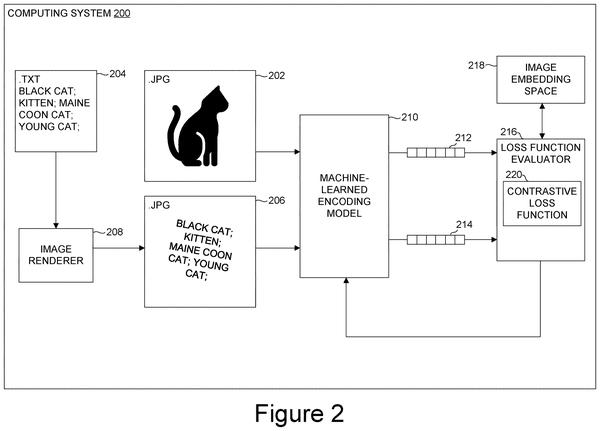
More in AI / ML
All 2,637 AI / ML patents →
Adobe
Adobe Patents a Proofreader That Checks an AI's Database Searches Before Running Them
IBM
IBM Files Patent for Letting Anyone Question a Database in Plain English
Microsoft
Microsoft Files Patent for AI Rewrites That Keep Your Document's Layout Intact
Microsoft
No comments yet