
Google
Google · AI / ML · Filed May 6, 2025 · USPTO published Nov 12, 2026 · This week's release
Google Patents an AI Librarian for the Endless Pile of Video Filters
When millions of people can build their own video filters, finding the one you want turns into a guessing game. Google's patent has an AI watch each effect in action and write down what it does, so your search words actually match.
- Publication number
- US 2026/0360125 A1(US20260360125A1)
- Applicant
- Google LLC
- Filed · Published
- May 6, 2025 · Nov 12, 2026
- Inventors
- Sanuj Sharma, Amir Hussain Memon, Scott Aaron Goldwater, Muhammad Essa Saeed, Rene Nahele Patnode
- Status when we published
- Waiting for an examiner
- Document
- 42 claims
- US classification
- 382/159
- Examiner
- CHANG, DANIEL CHEOLJIN (Art Unit 2669)
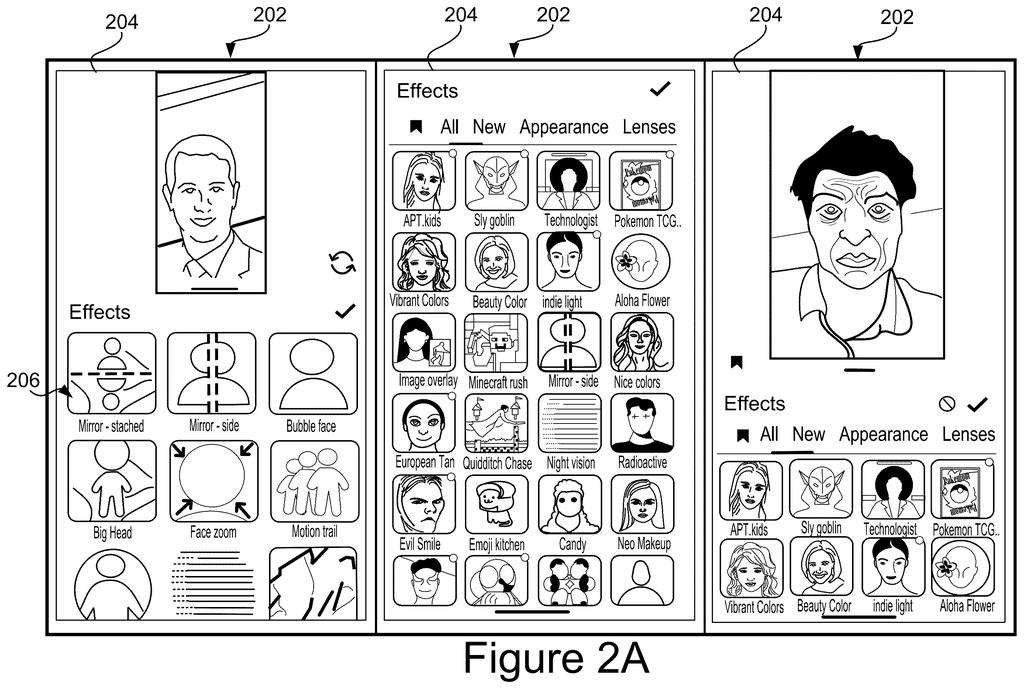
What Google's AI effect-labeling patent does
A video app has a filter that puts a logo on your face. Its creator named it "Cool Overlay 7" and added two tags. You search for "stick my team's logo on the video" and never see it.
This Google patent application goes after that gap. Apps with user-made effects can hold thousands or even millions of them, and the creator's own tags are often thin or just wrong.
Google's fix is to let AI write the descriptions instead. It looks at the effect, at videos that use it, and at the title and notes, then produces a long list of labels and synonyms. When you search, your words are matched against those AI-written labels, so you find what you meant, not just what the creator happened to type.
an effect repository storing effect identification data identifying a plurality of media effects and corresponding label data for the plurality of media effects, wherein the label data includes a respective set of labels descriptive of each of the plurality of media effects …
Translation: A digital storage room filled with organized labels for every video effect available.
How the AI describes an effect by comparing clips
The patent describes a system that builds a searchable catalog of visual effects (the filters and transformations you apply to photos and videos) using machine-generated labels instead of relying only on what creators typed in.
When a new effect is added, the system collects its "effect data." That can include the title, description, the creator's own labels, images, and videos made with the effect. One or more machine learning models then write a set of labels describing what the effect does. A large language model (an AI that writes and expands text) can then take those first labels and grow the list with synonyms and related terms.
The filing describes a few ways to get the labels:
- Image and video labeling models look at the effect's assets and at popular videos that use it, then pick out what they have in common.
- Before-and-after comparison: an AI is shown an original clip and the same clip with the effect applied, and told to describe the differences. The description says this avoids mistaking things like daylight versus darkness for part of the effect.
- Extra context such as the creator's location or viewing history can be fed in to sharpen the labels.
Labels are stored in an index, a lookup table that points each label to matching effects. Searches can also match by meaning using "embeddings" (numbers that capture what a phrase means). The filing says part of the index, if small enough (it gives under 100 MB as an example), could live on your phone for faster searching.
When an effects platform receives a query with keywords, where the query instructs the platform to provide a set of related effects based on the keywords, the platform can compare the keywords with the labels stored in the effects label database, and return the identity of the effects whose labels are a closest match to the keywords.
Translation: When you search for a specific look, the system matches your words against its catalog to find the right filter.
Why finding the right filter is a real problem
If you use any app that lets you add filters, lenses or effects, the practical payoff is simple: search that finds what you meant. The filing says better matches mean fewer repeat searches, faster picks, and less data sent back and forth to the app's servers.
The description also hints at extras. Labels could rank effects based on ones you have saved or liked, or suggest effects to improve a video you are making. Searches could also be adjusted using your interests, such as a favorite sports team, if you have allowed that. The filing names models like Gemini, but it does not tie the idea to any specific Google product, so treat this as a description of a system, not a launch.
Google's 119th filing in Language AI we've tracked since May follows a social media campaign builder and a photo-correction search patent.
Source: US 2026/0360125 A1 at the USPTO (PDF). Full patent text and figures are in the official publication.
Get our take in your Top Stories
Liked this breakdown? Add Patentlyze as a preferred source on Google, and our plain-English take shows up more often in your Top Stories the next time Google patent news breaks.
Add Patentlyze on Google
One click.
There are more where this came from
We read every patent application Big Tech publishes and send you the ones worth knowing. Plain English, free, every week.
The drawings · 9 sheets
9 drawing sheets from US 2026/0360125 A1 · click any drawing to enlarge


Show the other 1 sheets

More from Google
All 1,079 Google patents →
More in AI / ML
All 2,637 AI / ML patents →
Microsoft
Microsoft Files Patent for AI Search Suggestions Written by Several Models at Once
Disney
Disney Patents an AI Search System That Breaks Complex Questions Into Pieces
Salesforce
Salesforce Patents a Way to Automatically Grade and Kill Bad AI Search Results
Microsoft
No comments yet