
Google
Google · AI / ML · Filed May 6, 2025 · USPTO published Nov 12, 2026 · This week's release
A New Google Patent Translates the Text on Your Screen While You Scroll
Most translation tools make you wait, or handle one line at a time. This Google filing describes painting over the original words on your screen, drawing the translation in their place, and keeping it going as you scroll.
- Publication number
- US 2026/0359953 A1(US20260359953A1)
- Applicant
- Google LLC
- Filed · Published
- May 6, 2025 · Nov 12, 2026
- Inventors
- Clement Dickinson Wright, Sarah Fay Smith, Daniel Paik, Darren Kuo, Dylan Brandon Kristolaitis, Kyle Brien Firth
- Status when we published
- Examiner raised objections; the company can respond
- Document
- 20 claims
- US classification
- 345/619
- Examiner
- GHEBRETINSAE, TEMESGHEN (Art Unit 2626)
What Google's on-screen translation overlay does
Ever tried to read a foreign-language website and ended up translating it one line at a time, or waiting while a whole page crawled through a translator? Google's filing describes a way to translate whatever is on your screen as you look at it.
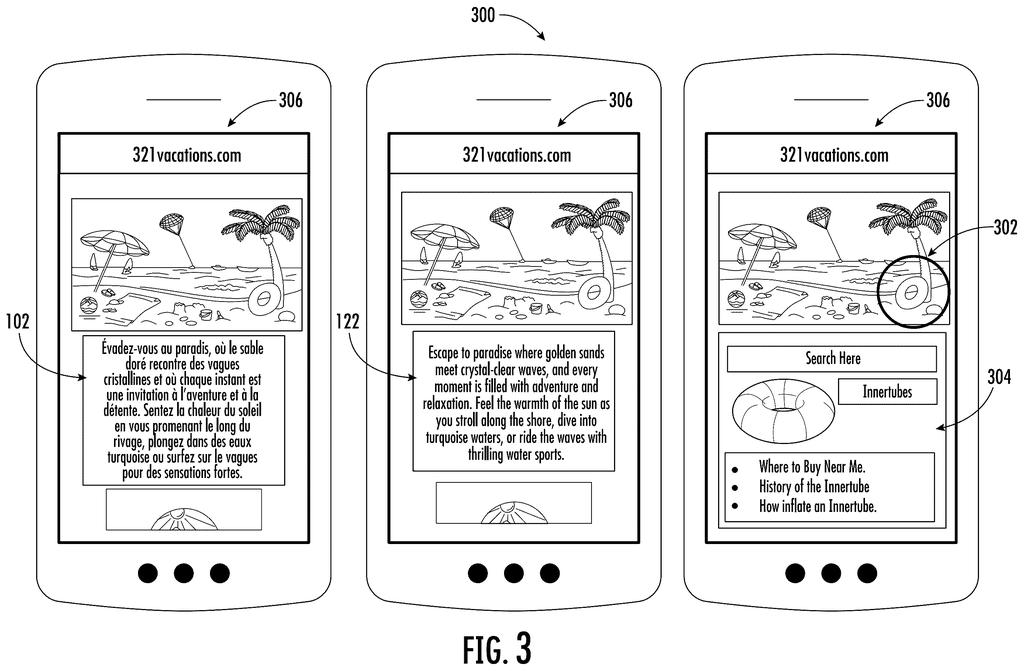
The system treats your screen like a stream of snapshots, taken every 5 to 100 milliseconds. It finds the text, translates it, paints over the original words so the background looks clean, and draws the translated words in the same spot with a matching font size and color.
The clever part is that it doesn't redo everything each time. When you scroll, the words still look the same, just higher up the page, so it reuses the translation it already has. When you move to a new page or app, it waits until things settle before doing fresh work.
… processing, using a first machine-learning model, the display data to categorize portions of each frame of the temporally sequential set of frames as static regions or dynamic regions; …
Translation: An artificial intelligence model separates the moving parts of the screen from the still background.
How Google tells scrolling text from new text
The system captures the screen as a stream of frames (snapshots taken every 5 to 100 milliseconds, per the description). Each frame is cut into a grid of small cells, and a machine-learning model sorts them into static regions (content that stays the same) and dynamic regions (video, animations, changing text).
Text that moves only because you scrolled, but still says the same thing, counts as static. The model tracks that shift using optical flow (a way of estimating how pixels moved between two frames), so an earlier translation can be reused at the new position.
For text it hasn't handled yet, the system:
- Reads it with OCR (optical character recognition, software that turns pictures of letters into real text);
- Sends it to a translation model, which can run on the device or on a server;
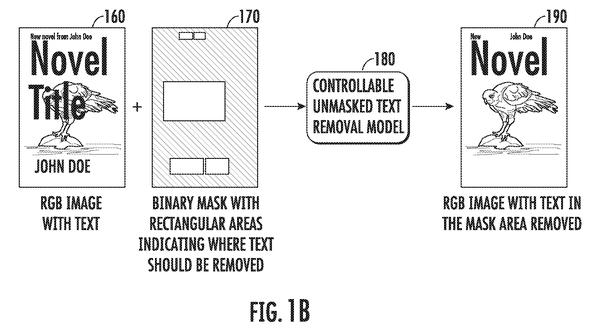
- inpaints the original words, meaning a second model fills in the background where they were;
- Draws the translation there, copying the original font, size and alignment, and adjusting for right-to-left languages like Arabic.
Earlier translations and background fills are stored and reused, and a rolling pixel comparison decides when fresh work is needed. A separate independent claim covers pausing during a navigation event (scrolling or switching apps) and translating again once the frames stop changing.
inpainting portions of the display content; and rendering the second set of textual data in the portions that were inpainted.
Translation: The system erases the original foreign text and paints the newly translated words directly into the empty space.
Why live screen translation could reach any app
For you, the pitch is that a foreign-language app, website or menu could show up in your own language the moment you land on it, with no copying text into a separate translator. The filing describes an overlay that works across different applications, so it isn't tied to one browser.
Speed is the whole game here. Reusing earlier work and holding off while you scroll saves computing effort, which matters on a phone. The examiner's first review rejected the claims as filed, a routine step that usually leads to amendments, so the final scope could change.
Google's 120th filing in Language AI work we've tracked since May adds to a thread that includes an AI video filter sorter and a tool for full social campaigns.
Source: US 2026/0359953 A1 at the USPTO (PDF). Full patent text and figures are in the official publication.
Get our take in your Top Stories
Liked this breakdown? Add Patentlyze as a preferred source on Google, and our plain-English take shows up more often in your Top Stories the next time Google patent news breaks.
Add Patentlyze on Google
One click.
There are more where this came from
We read every patent application Big Tech publishes and send you the ones worth knowing. Plain English, free, every week.
The drawings · 20 sheets
20 drawing sheets from US 2026/0359953 A1 · click any drawing to enlarge


Show the other 12 sheets


More from Google
All 1,079 Google patents →
More in AI / ML
All 2,637 AI / ML patents →
Samsung
Samsung Patents a System That Teaches AI to Describe Images in Plain Text

Microsoft
Microsoft Patents a Domain-Aware Scoring System for AI-Generated Text Edits

Adobe
Adobe Patents an AI That Writes Text to Fit Any Box Exactly
Samsung
No comments yet