
Amazon Patents a System for Locking AI Model Weights Behind Cryptographic Keys
Amazon is patenting a way to let customers use a highly optimized AI model without ever being able to see — or steal — the secret sauce inside it. Think of it as a locked black box you can run, but never open.
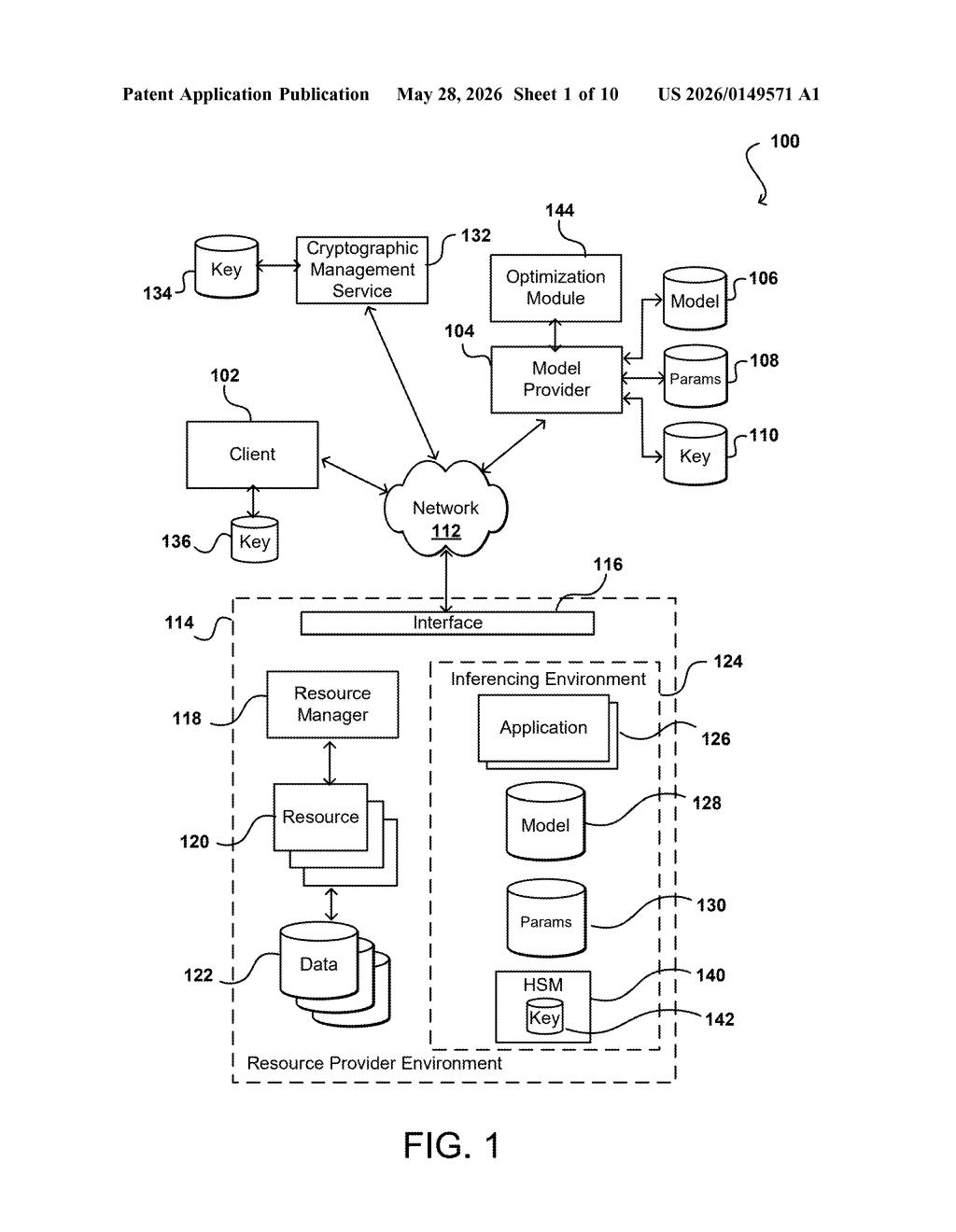
What Amazon's encrypted AI inferencing actually does
Imagine you rent a car with a souped-up engine, but the hood is welded shut. You get the performance boost, but the automaker never has to worry you'll reverse-engineer the engine and replicate it. That's roughly what Amazon is building here — but for AI models.
When you request an AI model for a specific task, Amazon's system can ship you an optimized set of model parameters (the weights that make the model good at that task) in encrypted form. You get a decryption key, but the parameters only ever unlock inside a trusted, Amazon-controlled environment. Your code can use them; you can never actually read them.
This lets Amazon (or third-party AI vendors on AWS) sell access to proprietary, fine-tuned models without those models walking out the door. You get a better-performing model for your specific use case; they keep their intellectual property locked up tight.
How Amazon seals and decrypts optimized model weights
The system works in two distinct phases: provisioning and inferencing.
During provisioning, a user requests an AI model optimized for a particular task — say, medical document summarization or code review. The system verifies two things:
- The model will run in an authorized inferencing environment (a trusted execution context Amazon controls or has certified)
- The user meets defined usage criteria (billing, compliance, access tier, etc.)
Once verified, the system deploys both a default parameter set and an encrypted optimized parameter set to that environment. The user also receives a decryption key — but here's the twist: when that key decrypts the optimized weights inside the authorized environment, the decrypted parameters are stored in a way that's inaccessible to the user. The model runs with them; the user never sees them in plaintext.
During inferencing, every time the user submits a task, the system re-verifies that the request is coming from the authorized environment and that the user's key instance is still valid. Only then does it run the task using the optimized (but hidden) weights. The patent also describes monitoring usage over time and the ability to silently swap in improved models or parameters without the user having to ask — a kind of managed, always-current model subscription.
What this means for AI model licensing and IP protection
For AWS and its AI marketplace partners, this solves a real problem: how do you sell access to a carefully tuned model without giving away the tuning? Right now, if you share model weights, you've essentially shared everything. This system creates a licensing layer where the weights are the product, but they're never truly in the customer's hands — closer to how software DRM works than how model files typically work today.
For you as a developer or enterprise customer, the upside is getting access to better-performing, task-specific models without needing to do your own fine-tuning. The tradeoff is a harder dependency on Amazon's infrastructure — you can't take those optimized weights and run them anywhere else.
This is a genuinely important infrastructure patent for anyone thinking about the future of AI model commercialization. The problem it solves — how do you monetize a fine-tuned model without handing it over? — is one the entire industry is wrestling with right now, and Amazon is staking out a clear position: trusted execution environments plus cryptographic access control. Whether that ends up being the dominant model or a niche enterprise play depends on how much the market trusts Amazon's authorized environments to be both secure and neutral.
Get our take in your Top Stories
Liked this breakdown? Add Patentlyze as a preferred source on Google, and our plain-English take shows up more often in your Top Stories the next time Amazon patent news breaks.
There are more where this came from
We read every patent application Big Tech publishes and send you the ones worth knowing. Plain English, free, every week.
Want this weekly breakdown for a company we don't cover? Patentlyze Pro →