
Sony Patents a Mid-Frame Cancellation System for Cloud Gaming Latency
Cloud gaming's dirtiest secret is that servers often finish rendering a frame your input already made obsolete. Sony's new patent tries to fix that by letting the server throw away a half-finished frame the moment new input arrives.
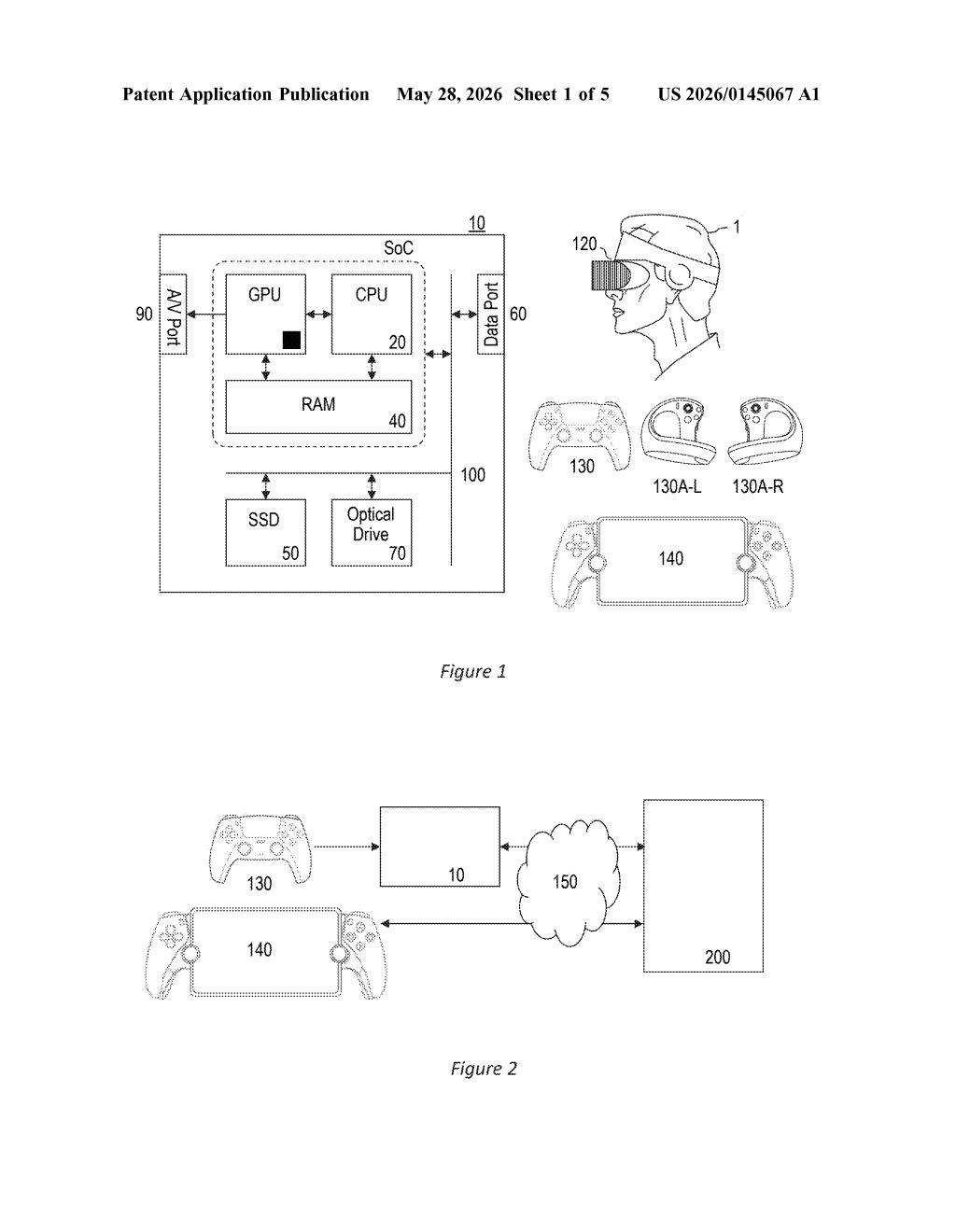
What Sony's mid-frame cancellation actually does
Imagine you're playing a cloud-streamed game and you tap a button to dodge an enemy attack. The server is already halfway through drawing the frame before your dodge — so it finishes that frame, sends it to your screen, and only then starts processing your input. You see a brief moment of your character standing still before they move. That lag isn't just your internet connection; it's the server wasting time completing work that's already stale.
Sony's patent describes a system that monitors how far along the server is in generating a frame. When new player input arrives, the server checks a set of criteria — essentially asking, 'is it worth finishing this frame?' If the answer is no, it stops rendering mid-frame, updates the game state with your input, and immediately starts generating a fresh frame that actually reflects what you did.
The scrapped partial frame is never sent to your device. You only see the new, input-accurate frame. The goal is tighter, more responsive cloud gameplay — the server stops doing work that would mislead you the moment it detects your input has changed the picture.
How the server decides to stop and restart a frame
The patent describes a server-side frame generation pipeline with an interrupt mechanism. Normally, a cloud gaming server generates frames in sequence and ships them to the client as fast as possible. The problem is that network round-trip time means player input can arrive mid-render, making the in-progress frame wrong before it's even finished.
This system adds an evaluation step: while a frame is being generated, the server continuously checks its progress against a first criterion — a configurable threshold that could represent how far along the render is, how computationally expensive it is to finish, or how significantly the incoming input would change the output. The patent is deliberately broad about what this criterion measures, which is typical for a foundational filing.
When input arrives and the evaluation says 'this frame is no longer worth completing,' the server:
- Stops generation of the current (first) frame
- Updates the application state with the new input data
- Starts generating a fresh (second) frame from that updated state
- Outputs only the second frame — the abandoned first frame is discarded
The key insight is that not all mid-render interruptions make sense. If a frame is 95% rendered, abandoning it wastes more time than it saves. The criterion lets the server make a cost-benefit decision dynamically, which is more nuanced than a simple 'always cancel' or 'never cancel' rule.
What this means for PlayStation's cloud gaming future
Cloud gaming latency is a multi-layered problem, and most solutions focus on the network side — better compression, faster CDN edges, predictive streaming. Sony's approach here targets a different layer: wasted compute on the server itself. Reducing the time between 'player acts' and 'player sees the result' is the core UX problem that separates cloud gaming from local play, and this filing suggests Sony is working on it at the rendering-pipeline level.
For PlayStation's cloud gaming ambitions — including PlayStation Plus streaming and any future thin-client hardware — responsiveness is a make-or-break quality. If this system ships, even small reductions in input-to-frame latency would be noticeable, especially in fast-paced action games where a frame or two of lag is the difference between hitting and missing.
This is a genuinely interesting systems patent because it addresses a real and underappreciated source of cloud gaming lag — not the network, but the server doing futile work. The 'first criterion' design is clever: it avoids the obvious failure mode of always canceling frames (which would create chaos) by making the interrupt conditional. Whether Sony can actually implement this efficiently at scale, and whether the latency gains are perceptible to players, is the real question — but the concept is sound and the problem is real.
There are more where this came from
We read every patent application Big Tech publishes and send you the ones worth knowing. Plain English, free, every week.
Want this weekly breakdown for a company we don't cover? Patentlyze Pro →