
Apple Patents a Four-Edge Curved Display With Per-Pixel Side Mirrors
Apple is patenting a display that curves on all four sides — not just the left and right — and solves a tricky physics problem with tiny mirrors built into each bent pixel.
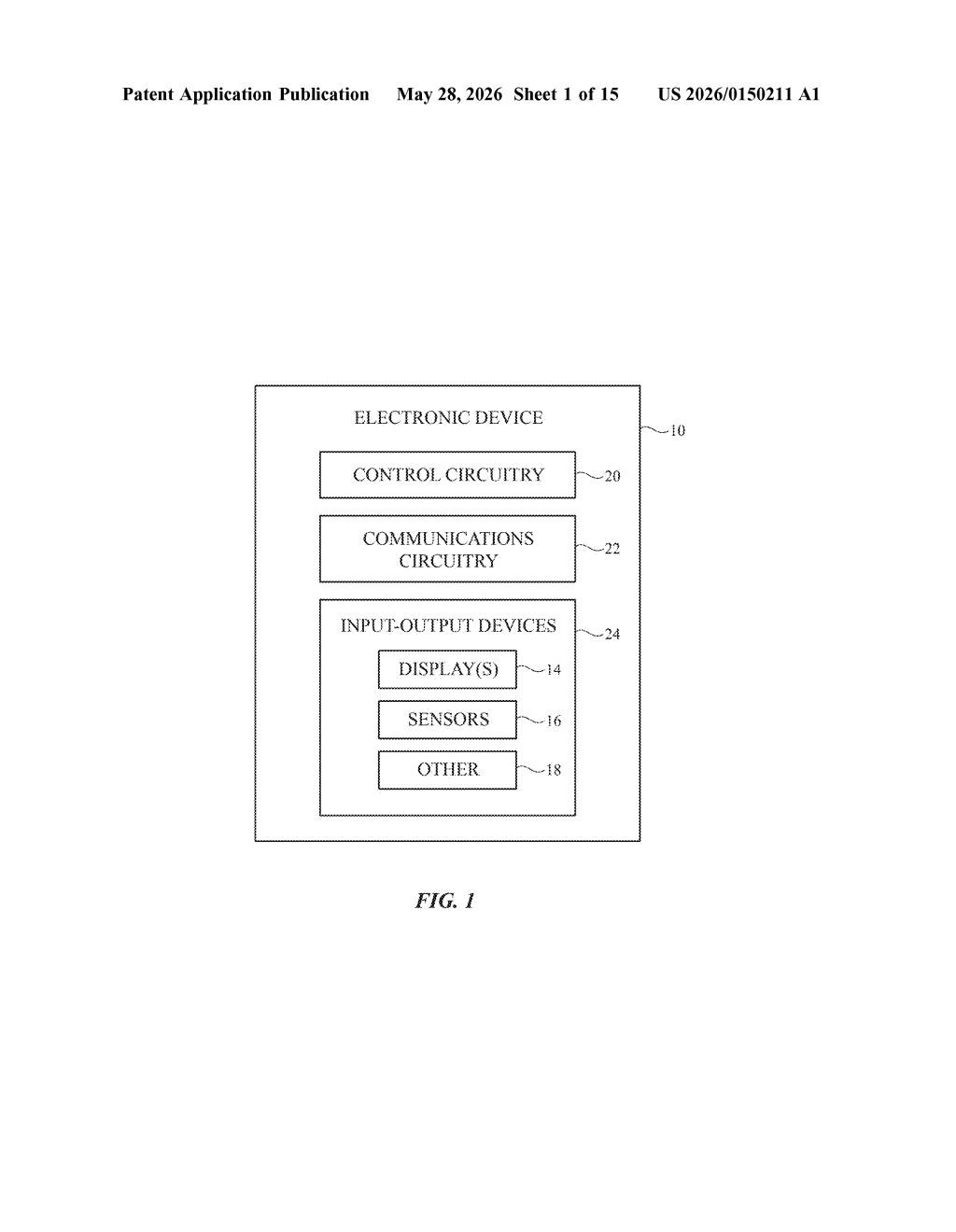
What Apple's curved-edge pixel mirror display actually does
Imagine holding a phone whose screen wraps gently around every edge, corners included. That's the vision in this Apple patent. The display panel bends away from a flat center on all four sides, giving the device a seamless, almost borderless look from any angle.
The catch with curved displays is that bent pixels look dimmer when you're not looking straight at them. Apple's answer is a small reflective mirror built into the side of each pixel along the curved edges — angled to push more light toward the viewer, compensating for the geometry of the bend.
On top of that, the cover glass that sits over the display isn't uniform: it's thinner toward the edges than in the center, which helps the whole assembly curve smoothly without cracking or distorting. The corners — where the curvature gets especially complex — are handled with what engineers call compound curvature, meaning they curve in more than one direction simultaneously.
How the side mirrors fix brightness on bent display edges
The patent describes a display panel with a flat central zone surrounded by four bent edge sections — all four sides curve, not just two as in current Samsung Galaxy or older iPhone Edge designs. The corners, where adjacent curved edges meet, have compound curvature (curving in two axes at once), which is geometrically the hardest part to manufacture cleanly.
The key optical innovation is the side mirror on edge pixels. When a pixel is tilted away from you because it's on a bent portion of the screen, its light naturally goes off at an angle rather than toward your eyes. Each affected pixel gets an asymmetric reflective structure — a mirror that wraps around part of the pixel's perimeter (not all of it) — redirecting that off-axis light back toward the viewer. The asymmetry matters: a full ring mirror would block light in the wrong direction too.
The cover glass layer has variable thickness: thicker in the center for rigidity and scratch resistance, thinner near the edges to accommodate the bend without adding bulk or stress. The radius of curvature of the panel itself also varies along the perimeter — it's not a single consistent arc — which gives Apple's designers flexibility in how aggressively the edges curve.
- Four-sided curved panel with compound-curvature corners
- Per-pixel asymmetric side mirrors on all bent regions
- Variable-thickness cover glass tuned to the bend geometry
- Varying radius of curvature around the perimeter
What this means for future iPhone and iPad display design
A display that wraps on all four edges would be a significant visual departure from the flat-front iPhones Apple has shipped since the iPhone 12. The per-pixel mirror approach suggests Apple is thinking seriously about the brightness uniformity problem — not just masking it with software gamma curves — which would mean a curved display that actually looks as good as a flat one at typical viewing angles.
For iPad, a four-edge wrap could allow dramatically thinner bezels without the optical compromise that has kept Apple flat-fronted. The compound-curvature corner solution is also relevant to any wearable or device where the screen needs to follow a non-rectangular shape — think watch faces or future AR surfaces.
This isn't a speculative moonshot — the engineering details here (variable-radius bends, asymmetric per-pixel optics, graded cover glass thickness) are the kind of precision manufacturing specs you write when you're close to production. The four-edge curve with compound corners is a real step beyond what's shipping today, and the pixel-level mirror fix is a clever solution to a problem that has made curved displays look worse than flat ones for years. Worth tracking closely.
Get our take in your Top Stories
Liked this breakdown? Add Patentlyze as a preferred source on Google, and our plain-English take shows up more often in your Top Stories the next time Apple patent news breaks.
There are more where this came from
We read every patent application Big Tech publishes and send you the ones worth knowing. Plain English, free, every week.
Want this weekly breakdown for a company we don't cover? Patentlyze Pro →