
Qualcomm Patents a Self-Correcting Fix for Media Data Burst Size Mismatches
When a device says it's sending a 10MB chunk of video but actually sends 8MB, things break quietly. Qualcomm's new patent builds a feedback loop to catch and correct that mismatch before it causes problems.
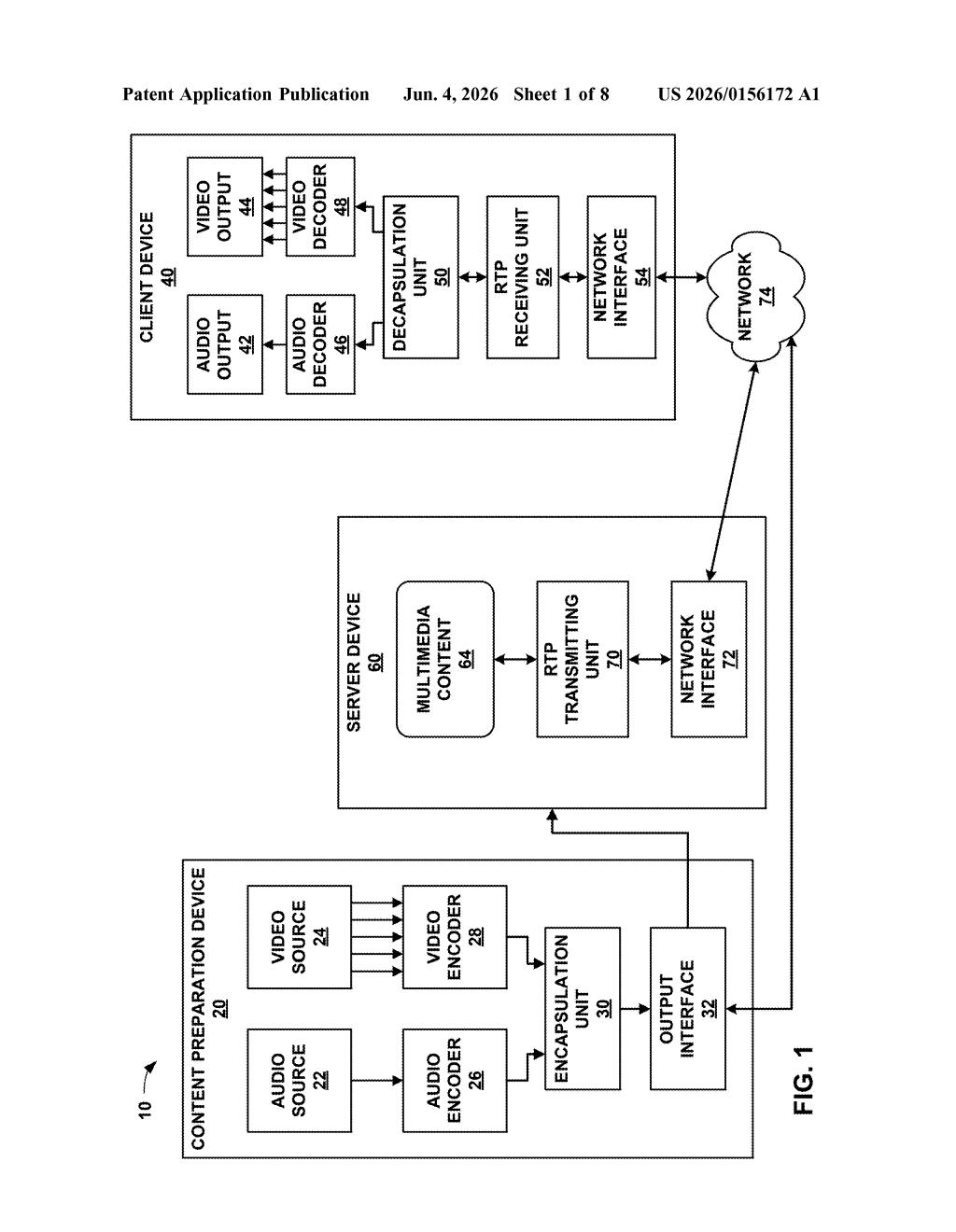
What Qualcomm's burst-size correction actually does
Imagine ordering a delivery truck that claims it's carrying 50 boxes, but only shows up with 40. The warehouse on the receiving end has already cleared space for 50, and now the math is off for everything that follows. Something similar happens in media streaming — a sender announces how big a data burst will be, but the actual bytes that arrive don't always match.
Qualcomm's patent describes two ways to fix this. The receiver can measure what actually arrived versus what was promised, calculate the difference as a ratio, and send that correction back to the sender. The sender can then adjust future announcements. Alternatively, the sender can proactively pad its declared burst size larger than the real size — essentially over-promising on purpose to absorb the drift before it causes downstream scheduling problems.
This kind of correction matters most in real-time media pipelines — think live video, video calls, or streaming over cellular networks — where precise burst sizing affects how buffers are managed and whether playback stays smooth.
How the ratio feedback loop closes the size gap
The patent covers two complementary approaches to the same problem: declared burst size (what a sender announces) diverging from actual burst size (what packets actually add up to).
- Feedback / pre-compensation: The receiving device tallies the cumulative byte count of all packets in a data burst, compares it against the signaled size the sender declared, and computes a ratio between the two. That ratio gets sent back to the source device, which can use it to correct future burst-size declarations.
- Over-provisioning: The sending device calculates its intended burst size and then deliberately signals a larger value to the destination — building in headroom so that when real-world packet overhead or encoding variance causes the actual size to swell, it still fits within the declared envelope.
The two approaches are essentially receiver-side correction versus sender-side preemption. Both aim to keep the burst size metadata accurate, which downstream network elements rely on for scheduling, buffering, and quality-of-service decisions.
The claims are framed around a processing system implemented in circuitry, which keeps the scope broad enough to cover both hardware and firmware implementations across Qualcomm's chipset ecosystem.
What this means for streaming and media delivery
Burst size accuracy is foundational plumbing for any media delivery system that relies on network scheduling and QoS (quality of service — rules that tell routers how to prioritize traffic). When declared sizes are consistently wrong, buffers over- or under-fill, jitter increases, and the whole adaptive bitrate logic that keeps your video from pixelating starts making bad decisions.
For Qualcomm, which supplies modem and application processor silicon across a huge range of devices, this kind of low-level correction can be baked into chipsets and be invisible to app developers — a reliability improvement that rides silently under every streaming session. It's particularly relevant for 5G media delivery, where burst-based scheduling is a core part of how the radio link manages throughput.
This is unglamorous but real infrastructure work. Burst size drift is a known, annoying problem in media-over-IP pipelines, and patenting a ratio-based feedback correction plus an over-provisioning fallback is a sensible dual-mode solution. It won't make headlines at a product launch, but it's exactly the kind of thing that ends up quietly improving video call quality on a Snapdragon device two years from now.
There are more where this came from
We read every patent application Big Tech publishes and send you the ones worth knowing. Plain English, free, every week.
Want this weekly breakdown for a company we don't cover? Patentlyze Pro →