Latest AI patents, Page 199
How the biggest tech companies are building AI: language models, assistants and agents, vision, voice, and the systems that train them. The artificial intelligence and machine learning patent applications we have broken down from the companies we track, newest first.
- in the Nov 12 release
- 96
- in November so far
- 188
- filings tracked
- 2,637
- sub-topics
- 10
Recent filings
Newest first · 2,637 total-
Adobe · Published May 28
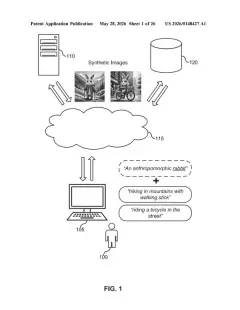
Adobe Patents a System That Generates Content When Real-World Events Happen
Adobe is patenting a system where a server watches the internet for real-world events, then automatically kicks your device's on-device AI into gear to generate relevant content — no manual prompt required.
-
Adobe · Published May 28
Adobe Patents a Pipeline That Builds 3D Models From One Photo
Take one photo of an object, and Adobe's patented system reconstructs a full 3D model of it — no turntable, no depth camera, no multi-angle shoot required.
-
Adobe · Published May 28
Adobe Patents a System for Generating Consistent Characters Across AI Scenes
One of the most frustrating problems with AI image generators is that your character looks like a completely different person from one prompt to the next. Adobe is filing a patent that tries to fix that at the model level.
-
Qualcomm · Published May 28
Qualcomm Patents a Neural Network That Fuses GPS with Road Maps
GPS is notoriously unreliable in dense urban canyons — satellite signals bounce off buildings, and your phone thinks you're floating in the middle of a block. Qualcomm's new patent tries to fix that by feeding both raw satellite measurements and road map data into a neural network to figure out where you actually are.
-
Sony · Published May 28
Sony Patents a Federated Learning System That Keeps Your Data Local
Sony is patenting a federated learning architecture that lets a central server improve an AI model using data from many devices — without the server ever seeing that raw data directly. The twist: the server also distributes tuned hyperparameters back to each device, tightening the training loop in a privacy-preserving way.
-
Sony · Published May 28
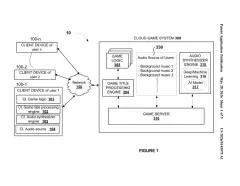
Sony Patents an AI System That Diagnoses and Auto-Fixes Game Performance Bugs
Sony wants to automate one of the most tedious parts of game development: hunting down why your frame rate just tanked. A new patent describes an ML system that watches for performance issues during QA, diagnoses the root cause, and — if it can — just fixes the code itself.
-
Sony · Published May 28
Sony Patents an AI Engine That Remixes Your Music to Match Video Game Moments
Imagine playing a tense boss fight — but instead of the game's original score, your own playlist is dynamically remixed in real-time to match that exact moment's energy. That's exactly what Sony is trying to build.
-
Sony · Published May 28
Sony Patents a Reinforcement-Learning System That Trains Around Network Lag
Network lag is a fact of life in online gaming — but what if the AI controlling game agents could learn which actions actually work at your current ping, and pick accordingly? That's the core idea behind this Sony patent.
-
Sony · Published May 28
Sony Patents LLM-Powered NPCs That React to What You Actually Say
Sony is patenting a system where NPCs don't just hear you talk — they understand what you're asking for, act on it through the game engine, and then talk back with full awareness of what just happened.
-
Intel · Published May 28
Intel Patents a RAG Pipeline That Continuously Fine-Tunes Its Own AI Models
Intel has patented a system where every question you ask a RAG-powered AI doesn't just get answered — it also feeds a training pipeline that gradually makes the underlying model smarter and the retrieval system cheaper to run.
-
Intel · Published May 28
Intel Patents a Query-Aware Graph Pruning System for RAG
When you ask an AI a question, the quality of the answer depends almost entirely on what context gets fed into the model. Intel's new patent tackles a surprisingly tricky part of that pipeline: figuring out which pieces of a knowledge graph to actually use — and which to throw away.
-
Intel · Published May 28
Intel Patents an LLM That Scores Its Own Confidence Before Writing Chip Code
Getting an AI to write code is one thing — getting it to flag when it's probably wrong is another. Intel's new patent tackles exactly that problem, but for chip design, where a bad guess can mean months of wasted silicon.