Latest AR & VR patents, Page 49
Headsets, smart glasses, and the displays, eye tracking and sensors that make them work, from Apple, Meta, Samsung, Sony and more. The augmented reality and virtual reality patent applications we have broken down from the companies we track, newest first.
- in the Nov 12 release
- 25
- in November so far
- 47
- filings tracked
- 690
- last 90 days
- 358
Recent filings
Newest first · 690 total-
Google · Published Jun 11
Google Patents a Way for AR Glasses to Know When Their Lens Has Cracked
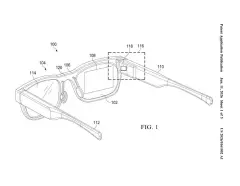
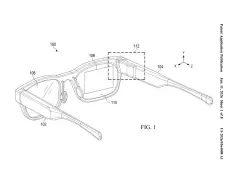
If the optical lens inside a pair of AR glasses cracks, it might not be obvious — the image could still project fine, but the cracked glass could be unsafe or cause subtle display problems. Google's new patent describes a system that catches that break automatically.
-
Google · Published Jun 11
Google Patents Smart Glasses That Automatically Correct for Your Eyeglass Prescription
Nearly half of adults wear prescription glasses, and that's always been an awkward problem for AR headsets. Google's new patent describes a way for an AR device to read your prescription — automatically — and adjust what it shows you accordingly.
-
Microsoft · Published Jun 11
Patent Adjusts AR Headset Image Sharpness Where Your Eyes Focus Based on Light
AR and VR headsets already cheat by rendering the part of the screen you're not looking at in lower quality — saving computing power. Microsoft's new patent takes that trick a step further by adjusting how the cheat works based on how bright or dark your environment is.
-
Meta · Published Jun 11
Meta Patents a Way to Copy Motion From One Video and Paste It Into a 3D Scene
Imagine being able to take the swaying dance moves from one video clip and automatically apply them to a completely different 3D scene — without touching a single keyframe. That's the core idea behind Meta's latest patent filing.
-
Meta · Published Jun 11
Gesture and Voice Can Now Work Together to Control AI Assistants
Talking to an AI assistant is useful — but what if you could point at something while you speak, and the AI understood both at once? That's the core idea in Meta's latest patent filing.
-
Meta · Published Jun 11
Meta Patents a Way to Teach Gesture Recognition Across Different Sensors at Once
Training an AI to read hand gestures is hard — and doing it separately for every type of sensor (camera, radar, EMG wristband) is even harder. Meta's new patent describes a shortcut: train one model well, then let it teach the others.
-
Meta · Published Jun 11
Meta Patents AR Glasses That Read Your Eye Position Without Extra Hardware
Meta is working on a way to track exactly where your eyes are looking inside a pair of AR glasses — not with bulky infrared sensors, but with polarized-light cameras hidden in the frame itself.
-
Nvidia · Published Jun 11
Nvidia Patents Technology That Shrinks 3D Scene Files Without Retraining Per Scene
Nvidia has patented a way to compress the data structures used to represent 3D scenes — and unlike existing approaches, it doesn't need to be retrained every time you switch to a different scene.
-
Samsung · Published Jun 11
Samsung Patents a Two-Gesture System for Taking Screenshots Inside Virtual Worlds
Taking a screenshot on your phone is muscle memory — two buttons, done. But how do you capture something inside a virtual world where there are no buttons? Samsung has a patent answer: two hand gestures.
-
Samsung · Published Jun 11
Samsung Patents Phone Camera Tech That Turns Hand Gestures Into Smart Glasses Controls
Samsung's latest patent describes smart glasses that don't need their own gesture-tracking cameras — they borrow the one already in your phone to read your hand movements instead.
-
Samsung · Published Jun 11
Samsung Patents a Headset That Places Controls Within Arm's Reach of Real Objects
Imagine looking at a smart TV through a mixed reality headset and having the remote controls automatically appear on the nearest armrest — not floating awkwardly in mid-air. That's exactly the problem Samsung is trying to solve.
-
Qualcomm · Published Jun 11
Qualcomm Patents AR Glasses That Show Other People Where You're Looking
One of the stranger problems with AR and VR headsets is that they hide your eyes — making you look like a blank-faced robot to everyone around you. Qualcomm's new patent tries to fix that by tracking your eyes and projecting an image of them outward for others to see.