
AMD Patents a GPU Command That Handles AI Math and Cleanup in One Step
AMD has filed a patent describing a way to collapse multiple steps of neural network math into a single GPU instruction, cutting down the number of operations a chip has to perform when running AI models.
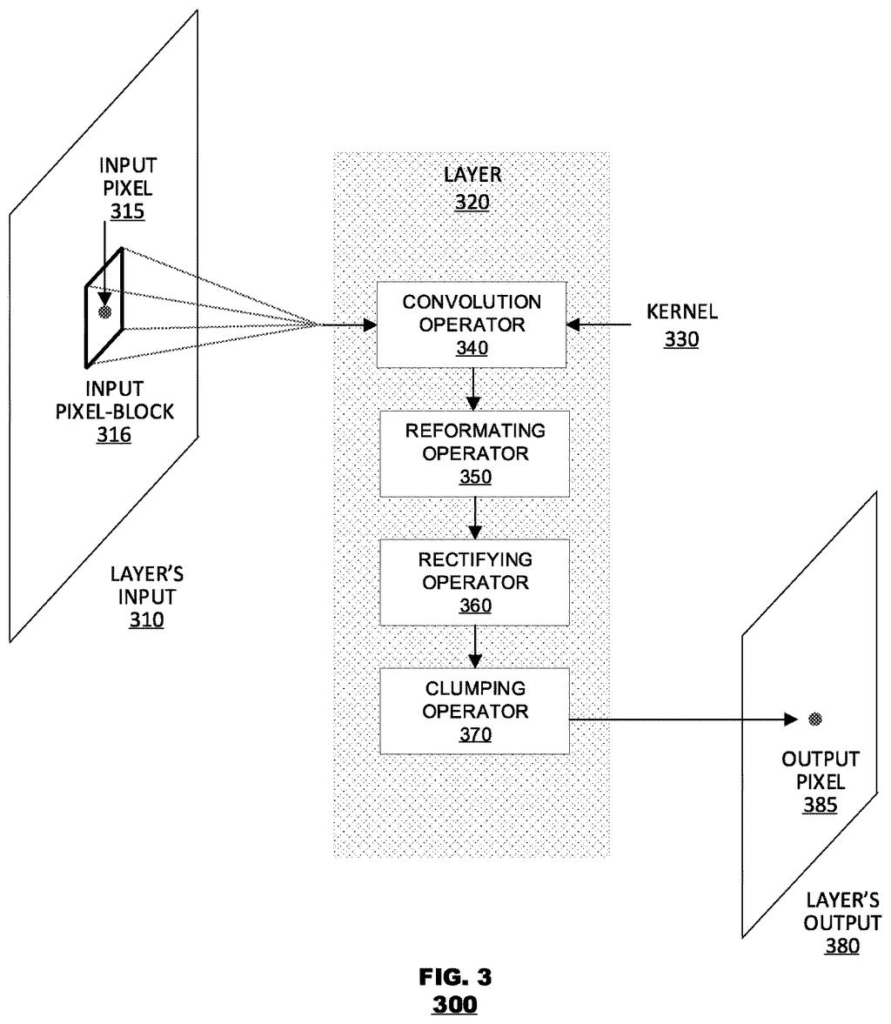
What AMD's single-cycle AI instruction actually does
You're running an AI model on your computer, and under the hood, the GPU is doing an enormous amount of arithmetic in rapid sequence. Each tiny math step takes time, and those steps add up across billions of calculations.
AMD's patent describes a special instruction that bundles several of those steps together. Instead of doing the core math, then reformatting the result, then clamping it to a safe range, then passing it along to the next stage, the GPU does all of that in a single clock tick. One tick, done.
A fancier version of the instruction can even handle two data elements in that same single tick. For the kinds of repetitive math that neural networks run constantly, shaving steps off at the hardware level can meaningfully cut the total time an AI task takes.
… executing, by the lane, a dot-product instruction during a clock cycle of the lane using operands stored in the VGPRs, the dot-product instruction generating a convolution result for a data element of the input data and applying one or more transitional operations to the convolution result to generate an output data element …
Translation: The processor completes heavy math and cleanup tasks all in one clock cycle.
How AMD packs convolution and post-processing into one op
The patent targets convolutional neural networks (CNNs), a type of AI model used heavily in image recognition, video processing, and similar tasks. CNNs work by sliding a small mathematical filter across input data repeatedly, a process called convolution.
Normally, after each convolution step, the GPU has to run several follow-up operations:
- Reformatting: converting the result to a different numerical format so it fits what the next layer of the network expects
- Rectifying: applying a function (like ReLU, which simply discards negative numbers) to add non-linearity to the model
- Clamping: keeping the output value within a specific allowed range
AMD's approach packages all of these into a single dot-product instruction that runs on a SIMD unit (Single Instruction, Multiple Data, meaning one command that operates on many data points at once). The instruction reads operands from the lane's vector general purpose registers (VGPRs), which are the GPU's fast local storage slots, does the convolution math, then applies whichever post-processing steps are needed, all within one clock cycle.
The patent also describes a dual dot-product variant that processes two data elements simultaneously in that same single cycle, effectively doubling the throughput for those operations.
The dot-product instruction may be a dual dot-product instruction that generates convolution results for two data elements and applies the transitional operations to produce two output data elements during the clock cycle of the lane.
Translation: An upgraded version of the command handles two data sets at the same time.
What this means for AI speed on AMD hardware
The core problem here is real and expensive: AI inference (running a trained model) is bottlenecked by raw arithmetic throughput, and every extra instruction cycle costs power and time. Collapsing three or four sequential steps into one is a straightforward way to address that at the hardware level, without requiring software developers to rewrite their code.
For AI workloads on AMD GPUs, including local AI processing on consumer hardware, this kind of instruction-level efficiency is the kind of thing that accumulates into measurable speed differences. It's less visible than a new chip architecture announcement, but AMD's interest in GPU-level AI acceleration shows up in patents like this one, which operate at the level where real performance is won or lost.
AMD's 43rd filing we've tracked since May in the AI chip wars follows one cutting memory traffic and one merging AI with graphics.
Running AI models requires a staggering amount of arithmetic, and every extra step a chip takes between calculations adds up to real heat, real time, and real cost at scale. Shaving even a small fraction of that overhead out of each operation matters enormously when a single model run can involve billions of such calculations.
What this patent describes is folding cleanup steps that normally happen after a calculation directly into the calculation itself, so the chip never has to pause and hand off work. Naming specific register types and a two-element-at-once variant in the filing suggests this comes from engineers who have already built something, not from lawyers staking out theoretical ground.
At the scale AI workloads now operate, a tighter loop between arithmetic and the steps that follow it is not a minor refinement. It is exactly the right place to look for gains that compound across every layer of every model a chip runs.
There are more where this came from
We read every patent application Big Tech publishes and send you the ones worth knowing. Plain English, free, every week.
The drawings
9 drawing sheets from US 2026/0300428 A1 · click any drawing to enlarge


Want this weekly breakdown for a company we don't cover? Patentlyze Pro →
Be the first to weigh in