
Google Patents an AI Chip That Skips Blank Video Segments to Save Battery
Every time a voice assistant listens for your wake word, it burns power even when you're silent. Google's new patent describes a chip design that simply skips the math when there's nothing to analyze.
What Google's inference-trimming chip actually does
Imagine your phone's voice assistant is running in the background, waiting for you to say "Hey Google." Even during complete silence, the chip inside is normally crunching numbers on each tiny window of audio, confirming over and over that nothing is there. That constant work drains your battery.
Google's new patent describes a chip that checks first whether a slice of incoming audio (or other data) is empty before doing any real work on it. If the slice is blank, the chip sends back a simple placeholder token instead of burning energy on a full calculation. If there is something there, it runs the analysis but only sends the top few results back to the main processor, not the full probability list for every possible option.
The result is less unnecessary computation, fewer large data transfers between chips, and a smaller drain on your battery, all without changing what the AI can actually detect or recognize.
… in response to determining that the slice of input data is an empty data slice, transmitting, by the hardware accelerator, a token to the host processor, wherein transmitting the token prevents the hardware accelerator from computing probabilities for the empty data slice; …
Translation: If the data slice is empty, the chip sends a quick signal to skip processing and save power.
How the chip detects empty slices and sends fewer results
The patent describes a hardware accelerator (a dedicated chip designed to run AI calculations quickly and efficiently) that works alongside a device's main processor.
The accelerator receives small chunks of input data called slices, one at a time. Before doing anything else, it checks whether a slice is empty (silence in audio, a blank region in video, etc.). If it is empty, the chip sends a lightweight token back to the host processor, a single signal that means "nothing here, move on." This skips the full machine learning computation entirely.
When a slice does contain real data, the chip runs it through a machine learning model that scores the likelihood the content belongs to each of many possible categories (individual characters in speech recognition, for example). Instead of transmitting all those scores back to the main processor, it identifies only a preset number of the highest-probability results and sends just those.
This two-part approach cuts power in two ways:
- Skipping empty slices avoids unnecessary math entirely
- Sending only top results reduces data moving between chips, which itself consumes energy
The hardware accelerator can process the input data using a machine learning model deployed on the hardware accelerator to compute a respective probability among multiple probabilities for each of multiple classes.
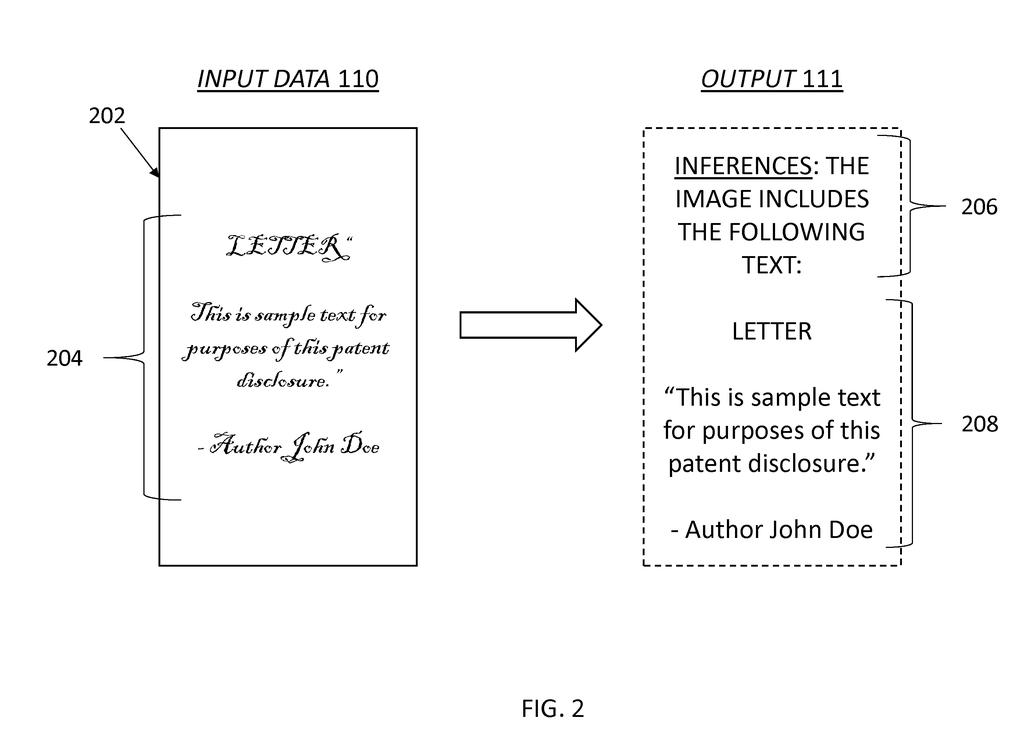
Translation: The specialized chip runs artificial intelligence models to figure out what is inside each piece of video data.
What this means for always-on AI features on your devices
Always-on AI features, things like continuous speech recognition, live transcription, or real-time image analysis, are some of the biggest battery drains on modern devices. Any architectural change that reduces how often a dedicated AI chip has to do a full calculation, or how much data it has to send back to the main processor, has a direct effect on how long your device lasts between charges.
Google keeps filing on on-device AI efficiency, and this patent fits that pattern. The approach described here is relatively low-level hardware behavior, which means if it works as described, the power savings happen automatically without any trade-off in what the AI can recognize or how accurate it is.
Google files its 16th patent application we've tracked since July in the AI chip wars, adding to work like the battery management one and the real-time efficiency one.
From a shipping standpoint, this idea sits closer to the product shelf than most patent filings. The technique lives entirely in how the chip is programmed, meaning it could reach devices through a firmware update or a new chip design without asking users to buy new hardware or install new apps.
The document stops short of naming a specific device or product line, so this reads as foundational protection over a method Google wants to own across many possible uses, from phones to home speakers to cloud servers.
The practical benefit matters and can be measured: a chip that skips unnecessary work during quiet moments in a voice conversation saves battery in a way a person can actually feel over the course of a day. That makes this one of the more grounded efficiency ideas to come through recently.
There are more where this came from
We read every patent application Big Tech publishes and send you the ones worth knowing. Plain English, free, every week.
The drawings
7 drawing sheets from US 2026/0288468 A1 · click any drawing to enlarge


Want this weekly breakdown for a company we don't cover? Patentlyze Pro →
Be the first to weigh in