
Google Patents an AI That Reads App Launches to Manage Battery and Performance
Every time you open an app, your phone's chip has to guess how hard to work. Google wants to replace that guessing with a small AI model living directly on the processor.
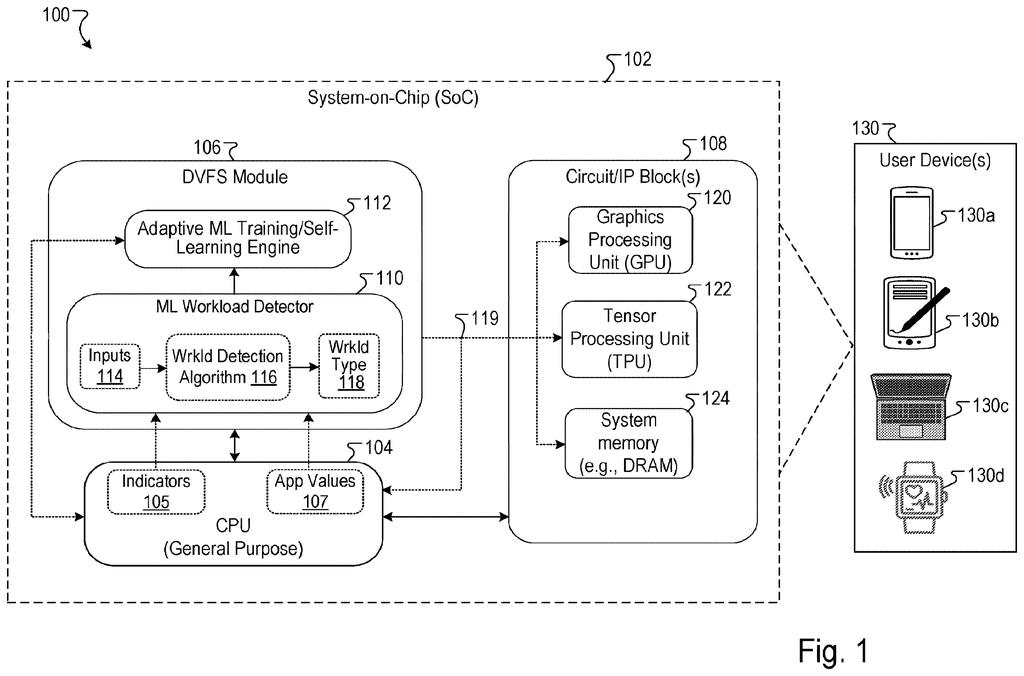
How Google's chip figures out what your app needs
Imagine tapping an app on your phone and, before a single frame even appears, the chip inside has already figured out exactly how much power it will need. That's the goal behind this Google patent.
Right now, phone chips tend to either overshoot (burning battery on tasks that don't need full power) or undershoot (causing that split-second lag when something heavier loads). Google's idea is to put a small machine-learning model directly on the chip itself. When you launch an app, the model reads a few software signals, like which app just opened and which internal functions it's calling, and uses those to decide what kind of work is coming.
Based on that read, the chip adjusts its clock speed before things get busy, rather than scrambling to catch up. The model also grades its own confidence on each signal, so it doesn't overreact to ambiguous information. The payoff, in theory, is a processor that runs at just the right speed more of the time.
… generating, using the inference outputs, a Dynamic Variable Frequency Signal (“DVFS”) control value for controlling DVFS settings at the SoC based at least on the detected workload type.
Translation: The chip creates a power adjustment signal based on what kind of task the app is starting.
How the ML model reads launch signals and sets clock speed
The patent describes a machine-learning model that lives on the system-on-chip (SoC), the single piece of silicon that contains the processor, memory controller, and other components in a modern phone or tablet.
When a user launches an app, the SoC collects what the patent calls software indicators: an app-launch flag (confirming which application just started) and one or more function call indicators (records of which internal software routines the app is already invoking). These signals arrive before the app has done any heavy lifting, giving the model an early read on what's about to happen.
The workload detection model processes those indicators and outputs two things:
- A detected workload type: a classification of what kind of demand the app is likely to place on the chip (video, gaming, background sync, and so on).
- Quality control values: confidence scores computed by an adaptive ML algorithm applied to each indicator individually, so the model knows how much to trust each signal before acting on it.
Those outputs feed directly into a Dynamic Variable Frequency Signal (DVFS) control value. DVFS is the standard mechanism chips use to raise or lower their clock speed (and voltage) in real time. By predicting workload type ahead of time, the model lets the chip dial in the right frequency proactively, rather than reacting after demand already spikes.
The software indicators include an app-launch indicator indicating the application was launched at the user device and one or more function call indicators.
Translation: The system checks clues like app startup signals and software function calls to figure out what is happening.
What this means for Android battery life and performance
For you, the most direct effect would be on the two things phone users complain about most: battery life and that brief sluggishness when opening a heavier app. A chip that correctly anticipates a light task can stay in a lower-power mode longer. One that correctly anticipates a demanding task can ramp up before the lag becomes visible.
The deeper implication is that this model runs on the chip itself, not in the cloud and not in the main operating system. That means no round-trip delay waiting for a server, and no dependence on the OS scheduler to make the call. Google keeps filing on on-device AI inference suggests this is part of a wider push to move more intelligence directly into silicon, which matters as phones take on tasks that need both speed and privacy.
Google's 15th filing we've tracked since July in our AI chip wars watchlist, this application connects ideas from one on keeping devices efficient and one reusing CPU vector instructions.
Guessing what a phone needs to do the moment you tap an app is a reasonable bet, but it is still a guess made on very little information. If the guess is wrong, the chip is already running at the wrong speed, and fixing that mid-launch takes time the user can feel.
The bigger crack in the logic is that the same app can demand completely different things depending on what you do with it. Opening a social media app to scroll looks nothing like opening it to play a video, but both trigger identical startup code, so the model sees the same signals either way.
The quality-checking layer built into the model is a fair answer to that uncertainty, but checking your own confidence costs something on a chip that is supposed to be getting faster, not thinking harder. Whether the savings in battery life outrun the cost of being wrong, or the cost of second-guessing, is a question only real-world use will settle.
There are more where this came from
We read every patent application Big Tech publishes and send you the ones worth knowing. Plain English, free, every week.
The drawings
5 drawing sheets from US 2026/0288485 A1 · click any drawing to enlarge


Want this weekly breakdown for a company we don't cover? Patentlyze Pro →
Be the first to weigh in