
Apple Patents a Two-Stage Playback Control System Driven by Gaze and Gesture
Apple is patenting a media control system that responds differently depending on whether you glance at it or actively stare — a subtle but meaningful UX distinction for hands-free or eye-tracked devices.
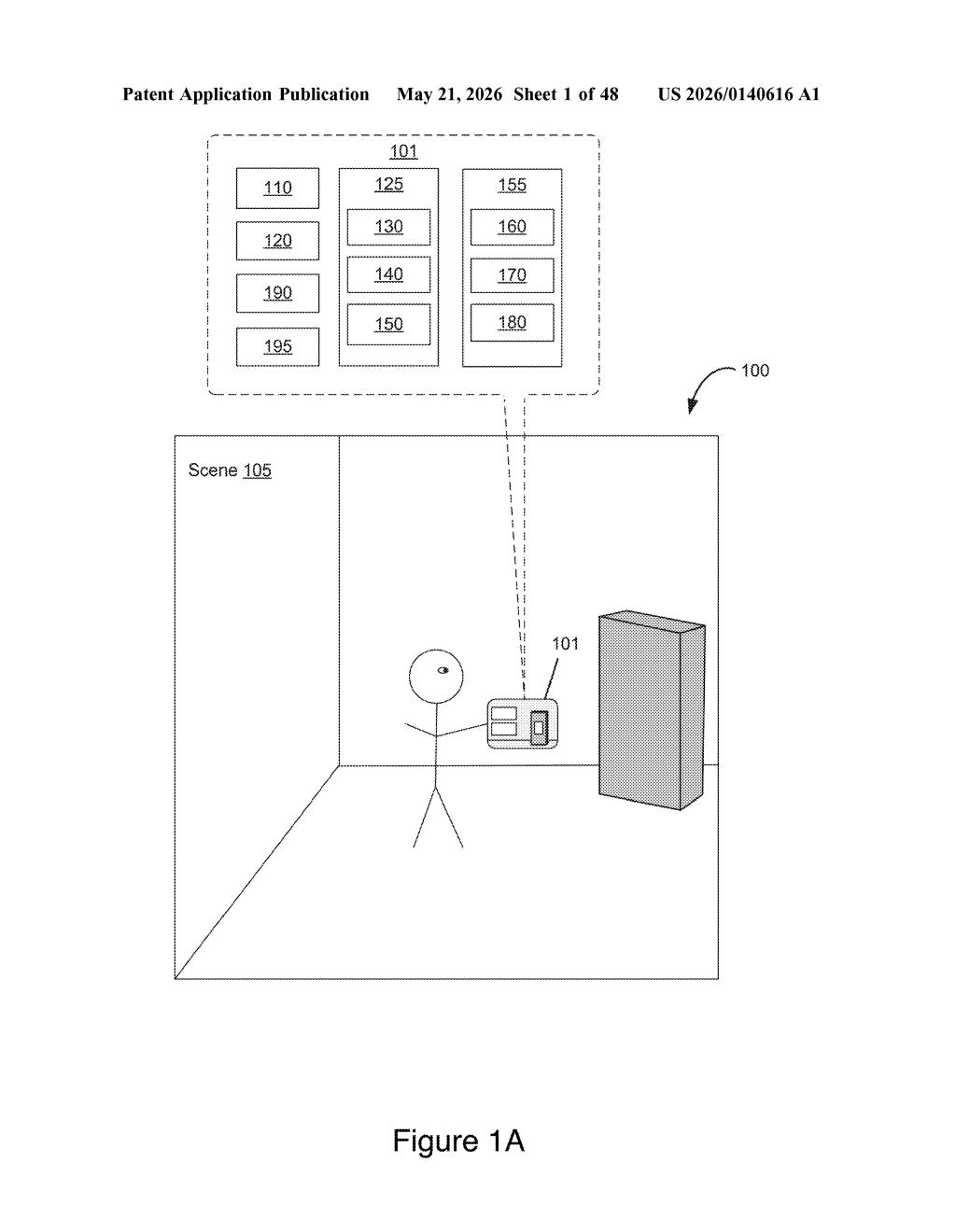
What Apple's gaze-triggered media controls actually do
Imagine you're watching a movie on a mixed-reality headset. You don't want playback buttons cluttering your view the whole time, but you also don't want to fumble around when you need to pause. Apple's patent describes a system that tries to solve exactly that.
Here's the flow: a body movement — like a hand gesture — first brings up a minimal set of controls in a low-key, non-distracting way. Then, if the system notices that your eyes (or gaze) have moved toward those controls, it upgrades them to a fuller, more prominent interface with more options.
The idea is to keep your viewing experience clean until you actually show intent to interact. Your hand says "show me something," and your eyes confirm "yes, I mean it." Two inputs, two escalating levels of UI — all without you ever touching a physical button.
How Apple's two-input detection pipeline escalates UI state
The patent describes a two-stage control escalation system for media playback interfaces. At its core, it separates user intent into two distinct signal types — a first input from one body part (like a hand or wrist gesture) and a second input from a different body part (most likely gaze direction tracked via eye-tracking hardware).
- Stage 1: The system detects an initial movement-based input — a gesture — and responds by surfacing a first set of controls in a "reduced-prominence state" (think: dimmed, small, partially transparent).
- Stage 2: While those Stage 1 controls are visible, the system monitors whether the user's attention — inferred from eye or gaze direction — moves toward the control region. If that criterion is satisfied, the system transitions to a second set of controls in an "increased-prominence state" — larger, brighter, and potentially containing more options.
The patent's claim is careful to specify that the second body part providing the attention signal must be different from the first — meaning a hand gesture alone won't trigger the full UI; you also have to look at it. This dual-confirmation approach is designed to reduce accidental UI escalation on gaze-heavy devices like headsets, where simply looking around a scene could otherwise trigger unwanted interface changes.
What this means for Vision Pro's media playback UX
For a device like Apple Vision Pro — where gaze is already a primary input mechanism — accidental UI triggers are a real usability problem. If controls popped up every time your eyes drifted near a playback bar, watching anything would be maddening. This patent's two-gate approach (gesture first, then gaze confirmation) is a practical solution to that noise problem, and it maps neatly to the kind of spatial computing UX Apple is actively building.
Beyond headsets, the same pattern could apply to CarPlay, tvOS with Face ID-style attention tracking, or future wearables. If Apple ships hardware that knows where your eyes are pointed, this patent describes the interaction logic to make that useful rather than intrusive.
This is solid, quietly important UX work. It's not flashy — but the problem it solves (how do you show controls without cluttering a media view, on a device where your eyes are also inputs) is genuinely tricky, and the two-stage gesture-then-gaze solution is an elegant answer. If Vision Pro ever gets better traction as a media consumption device, you'll probably live inside this interaction model without knowing it.
Get our take in your Top Stories
Liked this breakdown? Add Patentlyze as a preferred source on Google, and our plain-English take shows up more often in your Top Stories the next time Apple patent news breaks.
There are more where this came from
We read every patent application Big Tech publishes and send you the ones worth knowing. Plain English, free, every week.
Want this weekly breakdown for a company we don't cover? Patentlyze Pro →