
Apple Files Patent to Swap Out a Failing AI Model on Your Phone's Cellular Link
Apple's filing describes a phone that keeps score on its own AI, notices when the guesses go bad, and switches to a backup model with a short message to the cell tower.
What Apple's self-grading phone AI does
A phone rides a train out of a station while a small AI model guesses which radio signal will be strongest next. The model learned its habits in the station, and out on the tracks its guesses start going wrong.
Apple's filing describes two fixes. First, before the phone trains any of these models, the cell tower and the phone negotiate a quality bar: how much data to use, how old that data can be, and how long training is allowed to take. The phone can accept, or push back with numbers it can live with.
Second, the phone grades its own AI model while it runs. If the grades stay below a limit the network set, the phone reports a failure. The network then tells it to switch to a different, backup model.
receive a training quality enquiry message from a network device, wherein the training quality enquiry message comprises enquiry information about one or more training quality metrics for training one or more Artificial Intelligence (AI) models of the UE; …
Translation: Your phone gets a checkup request asking how well its internal artificial intelligence is learning.
How the phone and tower agree on training
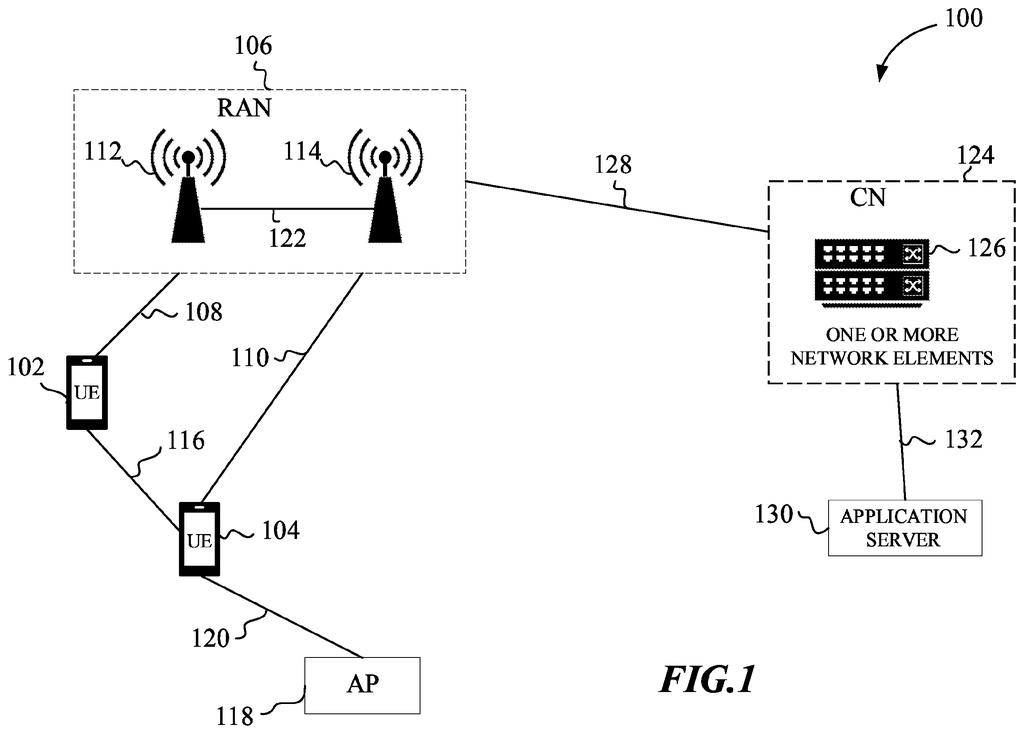
The filing covers two linked ideas for a phone (the patent calls it a "user equipment," or UE) and the cell tower it talks to. Both are about AI models that help manage the radio link, such as models that shrink signal-quality reports, pick the best beam, or work out where the phone is.
Idea one is a training quality negotiation. The tower sends an enquiry with requirements for training a model:
- A minimum size for the training dataset
- A maximum age for the data
- A time budget for training
- An allowed number of missing values
- An allowed number of outlier values (odd readings that can skew what the model learns)
The tower can also send one class number that maps to a preset bundle of these limits in a table both sides already hold. The phone answers accept or reject for each item, and can add values it would accept instead. The messages travel as a pair of RRC messages (Radio Resource Control, the standard control messages between phone and tower), and the exchange can repeat until both sides agree.
Idea two is failure detection and fast recovery. The phone compares its model's accuracy, integrity (how likely a prediction error is to pass a limit) and latency (how long an answer takes) against thresholds the tower set. It uses real answers it has collected and the model's outputs to do the math. A time-to-trigger rule means the numbers must stay bad for a set stretch before the model counts as failed.
The phone then reports the failure, optionally naming backup models it prefers, using an RRC message or a MAC CE (a compact control message; one version uses eight on/off bits, one per candidate). The tower replies with a switch instruction. In a variation, the phone only reports its scores and the tower decides.
AI/ML model quality monitoring and fast recovery under model failure detection are disclosed.
Translation: The patent outlines a way to watch for artificial intelligence breakdowns and quickly fix them.
Why backup AI models matter for your signal
If you have a phone with AI helping manage its cellular connection, you want that AI to notice when it is wrong and recover fast. A model tuned for one place can stumble in another, and the filing says performance can drop sharply. A built-in way to grade the model and swap to a backup could keep your connection steady as you move between environments.
There is a network side too. Carriers want a say in how phone-side AI is trained, and phone makers want to keep control of their own hardware. The negotiation step gives both a way to settle on training rules without a human involved. The filing reads like groundwork for the standards bodies that set how phones and towers talk, where Apple would want its approach considered.
This is the fourth Apple filing we've tracked since October in our AI models that work in teams watchlist, following one that routes searches and one about phones flagging AI limits.
Every piece of this design costs something. A phone that grades its own AI needs real answers to compare against, which means more measuring and more battery and processor work. A backup model needs storage space, and each switch needs messages over the air, which uses the same airtime the AI was meant to save.
The delay rule is a trade as well. Waiting for scores to stay bad for a set time avoids switching on a single blip, but you ride out the poor guesses while the clock runs. The negotiation step could also loop several rounds if the phone keeps rejecting what the tower asks for.
Still, the trades look reasonable. A model that fails would be worse than a short wait and a few extra messages. This filing is plumbing, and it is sensible plumbing.
Get our take in your Top Stories
Liked this breakdown? Add Patentlyze as a preferred source on Google, and our plain-English take shows up more often in your Top Stories the next time Apple patent news breaks.
There are more where this came from
We read every patent application Big Tech publishes and send you the ones worth knowing. Plain English, free, every week.
The drawings
8 drawing sheets from US 2026/0340475 A1 · click any drawing to enlarge


Want this weekly breakdown for a company we don't cover? Patentlyze Pro →
Be the first to weigh in