
Apple
Apple · Software · Filed Jan 5, 2026 · USPTO published Nov 19, 2026 · This week's release
Apple Files Patent for a Phone Feature That Waits on Hold for You
Apple has filed a patent for a phone that sits through the hold music so you don't have to, then taps you on the shoulder when a real person finally says hello. It can even tell the person on the line that you're on your way back.
- Publication number
- US 2026/0370749 A1(US20260370749A1)
- Applicant
- Apple Inc.
- Filed · Published
- Jan 5, 2026 · Nov 19, 2026
- Inventors
- Mahak GOINDANI, David S. EVANS, Gencer CILI, Jae Woo CHANG, Karthick SANTHANAM, Christopher M. GARRIDO
- Status when we published
- Waiting for an examiner
- Document
- 20 claims
- US classification
- 455/414.1
- Parent application
- Claims priority from a provisional application 63808625 (filed May 19, 2025)
What Apple's hold-assist call feature does
Ever stayed glued to your phone through endless hold music, afraid you'll miss the moment a human finally picks up? Apple has filed a patent for a way to hand that job to the phone.
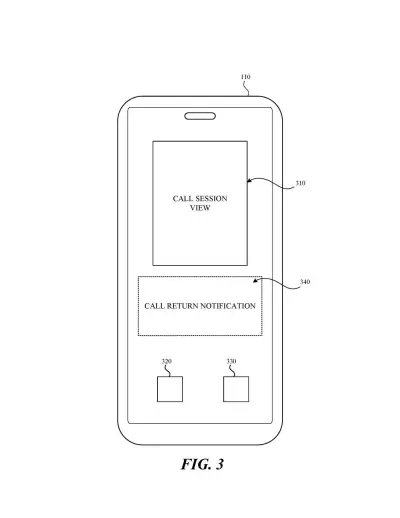
Here's the idea. If your phone hears music or silence for a stretch (the filing gives 30 seconds as an example), it offers to take over. Say yes, and the call is muted while the phone listens in for you. The moment it hears something like "Hello, how may I help you?" it tells you to come back. It can also play a short message to the agent saying you're returning, so they don't hang up.
If you've wandered off without your phone, the alert can go to a nearby watch or tablet instead. The phone can even guess a call will land on hold before it starts, using a scrambled list of numbers that have put callers on hold before.
… analyzing, by the electronic device, the audio signal to determine a call state of a plurality of call states of the call session; and causing output of a notification to change a user interface of the electronic device based on the determined call state.
Translation: The phone listens to the call audio, figures out if you are on hold, and updates your screen.
How the phone tells a recording from a person
The filing bundles four related ideas, each one a separate main claim. The first is the core: the phone analyzes the audio of a call to work out which of several call states it is in (hold, or a live person, for example), then pushes a notification that changes what you see on screen. The analysis can mean spotting music or silence over successive stretches of audio. It can also mean transcribing speech and running it through a machine learning classifier (a trained program that sorts things into categories) that separates pre-recorded messages from a human agent. The filing says this can be done word by word to speed things up.
The other three pieces build on that:
- Hold handling: once the phone decides you're on hold, it prompts you to minimize the call screen or silence the audio, and can disable some call buttons until a live agent is detected.
- Return alert: when the call shifts from hold to a live agent, you get a notification, which can go to nearby devices such as a watch or tablet. The phone can also inject audio into the call telling the agent you're coming back.
- Hold prediction: the phone checks the number against a database of obfuscated (scrambled, using techniques like hashing) phone numbers that have previously put callers on hold.
The description adds a few extras. The phone can notice keypad presses that suggest you're in a phone menu ("press 1 for support"). It can pick a speech model based on your language settings. In one extended version, it presses menu buttons for you.
… query a database of obfuscated telephone numbers associated with historical hold states. If a match is found, the device predicts a likely hold state and modifies the user interface accordingly.
Translation: It checks a database of past hold numbers to guess if you will be put on hold before it even happens.
Why waiting on hold may stop being a chore
The practical payoff is your time. Calls to banks, airlines and phone companies are where hold queues pile up, and today you either stare at the screen or risk missing the agent. A phone that watches the line for you means you can wash dishes, walk the dog or answer email while it waits, and it tells you the instant someone is there.
The filing also keeps the details modest where privacy is concerned. Both sides of the call are muted while the phone listens, and the processing is described as running on the device itself. Because the alert can reach a watch or tablet, and outside dialer apps could use the feature through a permission-controlled interface, the idea reaches beyond a single app screen.
This is the eighth Apple filing we've tracked since July on our AI agents that act for you watchlist, adding to earlier work like the app-picking voice assistant and AI app builder with a preview.
Source: US 2026/0370749 A1 at the USPTO (PDF). Full patent text and figures are in the official publication.
Get our take in your Top Stories
Liked this breakdown? Add Patentlyze as a preferred source on Google, and our plain-English take shows up more often in your Top Stories the next time Apple patent news breaks.
Add Patentlyze on Google
One click.
There are more where this came from
We read every patent application Big Tech publishes and send you the ones worth knowing. Plain English, free, every week.
The drawings · 11 sheets
11 drawing sheets from US 2026/0370749 A1 · click any drawing to enlarge


Show the other 3 sheets


More from Apple
All 748 Apple patents →
More in Software
All 814 Software patents →
Google
Google Files Patent for Answering Phone Calls by Tapping Instead of Talking
Samsung
Samsung Patents a Phone Assistant That Waits on Hold and Gets Firm in Your Voice
Samsung
Samsung Files Patent for a Screenshot Feature That Sends Coupons and Tickets to the Right App
Samsung
No comments yet