
Samsung Patents a Way to Start a Private Chat by Photographing Someone's Avatar
Imagine pointing your phone at a shared TV screen, snapping a photo of a stranger's avatar, and instantly sending them a private chat request — no username hunting required. That's exactly what this Samsung patent describes.
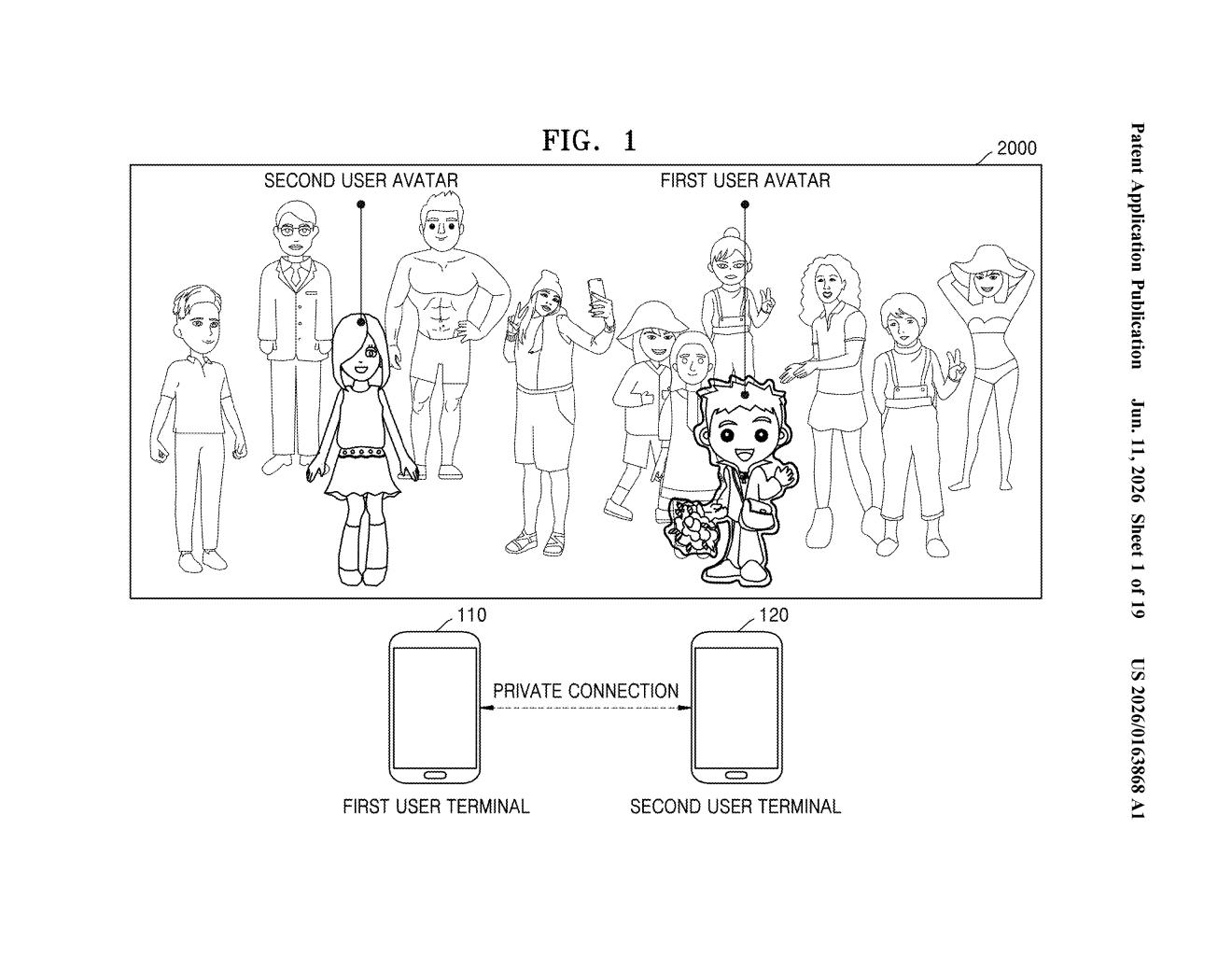
How Samsung's avatar photo-to-chat system actually works
Picture this: you're watching a shared virtual space on a Samsung smart TV — maybe a multiplayer game lobby or a social viewing room — and you spot someone's avatar you want to connect with. Instead of trying to find their username or manually searching for them, you just take a photo of the screen with your phone.
Samsung's patented system recognizes the avatar in that photo, figures out who it belongs to, and sends that person a private connection request directly to their own device. They can accept or decline, just like a friend request. If they accept, a private communication channel opens up between your two phones.
It's essentially a QR-code-style shortcut for meeting people in virtual spaces — except instead of scanning a code, you're scanning the avatar itself.
How the display device links a photo to a real user account
The system centers on a display device (think a shared screen like a smart TV or a kiosk) that renders a virtual space populated by multiple users' avatars.
When a user wants to connect privately with someone they see on that shared screen, their personal device (phone or tablet) takes a photo of the display. The display device receives that image and runs avatar identification — essentially matching the avatar captured in the photo against the avatars it knows are currently active in the virtual space, then retrieving the corresponding user's account or device identifier.
Armed with that identifier, the display device sends a private connection request to the second user's terminal. The second user sees the request on their own device and can accept or reject it. If accepted, a direct private communication channel is established between the two personal devices — the shared display just acts as the matchmaker.
- Step 1: Shared screen displays a virtual space with multiple user avatars
- Step 2: First user photographs the screen, capturing a target avatar
- Step 3: Display device identifies the avatar and looks up the associated user
- Step 4: A private connection request is sent to the second user's device
- Step 5: On acceptance, a private peer-to-peer communication channel opens
What this means for shared-screen social and TV experiences
For shared-screen social experiences — think living-room gaming, Samsung's virtual social platforms, or even digital events on a big display — finding and connecting with specific strangers today requires exchanging usernames or friend codes manually. This system removes that friction entirely by turning the camera into a contact-discovery tool.
The privacy angle is notable too: because the second user must explicitly accept the connection request, it's not a surveillance mechanism — it's closer to a digital business-card tap. Still, the broader implication is that Samsung is thinking seriously about how shared displays become social hubs, not just passive viewing surfaces.
This is a genuinely practical idea for virtual social spaces: avatar recognition as a contact-sharing shortcut is more elegant than swapping friend codes. The real question is whether Samsung has a platform compelling enough to make the feature worth using — the technology is straightforward, but the use case depends entirely on people actually gathering in Samsung-hosted virtual spaces.
There are more where this came from
We read every patent application Big Tech publishes and send you the ones worth knowing. Plain English, free, every week.
Want this weekly breakdown for a company we don't cover? Patentlyze Pro →