
Google Files Patent to Fix Conference Room Cameras That Make Far-Away Coworkers Look Tiny
In most conference rooms, the person nearest the camera looks enormous while the person at the far end of the table is a tiny blur. Google's patent describes AI that redraws the video, live, so everyone appears closer to the same size.
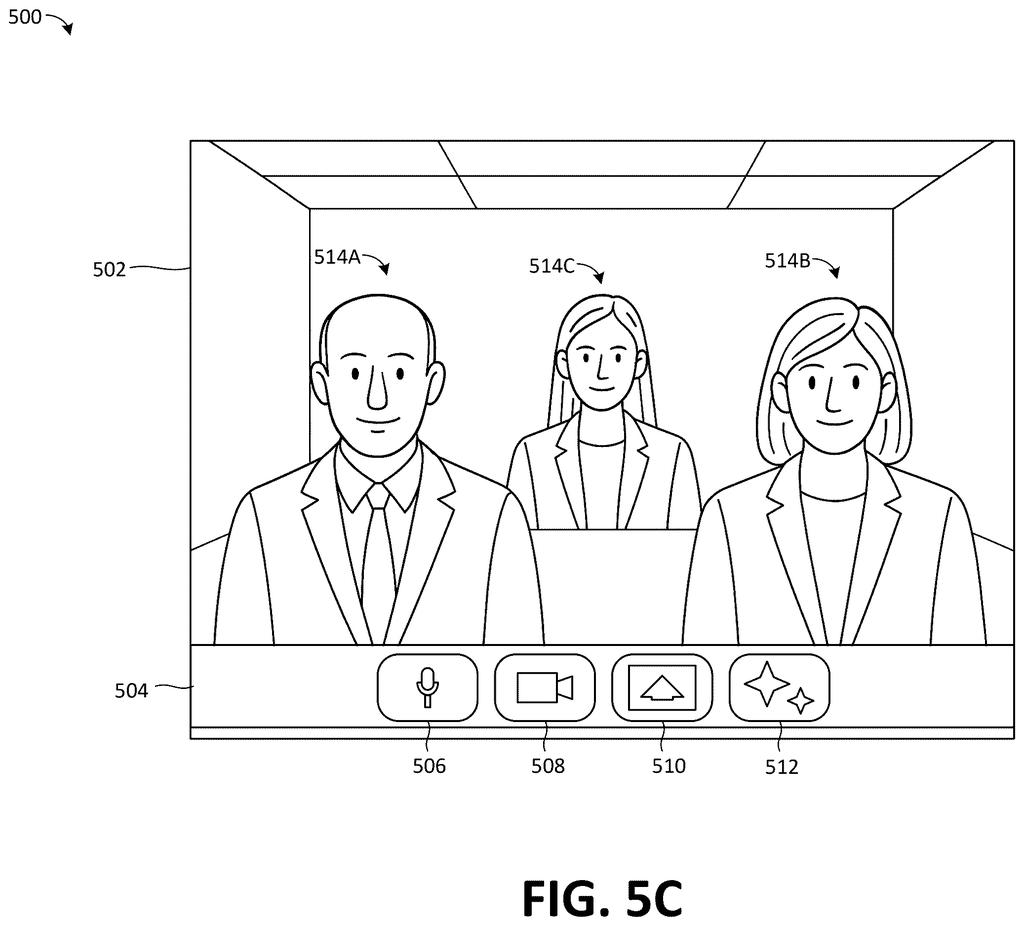
What Google's far-seat fix does for video calls
Every time you dial into a meeting where half the team sits together in one conference room, you see the same thing: the colleague nearest the camera looms large, while the person at the far end of the table shrinks into a small, hard-to-read figure. That happens because room cameras use wide lenses to fit everyone in the shot.
Google's patent describes software that redraws the video as if it had been shot through a longer, more zoomed-in lens. The system checks where people are sitting, picks the lens setting that would even out their sizes, and has an AI model generate the corrected picture while the meeting is still running.
The pitch is that the room does not need a bulkier camera. People joining remotely get a picture where everyone is easier to recognize, and you stop interrupting the discussion to ask, 'Who is that at the back?'
… determining, during the virtual meeting, a target focal length for the image based on a position of the at least one participant in the environment …
Translation: The system figures out how much to zoom based on where people are sitting.
How Google's AI redraws a wide shot as a zoom
A camera's focal length (the distance between its lens and its image sensor) decides how much of a scene it sees. Short focal lengths capture a wide view but exaggerate perspective, so things close to the camera look oversized. Longer ones give a narrower, flatter picture with less distortion. Meeting rooms use short ones because a long lens could not fit the whole table in the frame.
The filing's method runs during a live meeting:
- It takes a video frame from the room camera.
- It finds each person with bounding boxes (rectangles an object-detection model draws around people and faces) and compares how large each one appears.
- It works out a target focal length from where a participant sits. In one example, the far-end person is made roughly as large as the people near the camera, and real-world size can be estimated from a known object such as a four-foot-wide table.
- It sends the frame and the target setting to an AI model, which returns the image as a longer lens would have captured it. A later claim names a diffusion model (an image generator that learns to reverse a gradual noising process).
The filing also describes updating the setting when someone joins or leaves, responding to a zoom request or a person starting to speak, and feeding each generated frame into the next one. Face data can be passed in so people still look like themselves. The model can be trained in the cloud and stored on a device in the room, using 3D simulated scenes rendered at different focal lengths.
Why this matters for hybrid meeting rooms
If you work in a hybrid office, this targets a daily annoyance: the shared-room camera that makes half the table hard to see. Fixing it in software means existing room cameras could, in principle, produce a more even picture without anyone installing a long lens that would not fit the room anyway.
It also fits what a meeting platform is built to do: take a feed, process it in the cloud or on a device in the room, and stream the result to everyone. The catch is that the picture is generated, not just adjusted, so how faithfully it keeps real faces matters. The filing spends several paragraphs on consent, facial data handling and opt-outs, which tells you the company expects that question to come up.
Google's 71st filing we've tracked since May in the AI photo editing race builds on earlier applications like one matching text to images and one generating ad scenes from photos.
Claim 1 is wide. It covers an AI model that takes a meeting video frame plus a target focal length, set from where a participant sits, and returns a picture as a different lens would have captured it, shown to everyone during the meeting. The wording names no conference room, no particular model type and no lens size, so it is not limited to a boardroom.
The narrowing piece is the link to position. As written, the claim asks for a target lens setting based on where a participant is in the environment, so a generic beautify filter that only brightens or sharpens video does not match that step.
Face preservation and the diffusion model show up only in later claims. That leaves the main claim silent on how closely the generated faces match the real ones, and for anyone watching from home, that detail decides whether the far-end coworker still looks like themselves.
Get our take in your Top Stories
Liked this breakdown? Add Patentlyze as a preferred source on Google, and our plain-English take shows up more often in your Top Stories the next time Google patent news breaks.
There are more where this came from
We read every patent application Big Tech publishes and send you the ones worth knowing. Plain English, free, every week.
The drawings
10 drawing sheets from US 2026/0330702 A1 · click any drawing to enlarge


Show the other 2 sheets


Want this weekly breakdown for a company we don't cover? Patentlyze Pro →
Be the first to weigh in