
Google
Google · AI / ML · Filed May 13, 2025 · USPTO published Nov 19, 2026 · This week's release
Google Files Patent for a TV Channel of AI-Made Videos Built Around You
Google has filed a patent application for a TV channel where an AI makes videos just for you. In the fuller version, it even casts you as the star using your own avatar and voice.
- Publication number
- US 2026/0370899 A1(US20260370899A1)
- Applicant
- Google LLC
- Filed · Published
- May 13, 2025 · Nov 19, 2026
- Inventors
- Aravind Reddy Ayuluri, Prameela Kavya Thummuru
- Status when we published
- Rejected again; the company can still amend or appeal
- Document
- 20 claims
- US classification
- 725/34
- Examiner
- PARRA, OMAR S (Art Unit 2421)
What Google's AI-made 'My Channel' for TV does
Today, your TV's recommendations mostly point you to shows other people made, based on what you watched before. Google's patent application says that misses how people really watch: a crime thriller one night, a kids' movie the next, and different tastes from month to month.
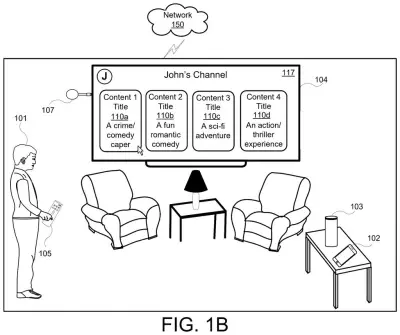
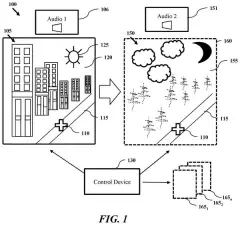
So the filing describes a My Channel option in a TV app. Instead of only suggesting existing titles, the system asks an AI to make new videos for you. They show up as tiles on a channel with your name on it, like "John's Channel," each with a title and a blurb such as "a crime/comedy caper."
The filing also describes an option to make you the hero. It builds an avatar from your photos and can copy your voice for the lead character's lines.
… generating, by the server computer, a prompt for use by a large language model that is based on the data related to preferences of the user, the contextual information related to the user, and the demographic data related to the user; …
Translation: The system builds a specific instruction for an AI by combining what you like, your current situation, and who you are.
How the prompt gets built from your habits
The core claim is a pipeline run by a server. It gathers three things: your preferences (such as the genres and titles you watch), context from your device (its IP address, language setting or GPS location), and demographic data (details about groups you belong to, such as an age bracket). From those, it writes a text instruction, called a prompt, for a large language model (the same kind of AI behind chatbots). The model makes a video, which is saved in a repository of custom content and then streamed to your device.
Other steps the filing describes:
- A trigger starts the process, such as a weekly, monthly or yearly timer, or a request from you. A claim says the prompt can be built without any input from you.
- The prompt can come from a fill-in-the-blank template or from a second language model that pulls in current news, social trends and sports scores. The example is a cricket fan during a major tournament.
- The system groups your genres, such as crime, thriller and action, and makes videos that blend them.
- An ad stitcher can insert ads into the video before it plays.
Phones and smart TVs can get different videos, depending on what each device reports.
… sending the prompt to the large language model, obtaining, by the server computer and from a customized content repository, a customized media content item for the user generated by the large language model based on the prompt, …
Translation: The AI uses that tailored instruction to create custom video or audio content just for you and saves it for later.
What a TV channel made for you could change
If this ever became a product, your TV home screen could stop being a shelf of other people's shows and become a channel made just for you, refreshed on a schedule. It would also mean a streaming app knows your viewing patterns, location and age group well enough to write a story around them, and the filing says ads can be stitched into those videos. The filing notes that users can control what data is collected.
Keep in mind this is a patent application, not a product. The patent examiner has issued a final rejection of this application, though Google can still amend the claims or appeal. The filing names no product, so treat it as a record of an idea rather than a launch plan.
This is the 21st Google filing we've tracked in AI simulation since May, adding to work like one turning text to 3D and one tracing light rays.
Source: US 2026/0370899 A1 at the USPTO (PDF). Full patent text and figures are in the official publication.
Get our take in your Top Stories
Liked this breakdown? Add Patentlyze as a preferred source on Google, and our plain-English take shows up more often in your Top Stories the next time Google patent news breaks.
Add Patentlyze on Google
One click.
There are more where this came from
We read every patent application Big Tech publishes and send you the ones worth knowing. Plain English, free, every week.
The drawings · 12 sheets
12 drawing sheets from US 2026/0370899 A1 · click any drawing to enlarge


Show the other 4 sheets


More from Google
All 1,127 Google patents →
More in AI simulation
All 192 AI simulation patents →
Adobe
Adobe Files Patent for Turning and Moving Objects Inside AI-Generated Images
Nvidia
Nvidia Files Patent to Keep AI-Built 3D Scenes From Having Floating, Overlapping Objects
Nvidia
Nvidia Files Patent for Turning Shaky Phone Videos Into Explorable 3D Scenes
Sony
No comments yet