
LG
LG · Display · Filed May 22, 2025 · USPTO published Nov 19, 2026 · This week's release
LG Patents a See-Through Screen That Flips Its Text for Viewers Behind It
Look at a see-through TV from the back and the words on it read backward. LG's patent application has the screen notice where you're standing and flip the text so it reads correctly.
- Publication number
- US 2026/0370914 A1(US20260370914A1)
- Applicant
- LG ELECTRONICS INC.
- Filed · Published
- May 22, 2025 · Nov 19, 2026
- Inventors
- Seongwoon SEOL, Obong AN
- Status when we published
- Examiner raised objections; the company can respond
- Document
- 15 claims
- US classification
- 348/564
- Examiner
- TEITELBAUM, MICHAEL E (Art Unit 2422)
- Parent application
- National Stage Entry of PCT/KR2022/018906 (filed Nov 25, 2022)(PCTKR2022018906)
What LG's see-through screen does for rear viewers
You're standing behind a see-through TV on a living room shelf, and the subtitles are staring back at you, reversed. The picture lives on glass, so anyone on the wrong side gets the text the wrong way around.
LG's patent application describes a transparent display that works out which side of the screen you're on. If you're in front, text such as subtitles or menu pop-ups shows up as usual. If you're behind it, the screen flips the text left to right so it reads properly from your side.
It also handles an audience on both sides. With one viewer in front and another behind, the screen shows the text twice, one copy for each person, in separate areas. To tell where you are, the device can use the remote, infrared sensors, echoes, your voice or cameras on both sides.
… recognizing a position of a viewer viewing the image content and, if the viewer is positioned behind the transparent display, displays second text content obtaining by rotating the first text content in a left and right direction on the transparent display.
Translation: The system tracks where people are standing and flips the words horizontally for anyone looking at the back of the screen.
How LG's screen figures out which side you're on
The core claim is simple. A transparent display shows picture content plus a layer of text, such as subtitles or an OSD (the on-screen menus a TV draws over the picture). A controller (the device's brain) works out whether a viewer is in front of or behind the glass. If the viewer is behind, it displays a second version of the text, rotated in the left and right direction, so it reads correctly from that side.
If viewers are on both sides, the screen shows both versions in separate areas. The description also covers flipping the picture itself, and a split-screen mode where a shrunken copy of the video faces the front and a flipped copy faces the back.
The claims list several ways to tell where a viewer is:
- Remote control: during setup you point at two on-screen buttons (upper left and lower right) to set reference coordinates, and later button presses are compared against them.
- Infrared sensors on both faces measure how far their signal travels before bouncing back. The filing assumes the side with the shorter distance faces a wall.
- Test sound: a speaker plays a tone and microphones on each face compare how long the echo takes, or how strong it is.
- Voice direction: a microphone array works out where your voice came from.
- Cameras on the front and rear look for a face.
… a text display direction of a transparent display device may be automatically rotated in accordance with a position of a viewer.
Translation: The device automatically spins the text around so it reads correctly depending on which side of the glass you are standing.
Why backward text on glass is worth fixing
For you, the benefit shows up when a see-through screen sits where people can walk around it, like a shelf in the middle of a room. Subtitles and menus stay readable from whichever side you're on, with no button press to flip them. The filing describes a TV placed on a living room shelf, so that is the setting LG has in mind.
Nothing here says LG will build it. The examiner's first review rejected the claims as filed, which is routine and usually followed by amendments, so the final scope may be narrower. Still, transparent screens raise the backward-text problem by design, and this is one way to solve it with a speaker, microphones and cameras that a TV could already include.
LG has filed its second patent in the Display topic we cover since November, following one on foldable screen haze, suggesting continued work on screen durability.
Source: US 2026/0370914 A1 at the USPTO (PDF). Full patent text and figures are in the official publication.
Get our take in your Top Stories
Liked this breakdown? Add Patentlyze as a preferred source on Google, and our plain-English take shows up more often in your Top Stories the next time LG patent news breaks.
Add Patentlyze on Google
One click.
There are more where this came from
We read the new patents from Big Tech, carmakers and more and send you the ones worth knowing. Plain English, free, every week.
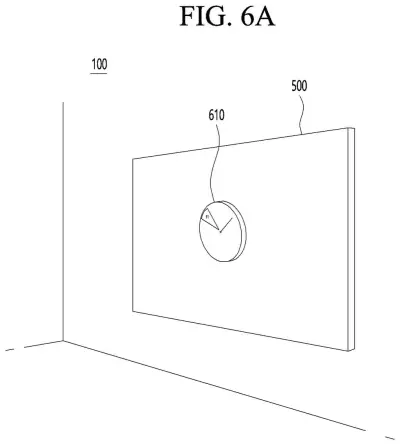
The drawings · 23 sheets
23 drawing sheets from US 2026/0370914 A1 · click any drawing to enlarge


Show the other 15 sheets


More from LG
All 7 LG patents →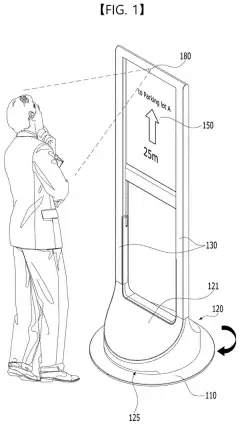
More in Display
All 746 Display patents →
Samsung
Samsung Patents a Smartwatch With a Second Screen Wrapped Around the Side
Nvidia
Nvidia Files Patent for Keeping Camera Colors True in Harsh Lighting
Qualcomm
Qualcomm Patents a Hardware Fix for Graphics That Sharpen Only Where You Look
Sony
No comments yet