
Meta Patents a System That Coaches You to Flex the Right Muscle for Its Wrist Controls
Controlling a computer with a flick of your wrist sounds simple, but first the computer has to learn which tiny muscle you're actually moving. Meta's new patent covers a system that walks you through that training process in real time, adjusting its instructions based on what your body is doing.
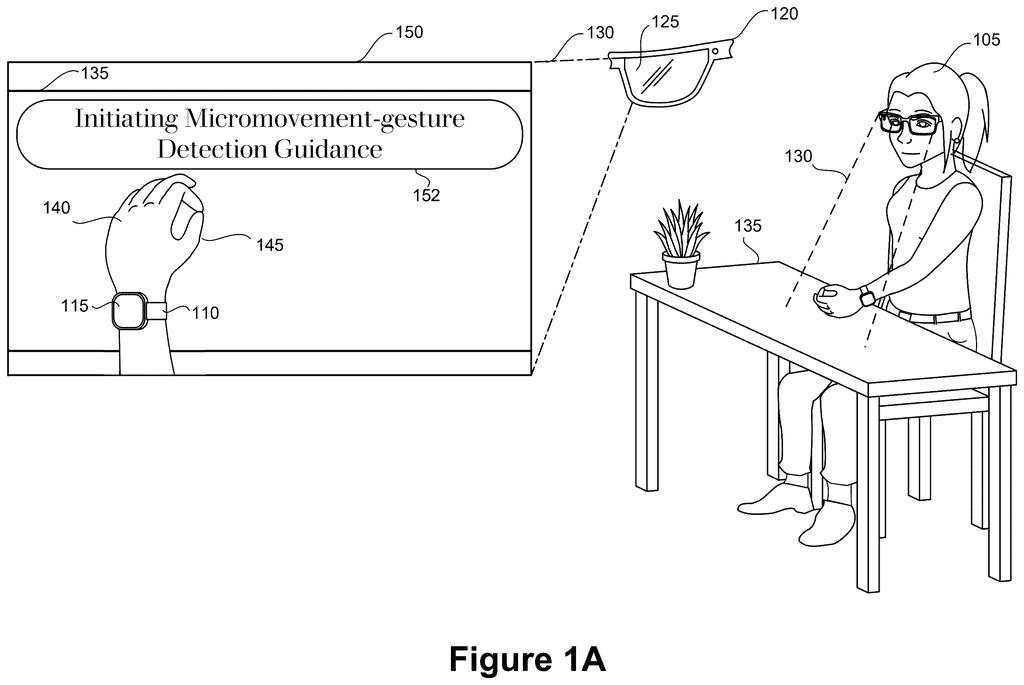
What Meta's muscle-signal training system actually does
A person straps on a wrist band and tries to make a small gesture, a subtle finger movement or a light wrist flick, hoping a headset or phone responds. But most people don't naturally activate the precise muscles a device needs to detect. That gap between what you intend and what the sensor picks up is the core problem this patent tries to solve.
Meta's system guides you through that gap step by step. It shows you instructions and on-screen graphics, watches the electrical signals your muscles produce, and then adjusts the next instruction based on what it saw. If you almost got the right movement, it asks you to try a variation. If you nailed it, it locks that muscle pattern in as a recognized gesture.
The result is a kind of interactive muscle-signal calibration, one that adapts to your body rather than asking you to match a fixed template. You can picture it as a short training session before a game controller works, except the controller is built into your arm.
presenting, via a communicatively coupled output device, first instructions for performing a first movement associated with an activation of a first biological motor unit; …
Translation: The wearable device tells you how to flex a specific muscle to trigger a control.
How the feedback loop reads and reshapes your muscle signals
The system uses biopotential sensors (electrodes that pick up the tiny electrical signals your muscles produce when they contract) worn on the wrist or forearm. These are the same signals captured in medical electromyography (EMG) tests, but here they're read in real time during a guided exercise.
The process works as a loop:
- The system presents a movement instruction and a visual graphic on screen.
- The user attempts the movement; sensors capture the resulting muscle-activation data.
- The system evaluates which motor units (the specific nerve-and-muscle bundles that fired) were active, and compares that to the target pattern.
- It then generates a revised instruction and updates the graphic to nudge the user toward the desired activation.
- Once the sensor data meets a defined threshold of accuracy, the system formally ties that muscle pattern to a gesture command.
The feedback is both instructional and graphical. Changing the visual elements in real time gives the user a concrete signal that they're getting warmer or colder, without needing any prior knowledge of anatomy.
The patent focuses specifically on motor unit-level resolution, meaning the system tries to distinguish not just "forearm muscle active" but which specific group of fibers within that muscle fired. That level of precision is what allows multiple distinct gestures to be mapped on a small body area like a wrist.
System and method for guiding a user in activating biological motor units (MUs) are disclosed.
Translation: The patent describes a way to help people properly activate muscles for device control.
What this means for wrist-worn AR and neural input devices
For wrist-worn devices like Meta's neural wristband (part of the technology the company acquired from CTRL-labs), the biggest friction point has always been getting a new user set up. Your muscle geometry is slightly different from everyone else's, so a gesture that works for a test subject in a lab may not register when you try it. An adaptive coaching system could cut that setup time dramatically and make the device usable without a technician present.
Meta keeps filing on wrist-based neural input at a pace that suggests this is a serious product direction, not a research side project. If this calibration approach works at consumer scale, it removes one of the most practical barriers between a wristband prototype and something a person would actually wear every day.
Meta's 20th filing we've tracked since May on our wrist muscle-reading watch list builds on the optimal wear position and 3D finger control ideas.
When you first put on a muscle-sensing wristband, your body and the device have no shared language. This patent describes a system that coaches you through small, specific movements until the device learns exactly which muscle signals are yours, closing that gap before frustration sets in.
Most people will notice this during the first five minutes of setup, or they won't notice it at all because it worked. The coaching loop described here is what prevents the experience of trying a gesture repeatedly, getting no response, and putting the device in a drawer.
If the guided calibration runs fast enough to feel like a quick hello rather than a homework assignment, a wristband becomes something you can hand to anyone and expect to work. That is the concrete thing at stake.
There are more where this came from
We read every patent application Big Tech publishes and send you the ones worth knowing. Plain English, free, every week.
The drawings
57 drawing sheets from US 2026/0299703 A1 · click any drawing to enlarge


Want this weekly breakdown for a company we don't cover? Patentlyze Pro →
Be the first to weigh in