
Microsoft
Microsoft · AI / ML · Filed Jun 20, 2025 · USPTO published Nov 19, 2026 · This week's release
Microsoft Patents a Screening Step for the Files and Chats Its AI Reads
Before an AI agent acts on your behalf, Microsoft wants it to sort through your meetings, chats and files and throw out the junk. This patent application lays out a two-step filter to do that.
- Publication number
- US 2026/0368232 A1(US20260368232A1)
- Applicant
- MICROSOFT TECHNOLOGY LICENSING, LLC
- Filed · Published
- Jun 20, 2025 · Nov 19, 2026
- Inventors
- Sakshi MUNJAL, . CHAITANYA, Priyank RASTOGI, Sachin SWAMI, Rohan GYANI, Sheetal S SETHI, Sandeep Kumar SRIVASTAVA
- Status when we published
- Approved; patent expected soon
- Document
- 20 claims
- US classification
- 707/749
- Examiner
- ROBINSON, GRETA LEE (Art Unit 2163)
How Microsoft's AI sorts what it reads before acting
You ask your work AI to prep a project update. Behind the scenes it has to read last week's meeting transcript, a pile of chat threads, a few shared files and maybe some web pages. Some of that is useful, some is outdated, and some of it flatly contradicts the rest.
Microsoft's patent application describes a two-step sorting process for exactly this mess. First, the system casts a wide net, pulling anything that might be relevant from every source and labeling each piece with what it is, where it came from and how it was shared. Second, it ranks and trims: it scores each piece for relevance to your task, spots overlaps and conflicts, and drops snippets that are weak and unconnected to anything else.
The AI then works from a cleaned-up summary instead of a heap of raw material.
ranking the artifacts according to their relative importance and relevance; identifying dependencies, overlaps, and information conflicts; and filtering out artifacts that do not connect with other relevant artifacts and are below a minimum relevance threshold.
Translation: The system sorts the gathered data by importance, checks for contradictions, and discards anything irrelevant.
How Microsoft's two-stage pipeline picks the facts
The patent application describes a two-stage pipeline for feeding AI agents (software helpers that carry out tasks) the right background information. Engineers call that background grounding: the facts an AI model relies on so its output matches your actual situation.
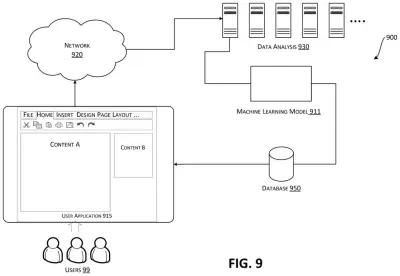
Stage 1 is built for speed and recall (catching everything that might matter). A meta grounding agent queries each source, such as meeting transcripts, files and web content, and returns grounding artifacts. Each artifact is a chunk of text plus metadata saying what the text represents, where it was extracted from, and in what context it was shared.
Stage 2 is built for precision. A synthesizer does three things:
- Ranks artifacts by importance and relevance to the task (the description names task relevance and source credibility as the main criteria).
- Identifies dependencies, overlaps and conflicts between artifacts.
- Filters out artifacts that connect to no other relevant artifact and also fall below a minimum relevance threshold.
The filing also describes helpers for the details. A preprocessor agent splits long text into chunks and tags topics, a reasoning agent clusters chunks by topic and drops the weak ones, and a questioning agent asks for missing information. The result is joined into one cohesive block of text, plus an index agents can use to look up the original artifacts on demand.
Why this matters for Microsoft's workplace AI agents
If you use an AI assistant at work, the quality of its answer depends on what it read first. The filing's own background says pulling from meetings, chats, files and web content adds delay and raises the risk of using wrong or irrelevant data. A filter that cuts clutter and settles conflicts before the agent starts could mean faster, more accurate results. It also addresses a limit the filing points out: the pile of source material can grow past what a large language model (the AI behind chatbots) can hold at once.
The application has been approved, and once Microsoft pays the final fee it should be issued as a granted patent. The filing names Microsoft's Multi-Agent Runtime Service as the setting, but it does not say when or whether any product will use this.
One more thing to know: the patent office has already approved this application. Once Microsoft pays the final fee, it should be issued as a granted patent, and the final claims may read a little differently from the version described here.
That makes this Microsoft's 35th filing we've tracked since July on our AI agents watchlist, building on turning manuals into fixes and finding the right button.
Source: US 2026/0368232 A1 at the USPTO (PDF). Full patent text and figures are in the official publication.
Get our take in your Top Stories
Liked this breakdown? Add Patentlyze as a preferred source on Google, and our plain-English take shows up more often in your Top Stories the next time Microsoft patent news breaks.
Add Patentlyze on Google
One click.
There are more where this came from
We read every patent application Big Tech publishes and send you the ones worth knowing. Plain English, free, every week.
The drawings · 13 sheets
13 drawing sheets from US 2026/0368232 A1 · click any drawing to enlarge


Show the other 5 sheets


More from Microsoft
All 681 Microsoft patents →
More in AI assistant & agent
All 436 AI assistant & agent patents →
Samsung
Samsung Files Patent for a Phone That Builds Its Own Shortcuts From Your Chats
Salesforce
Salesforce Files Patent for AI Assistants That Learn to Use Websites From Flawed Examples
IBM
IBM Patents an AI That Decides When to Speak Up in Group Conversations
Google
No comments yet