
Microsoft's New Patent Keeps AI Answering Your Questions When the Internet Cuts Out
Most AI assistants become useless the moment your connection drops. Microsoft is filing a patent for a system that pre-loads a personalized slice of an AI model onto your device — so it can still answer your questions, even in the middle of nowhere.
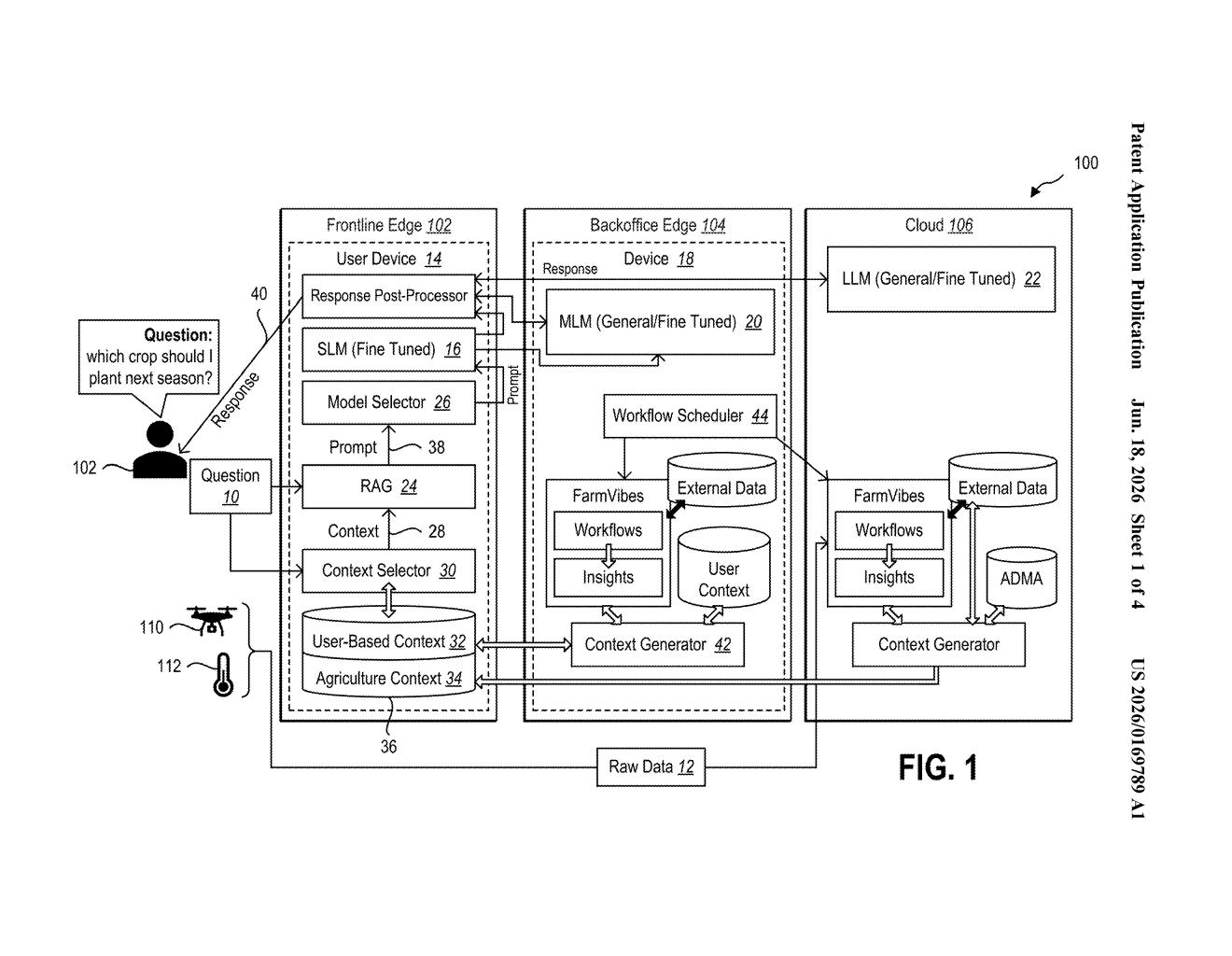
How Microsoft's offline AI actually knows who you are
Imagine you're a field technician in a rural area, and you ask your AI assistant a question — but there's no cell signal. Right now, most AI tools would just fail. Microsoft's patent describes a way to avoid that.
The idea is to have the cloud prepare a compact, personalized version of an AI model for your specific job, habits, and data — and then store that on your device ahead of time. When you lose internet access, the device-side model takes over, using that pre-built personal context to give you answers that still feel relevant to you.
When your connection returns, a bigger, more powerful cloud model can handle heavier questions. The system picks which model to use based on how much connectivity you have at any given moment — so you're always getting the best response possible for your situation.
How the cloud builds and ships your personal AI context
The patent describes a hierarchical AI architecture — a layered stack of language models spread across three tiers: a small model on your device, a mid-size model on a nearby edge server (think a local network hub), and a full-size model in the cloud.
The key mechanism is what Microsoft calls user-specific context generation. Before you ever go offline, the cloud system analyzes your collected data — things like your past queries, work tasks, or stored documents — and packages that into a compact "context" file. This context is then pushed down to your device for local storage. When you ask a question offline, the on-device language model loads that context to shape its answers around your specific situation rather than giving generic responses.
The system decides which model tier to use based on three live signals:
- How much network connectivity is available right now
- How complex the query is
- What compute power the device or nearby edge node can handle
This means a simple question might get answered entirely on-device, while a complex one waits for a cloud connection — or gets routed to a nearby edge server as a middle ground.
What this means for AI tools in remote or rural settings
AI assistants are only as useful as their internet connection, which is a real problem for anyone working in construction, agriculture, logistics, emergency response, or rural healthcare. This patent points at a Microsoft strategy to make AI tools genuinely useful in offline or low-connectivity environments — not just as a fallback, but as a designed-in feature.
For you as an end user, the practical upshot is an AI assistant that doesn't go blank when your signal does. The personalization angle is also worth noting: by pre-loading context specific to your role and data, the on-device model isn't just a dumb fallback — it's supposed to know enough about you to stay actually helpful.
This is a genuinely practical patent aimed at a real gap in AI deployment — the assumption that everyone always has a good internet connection. The hierarchical model-routing approach is the kind of unglamorous infrastructure work that could matter a lot for enterprise and industrial AI tools. Whether Microsoft ships something like this in Copilot or a specialized field-worker product, it's a sensible architectural direction.
There are more where this came from
We read every patent application Big Tech publishes and send you the ones worth knowing. Plain English, free, every week.
Want this weekly breakdown for a company we don't cover? Patentlyze Pro →