
Microsoft
Microsoft · AI / ML · Filed Mar 27, 2025 · USPTO published Oct 1, 2026 · Oct 1 release
Microsoft Patents a Chain-of-Networks Approach to Spotting Objects in Video
Spotting a small, fast-moving object in a blurry video clip is one of the harder problems in computer vision. Microsoft's latest patent applies a relay-race approach, where each piece of an AI model hands off what it learned to the next, building up a richer picture of what's happening across time.
- Publication number
- US 2026/0301374 A1(US20260301374A1)
- Applicant
- Microsoft Technology Licensing, LLC
- Filed · Published
- Mar 27, 2025 · Oct 1, 2026
- Inventors
- Qi ZHANG, Fuxun YU, Rishi MADHOK, Nikolaos KARIANAKIS
- Status when we published
- Waiting for an examiner
- Document
- 20 claims
- US classification
- 382/159
- Examiner
- DUONG, JOHNNYKHOI BAO (Art Unit 2667)
How Microsoft's video AI tracks blurry, tiny, or hidden objects
Imagine you're watching security camera footage of a parking lot at night. A small figure moves quickly across the corner of the frame, blurred by speed and half-hidden by a parked car. A single still-image AI would likely miss it entirely. That's the problem Microsoft is trying to fix here.
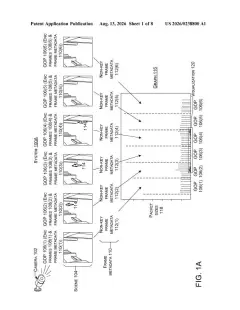
The patent describes an AI model that's broken into a series of smaller sub-models, each one responsible for a different video frame. As one sub-model finishes analyzing its frame, it passes a summary of what it found to the next sub-model, which uses that context when examining the following frame. By the end of the chain, the model has a much more complete picture of what's moving, where, and how fast.
The result can be used for tasks like labeling what's in a video, drawing boxes around objects, or segmenting the scene into regions. Think of it as giving the AI a short-term memory so it can connect the dots across time, rather than treating each frame as a brand-new puzzle.
… assigning individual video frames of the video to respective subnetworks of a machine learning model; extracting initial features from respective video frames of the video; inputting the initial features to respective assigned subnetworks of the machine learning model; propagating intermediate features among the subnetworks …
Translation: The system splits video frames across multiple smaller networks and passes data between them.
How the subnetworks pass context from frame to frame
The system works by distributing individual video frames across a series of subnetworks (smaller, specialized components inside a larger AI model). Each subnetwork handles one frame at a time, but it doesn't work in isolation.
Here's the flow the patent describes:
- The system pulls a sequence of video frames from a clip.
- Each frame is assigned to its own subnetwork in a fixed order.
- The subnetwork extracts initial features from its frame (essentially a compressed mathematical description of what it sees: edges, shapes, colors, motion patterns).
- Those features, plus intermediate features passed forward from the previous subnetwork, are combined and processed.
- The final subnetwork in the chain produces final features that represent the whole sequence.
- Those final features feed into a task-specific output layer for detection, classification, or segmentation.
The key innovation is the propagation of temporal features, meaning information about earlier frames is carried forward through the chain rather than discarded. This is what helps the model handle motion blur (where a fast-moving object appears smeared), occlusion (where an object is partially hidden), and small object size (where a single-frame snapshot may not carry enough pixels to be reliable).
The patent doesn't tie itself to a specific model architecture, which keeps the claims fairly broad.
Objects can be difficult to detect in videos due to motion blur, occlusion, and/or having a relatively small size.
Translation: Video analysis struggles when objects are blurry, hidden, or too small.
What this means for security cameras and video AI tools
Video AI is everywhere: in security systems, sports analytics, autonomous vehicles, and content moderation. The persistent weak point in most deployed systems is exactly what this patent addresses. Small, fast, or partially hidden objects are exactly what cause false negatives in real-world footage, and those misses carry real consequences in safety or surveillance contexts.
For everyday users, this kind of technology could mean a home security camera that actually catches the small detail that matters, or a video conferencing tool that correctly tracks multiple people moving around a room. The patent is filed broadly enough that if granted, it could cover a wide range of implementations where temporal context is passed between AI subnetworks during video analysis, which describes a pattern common to many modern video AI products.
Microsoft's 33rd filing we've tracked since May in AI teams working together builds on ideas like meeting role assistants and a self-managing security trio.
Source: US 2026/0301374 A1 at the USPTO (PDF). Full patent text and figures are in the official publication.
Get our take in your Top Stories
Liked this breakdown? Add Patentlyze as a preferred source on Google, and our plain-English take shows up more often in your Top Stories the next time Microsoft patent news breaks.
Add Patentlyze on Google
One click.
There are more where this came from
We read every patent application Big Tech publishes and send you the ones worth knowing. Plain English, free, every week.
The drawings · 17 sheets
17 drawing sheets from US 2026/0301374 A1 · click any drawing to enlarge


Show the other 9 sheets


More from Microsoft
All 646 Microsoft patents →
More in AI vision
All 339 AI vision patents →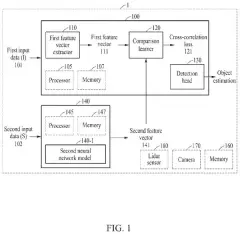
Samsung
Samsung Patents a Training Method That Uses Two AI Systems to Identify Objects
IBM
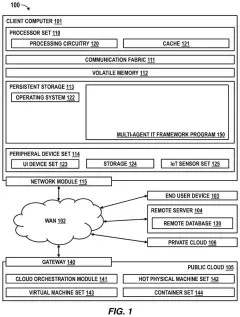
IBM Patents an AI System That Diagnoses and Fixes IT Outages Automatically
Salesforce
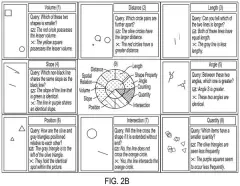
Salesforce Patents AI That Corrects Its Own Visual Math Mistakes
Samsung
No comments yet