
Microsoft
Microsoft · Software · Filed Feb 21, 2025 · USPTO published Aug 27, 2026 · Aug 27 release
Microsoft Patents a Code Editor That Hides Irrelevant Lines as You Work
Every developer knows the pain of scrolling through thousands of lines to find the one function that matters. Microsoft's new patent describes an editor that hides the rest automatically.
- Publication number
- US 2026/0252315 A1(US20260252315A1)
- Applicant
- MICROSOFT TECHNOLOGY LICENSING, LLC
- Filed · Published
- Feb 21, 2025 · Aug 27, 2026
- Inventors
- Ion TODIREL, Bogdan Ionut MIHALCEA
- Status when we published
- Waiting for an examiner
- Document
- 20 claims
- US classification
- 717/106
What Microsoft's context-aware code view actually does
A developer opens a source file with ten thousand lines of code and needs one small section near the bottom. So the editor just shows them that section, hiding the rest.
That's the core idea in this Microsoft patent. The editor watches what you're doing, figures out what part of the code is relevant right now, and shows you a trimmed view that looks like a normal file but skips everything you don't need. If you switch to a different task, the view updates to match.
When the view changes, the editor visually highlights which lines are new, so you're never confused about what shifted. It's aimed squarely at large software projects where a single file can scroll for minutes, and where finding your place is half the battle.
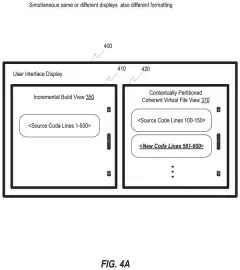
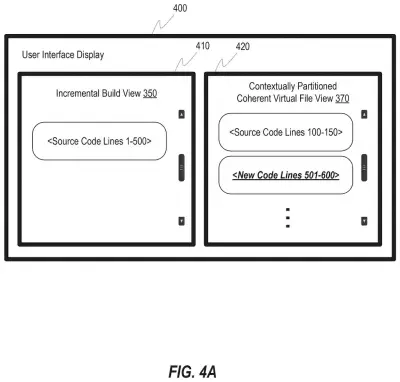
Partitioned segments are presented within a coherent virtual file view while omitting less relevant code from the coherent virtual file view.
Translation: The editor displays only the relevant sections and hides unnecessary lines of code.
How the editor detects context shifts and rebuilds the view
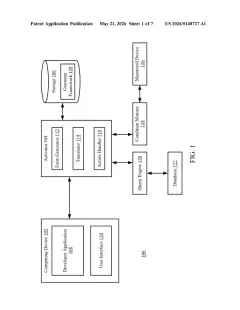
The system works inside a code editor and continuously monitors what a developer is focused on. Based on that focus (called the "defined context" in the patent), it partitions the source file into segments and presents only the relevant ones in what the patent calls a contextually partitioned coherent virtual file view.
That phrase is doing a lot of work. "Virtual file view" means the underlying file is not changed. The developer sees a filtered window into the real file, not a copy. "Coherent" means the displayed segments flow together logically, so the view doesn't feel broken or patchy even though chunks are missing.
When the context changes, say the developer clicks somewhere new or switches tasks, the system detects that change and regenerates the view. Crucially, it visually distinguishes the newly shown code from what was visible before, so the developer can see at a glance what shifted.
The patent covers both the display logic and the update logic:
- Determining context and scope from developer activity
- Partitioning source code based on that context
- Rendering a filtered but coherent view of the relevant segments
- Re-rendering with visual differentiation when context changes
… detecting a change that results in a new defined context for generating an updated contextually partitioned coherent virtual file view of partitioned code segments; …
Translation: When your focus shifts, the editor automatically updates to show the new relevant code.
What this means for developers working in large codebases
For developers working in large, mature codebases, like the ones maintained by Microsoft itself inside products such as Windows or Visual Studio, file size is a real daily friction. A feature that automatically collapses irrelevant code and updates that collapse in real time could meaningfully reduce the mental overhead of navigating a project.
The broader trend here is editors becoming more context-aware rather than just syntax-aware. Microsoft has been building AI-assisted developer tools under the GitHub Copilot umbrella, and a patent like this fits that direction, whether or not it ever ships as a standalone feature. Patentlyze tracks new Big Tech patents across developer tooling and AI, where Microsoft has been one of the most active filers in the past two years.
That makes this Microsoft's 333rd filing in our Microsoft coverage since May, a run that spans everything from private call timers to AI building AI training data.
Source: US 2026/0252315 A1 at the USPTO (PDF). Full patent text and figures are in the official publication.
Get our take in your Top Stories
Liked this breakdown? Add Patentlyze as a preferred source on Google, and our plain-English take shows up more often in your Top Stories the next time Microsoft patent news breaks.
Add Patentlyze on Google
One click.
There are more where this came from
We read the new patents from Big Tech, carmakers and more and send you the ones worth knowing. Plain English, free, every week.
The drawings · 10 sheets
10 drawing sheets from US 2026/0252315 A1 · click any drawing to enlarge


Show the other 2 sheets


More from Microsoft
All 681 Microsoft patents →
More in Software
All 816 Software patents →
Nvidia
Nvidia Patent Routes Compiled Code Dynamically to Different Processor Targets at Runtime
Adobe
Adobe Patents a System That Turns UI Designs Into Reusable Code Automatically
IBM
New IBM Patent Pinpoints Whether Bugs Live in Code or Tests
Samsung