
Microsoft
Microsoft · Battery & power · Filed Jul 17, 2026 · USPTO published Nov 12, 2026 · This week's release
Microsoft Patents a Laptop Charger That Reels in Its Own Cable
Microsoft has filed a patent application for a laptop charger with a tiny motor inside that winds the cable back into the brick the moment you unplug it. It also sizes the cable to fit the job, so there's no slack left to snag on.
- Publication number
- US 2026/0361067 A1(US20260361067A1)
- Applicant
- Microsoft Technology Licensing, LLC
- Filed · Published
- Jul 17, 2026 · Nov 12, 2026
- Inventors
- Ahilan ANANTHA KRISHNAN
- Status when we published
- Waiting for an examiner
- Document
- 20 claims
- US classification
- 242/390.1
- Parent application
- Continuation of 18/641,929 (filed Apr 22, 2024)(18641929)
What Microsoft's self-reeling charger cable does
You pull the plug out of your laptop ultimately, and the charger cable is left sprawled across your desk, looped around a coffee mug. In this Microsoft filing, the charger notices the unplug and reels the cable back inside by itself, leaving only the plug end outside.
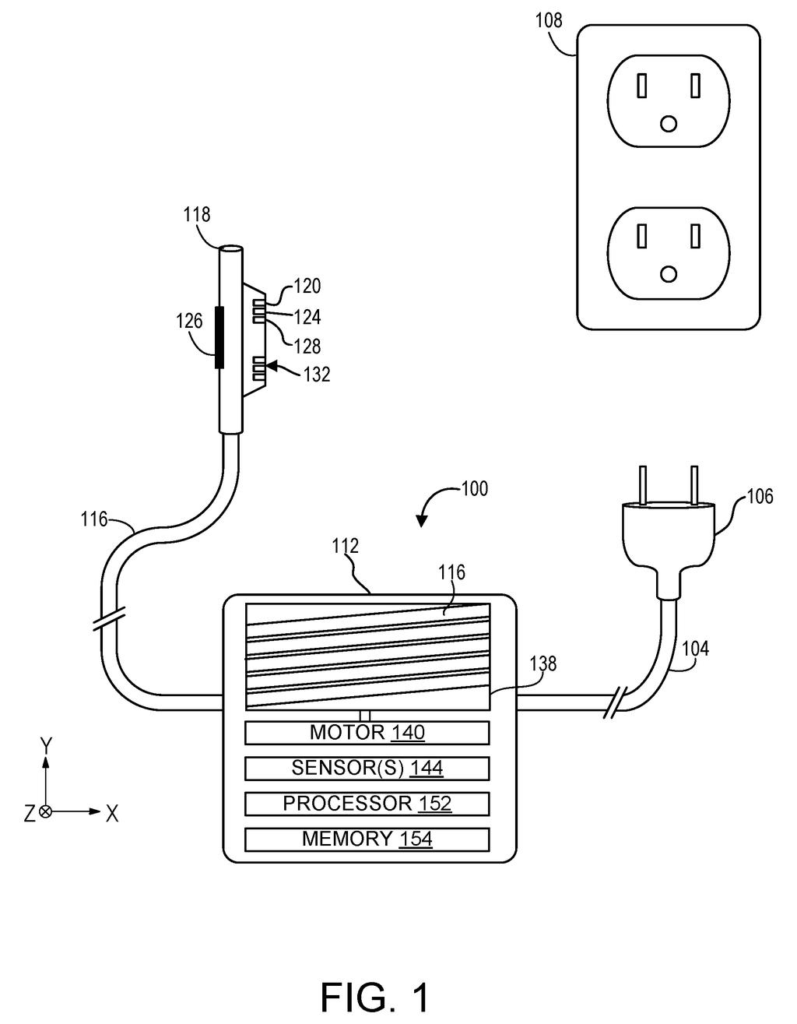
The charger brick holds a small motor and a spool, a bit like a tape measure. When you plug in, it can also pull the cable in to a set length, so there's no extra slack to catch on a water bottle or a passing pet. It keeps track of how taut the cable is and how sharply it bends, and it stops before anything is strained.
The filing even describes learning your habits. If you usually pick up your phone while it charges, the charger could let out more cable, say 1.5 meters instead of 1.
determining that a device connector of the device cable is disconnected from a computing device; and based at least in part on determining that the device connector of the device cable is disconnected from the computing device, actuating a motor in the power supply device to retract the device cable.
Translation: The charger senses when you unplug your laptop and automatically winds up the cord.
How the charger knows when to stop reeling
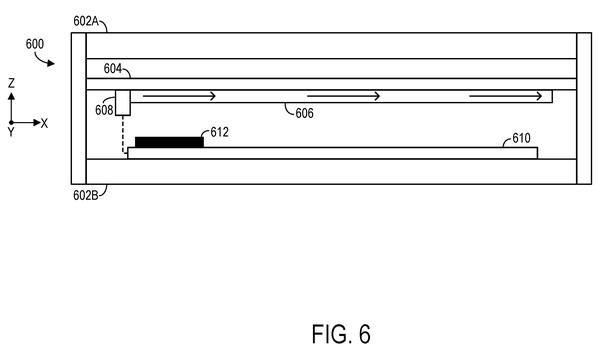
The core idea is a power supply (the brick between the wall outlet and your device) that has a motor-driven spool inside. The charging cable is wound around that spool, so the motor can pull cable in or push it out.
To know when to retract, the charger checks for a connection signal, a small message the laptop normally sends when the plug is seated. When that signal is missing, the charger decides the plug is out and runs the motor to pull the cable fully, or nearly fully, into its housing. The connector stays outside so you can grab it again.
The filing also describes three ways the charger can judge how much cable to give you:
- Tension: a force sensor (it can read how hard the motor is working) shows how tight the cable is, and the motor stops at a target tension.
- Bending strain: a strain gauge near the plug end detects kinks or sharp bends.
- Length: an encoder (a sensor that counts spool turns) tracks how much cable is out.
These can be combined. Other options include a button on the connector (hold it for about 1.5 seconds to run the motor) and a machine-learning model that adjusts the length based on your past behavior.
Why a tidier desk is the point of this filing
If you work at a desk with a laptop, a phone and a tangle of chargers, this is aimed at the mess you actually see: cables draped over books, cups and bottles, or lying across the floor where people trip. A charger that tidies itself could make a shared desk, a coffee shop table or a conference room look much cleaner.
The tension and bend sensors also hint at a second goal, protecting the cable itself. Yanked and kinked cables are a common reason chargers fail. The filing is a continuation of an earlier application and describes no product or release plan, so treat it as an idea Microsoft wants on record, not a charger you can expect to buy.
Microsoft's sixth filing in the battery and power patents we've tracked since May follows one on tiny liquid heat pumps and one on removing AI chip bottlenecks.
Source: US 2026/0361067 A1 at the USPTO (PDF). Full patent text and figures are in the official publication.
Get our take in your Top Stories
Liked this breakdown? Add Patentlyze as a preferred source on Google, and our plain-English take shows up more often in your Top Stories the next time Microsoft patent news breaks.
Add Patentlyze on Google
One click.
There are more where this came from
We read every patent application Big Tech publishes and send you the ones worth knowing. Plain English, free, every week.
The drawings · 12 sheets
12 drawing sheets from US 2026/0361067 A1 · click any drawing to enlarge


Show the other 4 sheets


More from Microsoft
All 646 Microsoft patents →

More in Battery & power
All 116 Battery & power patents →
Samsung
Samsung Patents a Wireless Charger That Spots Metal Objects Before Fast Charging Starts

Samsung
Samsung Patents a Wireless Charger That Negotiates Voltage on Both Ends
Intel
Intel Patents a Physical Key System That Stops You Installing the Wrong Laptop Battery
Tesla
No comments yet