
Microsoft
Microsoft · AI / ML · Filed Jul 7, 2026 · USPTO published Nov 12, 2026 · This week's release
Microsoft Files Patent to Help AI Skip the Still Parts of a Video
Compressed video files already carry notes about what moved between frames. Microsoft's patent application reuses those notes to show an AI only the action, so it can skip everything that sits still.
- Publication number
- US 2026/0359994 A1(US20260359994A1)
- Applicant
- Microsoft Technology Licensing, LLC
- Filed · Published
- Jul 7, 2026 · Nov 12, 2026
- Inventors
- Christian Palmer LARSON, Naveen THUMPUDI, Mehmet KUCUKGOZ, Louis-Philippe BOURRET
- Status when we published
- Waiting for an examiner
- Document
- 20 claims
- US classification
- 382/103
- Parent application
- Continuation of 18/070,236 (filed Nov 28, 2022)(18070236)
What Microsoft's motion-based video filter does
Imagine you've handed an AI an hour of security footage and asked it to flag anything interesting. For most of that hour nothing happens: an empty hallway, a parked car. A typical AI would still study every frame, and you'd pay for all that looking in time and computing power.
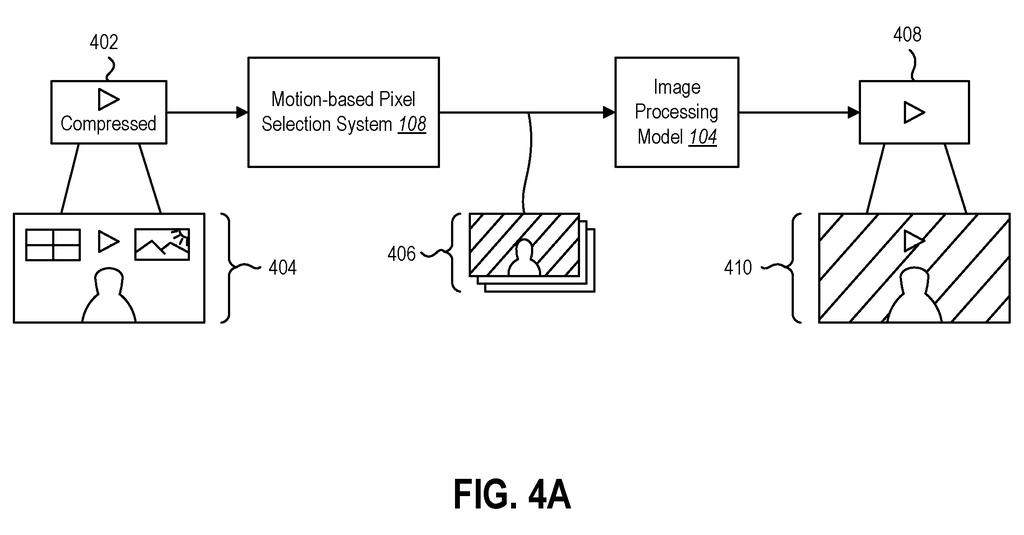
Microsoft's patent application describes a shortcut. Video files are squeezed down before they're stored or streamed, and the squeezed file already contains notes about what moved from one frame to the next. Microsoft's idea is to read those notes while the video is being unpacked, then show the AI only the moments and the patches of the picture where something is moving.
The AI gets less to chew on, so it can finish faster and cost less to run. It can also receive the movement notes themselves as extra clues, such as how fast a baseball is flying.
identifying motion data from the compressed digital video; and generating pixel data of a plurality of frames based at least in part on the motion data; …
Translation: The system finds motion details inside compressed video and builds picture frames using that movement.
How the decoder's motion notes pick the pixels
The claims cover a pipeline that starts with decompressing a video. Compressed formats such as H.264 store a few full reference frames plus motion vectors (small arrows saying how a patch of the picture shifted between frames). Rebuilding the frames uses those arrows, so the system can capture them as a by-product of work it is already doing.
- Use the motion data to find regions of interest, the patches of each frame where something is moving.
- Pick a subset of the pixels, such as only those regions, instead of whole frames.
- Hand that subset, plus the related motion data, to an image processing model (an AI trained to produce a result from pixels and motion).
The filing also describes variations. Sudden breaks in the motion data can mark scene changes, and busy scenes can be sampled at a higher frame rate than still ones. Camera movement, like a pan or zoom, can be separated from the movement of objects, and the frame rate can be matched to how much the AI or a cloud budget can handle.
The dependent claims and description list example outputs: keeping only the foreground and placing it over an augmented reality background, cutting a long video down to a short clip, tagging key moments so viewers can skip to them, estimating the speed of a baseball, or choosing a thumbnail. The AI can run in the cloud or on the same device that decompresses the video.
… analyzing the motion data to determine a subset of pixel data from the decompressed digital video to provide as input to an image processing model …
Translation: It studies the movement data to figure out which specific video pixels the AI actually needs to see.
Why cheaper video AI could reach more apps
If you've ever watched a phone heat up or a cloud bill climb while an AI chewed through video, this is the problem being attacked. The filing says machine-learning tools can drain a device's processing power and run up big cloud costs. Sending the AI only the moving parts could make features like background swaps, auto-trimmed clips and jump-to-the-good-part markers faster and cheaper to offer.
The description also says an AI fed motion data could be trained with fewer images, since the motion hints do part of the work. The filing names no product, so treat it as a building block that could slot into any app that analyzes video, whether on a phone or in a data center.
Microsoft's 60th filing in Enterprise AI we've tracked since May adds to a run that includes self-checking AI coding help and an app builder from written descriptions.
Source: US 2026/0359994 A1 at the USPTO (PDF). Full patent text and figures are in the official publication.
Get our take in your Top Stories
Liked this breakdown? Add Patentlyze as a preferred source on Google, and our plain-English take shows up more often in your Top Stories the next time Microsoft patent news breaks.
Add Patentlyze on Google
One click.
There are more where this came from
We read every patent application Big Tech publishes and send you the ones worth knowing. Plain English, free, every week.
The drawings · 11 sheets
11 drawing sheets from US 2026/0359994 A1 · click any drawing to enlarge


Show the other 3 sheets


More from Microsoft
All 646 Microsoft patents →
More in AI / ML
All 2,637 AI / ML patents →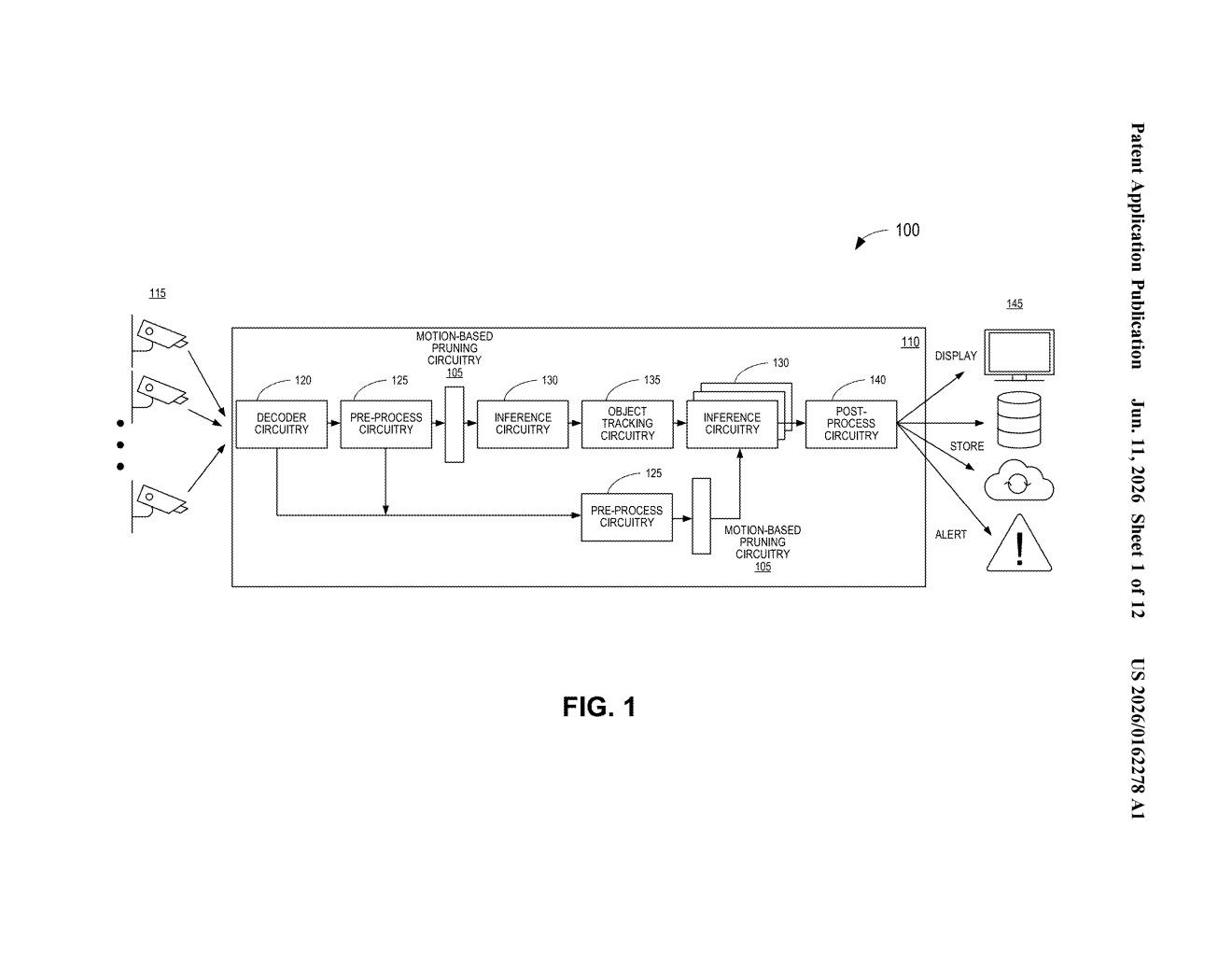
Intel
Intel Patents a Way to Make AI Video Analysis Skip the Parts That Aren't Moving
Samsung
Samsung Patents an AI Method for Creating Slow-Motion Video From Normal Footage
Nvidia
Nvidia Files Patent for AI Video Built From Frames That Share Their Static
Salesforce
No comments yet