
Netflix
Netflix · Software · Filed Jul 27, 2026 · USPTO published Nov 19, 2026 · This week's release
Netflix Files Patent for Trailers That Update Themselves as Shows Come and Go
Netflix describes storing one big video file of clips and using a list of directions to turn it into a different trailer for every viewer. The claims add that the directions get rebuilt whenever titles join or leave the library.
- Publication number
- US 2026/0370921 A1(US20260370921A1)
- Applicant
- Netflix, Inc.
- Filed · Published
- Jul 27, 2026 · Nov 19, 2026
- Inventors
- Christine Doig-Cardet, Bruce Wobbe, Sanford Holsapple, Alexander Lott, Sonali Sharma, Clay Gimenez, Jeremy Kelly, Jeff Kirchner, Leena Janardanan
- Status when we published
- Waiting for an examiner
- Document
- 20 claims
- US classification
- 725/34
- Parent application
- Continuation of 18/949,009 (filed Nov 15, 2024)(18949009)
What Netflix's one-file trailer idea does
Right now, every trailer for a movie or show is its own separate video file. If a studio wants a comedy-flavored cut and an action-flavored cut of the same film, it has to encode and store both, and then repeat that across an entire catalog.
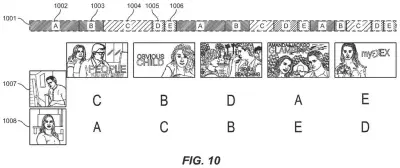
Netflix's filing describes a shortcut. Instead of saving finished trailers, it saves one big file of clips (the filing calls it a mega asset) plus a set of directions for which clips to play and in what order. Those directions are the playgraph. Your account could get one path and your neighbor's another, all drawn from the same stored file.
The claims add a twist: when titles are added to or removed from the library, the system notices and rebuilds the directions so the trailer matches what is actually available.
generating, from a plurality of media items stored in a data store, a mega asset comprising a data structure that includes media segments taken from the plurality of media items stored in the data store; …
Translation: It bundles pieces of many different shows into one giant digital file.
How the playgraph picks clips for each viewer
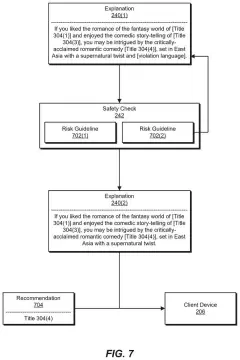
The first claim covers a four-step routine. The system builds a mega asset, a single data structure holding video segments pulled from many titles in the company's library. It then generates a playgraph, which is a playback path: a list saying which segments play and in what order. Next it watches for changes to the library, such as a title added or removed. When that happens, it generates a modified playgraph through the updated titles.
The description fills in the rest. A mega asset might hold five, 10, 15, 20 or more clips in one standard video file, each tagged with metadata such as comedy or a particular actor. A virtual asset bundles a playgraph with a unique ID, so a device can be sent just the ID and play a path it already has stored.
- Viewers with no history get a generic or popularity-based path.
- The system tracks which clips you watched, and which were personalized versus randomly picked.
- A cadence template trims clips (for example, 160, 80 or 40 video frames) so cuts land on the beat of the music.
- Devices that cannot follow a playgraph just play an introductory clip and a body clip.
… generating playgraphs for the media item, where the playgraphs define different playback paths between media item segments.
Translation: It creates custom maps that decide the exact order in which clips are played.
Why Netflix trailers could differ per viewer
For you, the visible change would be modest but constant: the trailer you see for a title could be assembled from clips chosen for your tastes, such as a favorite actor or genre, and timed to the music. The filing frames the main payoff as storage. One stored file replaces a pile of separate trailer videos for every title.
The claims lean toward upkeep. When titles join or leave the library, the paths get rebuilt, which matters for a service whose catalog keeps shifting, since a trailer pointing at a removed show would be a dead end. The filing also says the same approach could apply to full-length movies, audiobooks and songs, though trailers are the main example throughout.
Source: US 2026/0370921 A1 at the USPTO (PDF). Full patent text and figures are in the official publication.
Get our take in your Top Stories
Liked this breakdown? Add Patentlyze as a preferred source on Google, and our plain-English take shows up more often in your Top Stories the next time Netflix patent news breaks.
Add Patentlyze on Google
One click.
There are more where this came from
We read the new patents from Big Tech, carmakers and more and send you the ones worth knowing. Plain English, free, every week.
The drawings · 10 sheets
10 drawing sheets from US 2026/0370921 A1 · click any drawing to enlarge


Show the other 2 sheets


More from Netflix
All 2 Netflix patents →More in Software
All 816 Software patents →
Google
Google Files Patent for One Screen That Lets Your Email Update Your Calendar
Google
Google Files Patent for Smoothing the Blocky Seams in Compressed Video
Apple
Apple Files Patent for a Video Timeline That Flags Scenes Risky to Your Health
Apple
No comments yet