
Google
Google · Software · Filed Jul 23, 2026 · USPTO published Nov 19, 2026 · This week's release
Google Files Patent for Smoothing the Blocky Seams in Compressed Video
Google has filed a patent for letting each tiny square of a video borrow motion from the square beside it, so the edges between squares line up instead of showing as seams.
- Publication number
- US 2026/0370842 A1(US20260370842A1)
- Applicant
- GOOGLE LLC
- Filed · Published
- Jul 23, 2026 · Nov 19, 2026
- Inventors
- Rachel Barker, Debargha Mukherjee, Jianle Chen
- Status when we published
- Waiting for an examiner
- Document
- 20 claims
- US classification
- 375/240.02
- Parent application
- Continuation of 18/864,188 (filed Nov 8, 2024)(18864188)
What Google's neighbor-borrowing video trick does
A streaming video of a spinning bicycle wheel gets chopped into thousands of small squares before it travels over the internet. Each square is predicted from an earlier frame, and when neighboring squares guess slightly different motion, faint seams show along their edges. That is the blocky look of a low-quality stream.
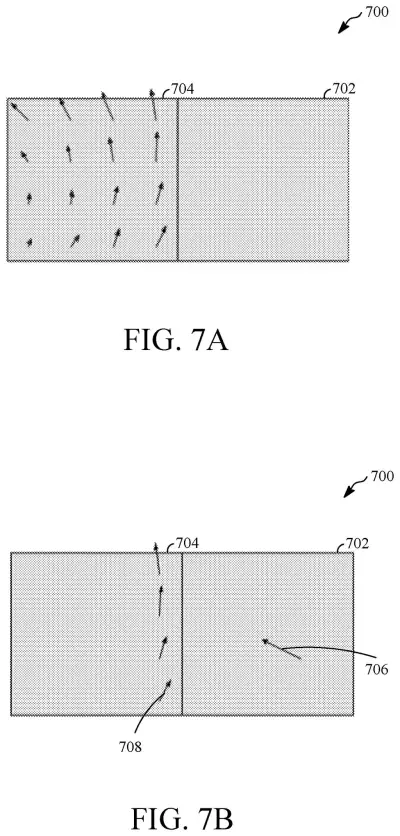
Google's patent has each new square borrow the motion of the square next to it. The square starts with its neighbor's movement, including twists and zooms, then adjusts it using one simple motion hint of its own. The two squares agree along their shared edge, so the seam mostly disappears.
For you, that could mean cleaner video for the same amount of data, or the same quality using less. The filing says the math is light and that only a few bits are needed to tell the player the trick is in use.
generating, for a current block that shares at least a portion of a boundary with an adjacent block, a warp model according to a constraint applied along a column of pixels of the adjacent block to maintain per-pixel motion vector continuity across the at least the portion of the boundary; …
Translation: The system blends pixel movement across block edges to eliminate visible grid lines.
How a block extends its neighbor's motion
Video compression works block by block. For each block, the encoder (the program that shrinks the video) finds a matching patch in an earlier frame and sends only the small difference. The matching rule is a motion model: either a single shift (a translational motion vector, meaning the whole block slides by the same amount) or a warp model, which also allows rotation, zoom and shear.
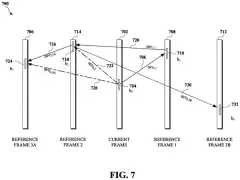
Here, the current block starts from the motion model of an adjacent block that shares an edge with it. A continuity constraint is applied along the column of pixels at that shared edge, so each pixel's motion matches on both sides. The block's own translational vector then pins down the rest. In the filing's worked example, this becomes six equations that solve for the six numbers of the new warp model.
The filing also describes several variations:
- The decoder can read a flag in the block or frame header, or infer the choice from context, such as neighbors already using warp models.
- A neighbor's plain shift can be treated as a warp with no twist.
- Predictions built from two neighbors can be blended, or paired with two-way prediction.
When the block center sits a power-of-2 distance from the edge, the one division involved becomes a simple binary shift, which keeps the math cheap.
Motion for an adjacent block is extended locally into the block to determine motion for predicting the block.
Translation: Neighboring pixel motion data is stretched across the boundary to predict how the current block should move.
Why smoother block edges matter for streaming
If you stream video, join video calls, or watch clips on your phone, quality depends on how well the codec (the video shrinking software) guesses motion. Smoother edges between blocks mean fewer visible seams. The filing says this can reduce how much deblocking (a cleanup pass that blurs block edges) is needed, and the bits spent signaling it.
The filing also stresses cost. It needs only a small number of basic arithmetic operations, far fewer than fitting a model across many nearby blocks, and only a few bits to switch on. That matters on phones and in live calls, where every bit and every chip cycle counts. The filing does not say whether any Google product will use it.
That makes this Google's 86th filing we've tracked in our AI photo editing race since May, adding to work like relighting faces post-shot and reshaping rejected images to pass rules.
Source: US 2026/0370842 A1 at the USPTO (PDF). Full patent text and figures are in the official publication.
Get our take in your Top Stories
Liked this breakdown? Add Patentlyze as a preferred source on Google, and our plain-English take shows up more often in your Top Stories the next time Google patent news breaks.
Add Patentlyze on Google
One click.
There are more where this came from
We read every patent application Big Tech publishes and send you the ones worth knowing. Plain English, free, every week.
The drawings · 6 sheets
6 drawing sheets from US 2026/0370842 A1 · click any drawing to enlarge


More from Google
All 1,127 Google patents →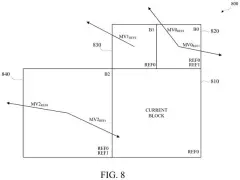
More in Software
All 814 Software patents →
Microsoft
Microsoft Files Patent for Letting AI Fill In a Video's Missing Detail
Samsung
Samsung Files Patent for Phone Video That Lets You Change Its Star After Filming
Microsoft
Microsoft Patents an AI Judge That Picks the Cleanest Photo Cutout
Samsung
No comments yet