
Nvidia Patents a Way to Stop Flickering Artifacts in Real-Time Graphics
Random noise in rendered images isn't all bad — but the wrong kind of noise creates ugly, flickering artifacts. Nvidia's new patent describes a smarter way to orchestrate that noise so your GPU produces cleaner images with fewer samples.
What Nvidia's blue noise mask system actually does
Imagine watching a campfire scene in a video game. The lighting flickers realistically, but if your GPU is cutting corners — which it always is in real-time rendering — some pixels end up with the wrong color or brightness because there just wasn't enough time to calculate them perfectly. The solution isn't to work harder; it's to distribute the guessing more cleverly.
That's what blue noise does. Unlike purely random noise, blue noise spreads estimation errors evenly across space so your eye naturally blends them out. Nvidia's patent takes this a step further: instead of a simple grid of scalar noise values, it uses vector values per pixel — think of each pixel carrying a small arrow pointing in a direction, not just a single number. That richer information lets the system handle not just space but time, smoothing out flickering artifacts that appear when you string multiple rendered frames together.
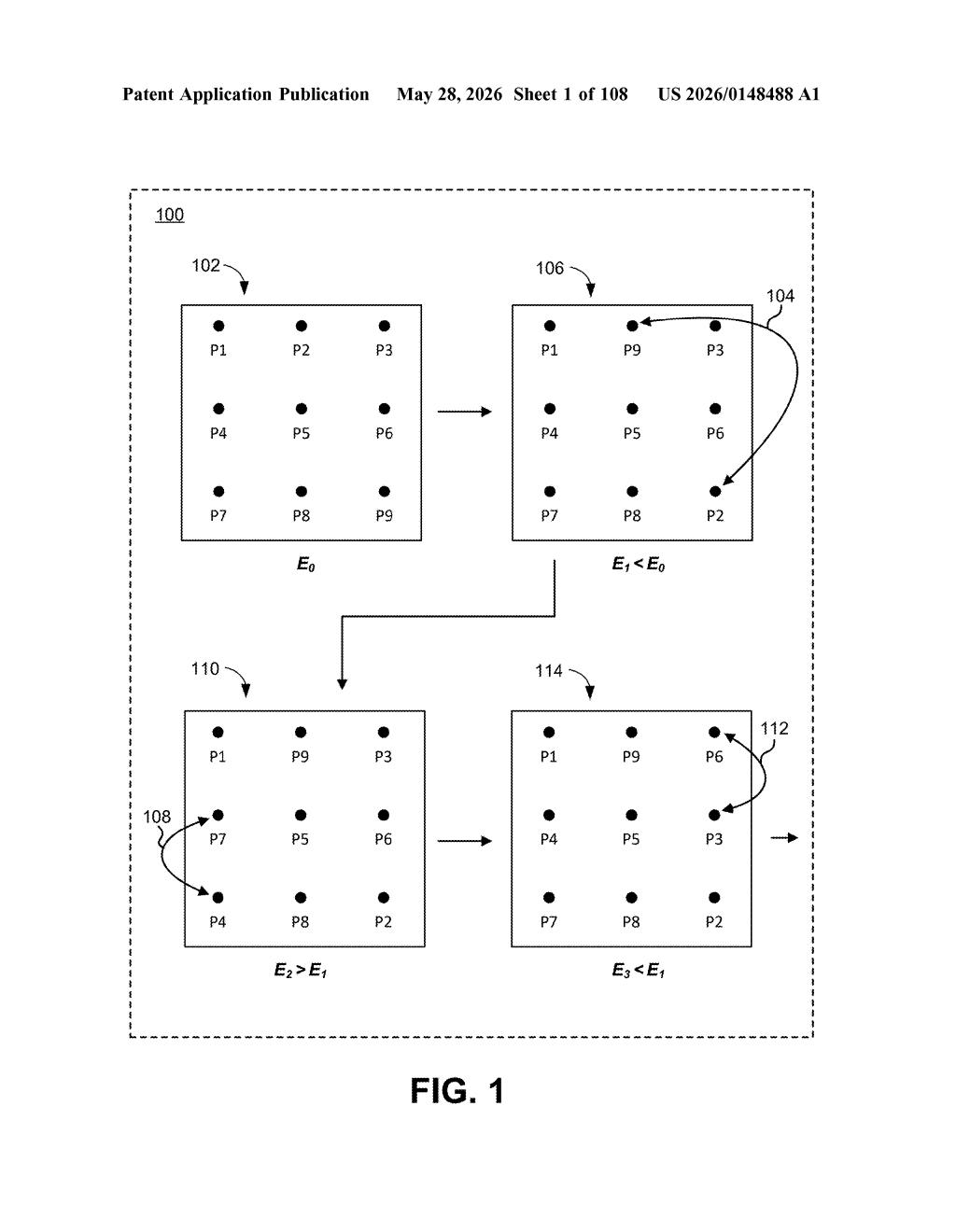
The core trick is an importance-sampling-and-swapping process: pixels are grabbed based on how visually significant they are, then shuffled around to build a noise mask that's perceptually well-distributed before the final image is drawn.
How Nvidia builds and applies vector noise masks per pixel
The patent describes a method for generating and applying blue noise masks — structured patterns of randomness used to distribute rendering errors in a way that's perceptually pleasant rather than visually jarring.
Traditional noise in rendering is often white noise (completely random, like TV static), which clusters errors unpredictably and causes visible grain. Blue noise removes low-frequency clumping so errors are evenly spaced — your visual system integrates them as smooth color rather than gritty speckle.
Nvidia's approach adds two meaningful upgrades:
- Vector values per pixel: Each pixel in the mask stores a vector (a multi-component value, like an (x, y) direction) rather than a single scalar number. This gives the mask more expressive power — useful when sampling multi-dimensional quantities like lighting directions or material reflectance.
- Temporal extension: The mask is extended into the time domain, meaning it coordinates noise patterns across consecutive frames. This helps suppress the flickering and ghosting artifacts that plague techniques like ray tracing and denoising when frames are composed into motion.
The generation process relies on importance sampling (prioritizing pixels that contribute most to the final image) followed by a pixel-swapping optimization loop that redistributes values until the mask achieves the desired blue-noise frequency profile. The resulting mask is then fed directly into the rendering pipeline.
What this means for real-time ray tracing and AI upscaling
Noise masks are a quiet but load-bearing piece of modern GPU rendering pipelines. Techniques like path tracing, DLSS, and TAA (Temporal Anti-Aliasing) all depend on well-structured noise to make undersampled frames look complete. A better noise mask means fewer visual artifacts without extra GPU compute — which is exactly the kind of efficiency gain that matters in real-time scenarios like games or interactive visualization.
The temporal dimension is the genuinely interesting part here. Most blue noise work focuses on single frames. Extending it across time directly targets the shimmering and flickering that users notice most in ray-traced scenes. If Nvidia integrates this into its RTX rendering stack or future DLSS iterations, you could see cleaner motion in demanding scenes without touching frame rate budgets.
This is solid, unsexy graphics engineering — exactly the kind of foundational work that makes the next generation of real-time ray tracing feel polished rather than gimmicky. Blue noise research isn't new, but extending vector-valued masks into the temporal domain is a meaningful refinement, and Nvidia is the right company to industrialize it given their control over the RTX rendering pipeline. Worth watching, even if it'll never make a product spec sheet.
There are more where this came from
We read every patent application Big Tech publishes and send you the ones worth knowing. Plain English, free, every week.
Want this weekly breakdown for a company we don't cover? Patentlyze Pro →