
Nvidia Patents a Way to Stop AI Cameras From Wasting Power on Redundant Video Frames
Every second of video is dozens of frames, and most of them look nearly identical to the last one. Nvidia is patenting a system that teaches AI cameras to notice when a frame is actually worth thinking about, and skip the rest.
How Nvidia's vision AI decides which frames are worth analyzing
AI cameras today process every single video frame the same way, whether or not anything in the scene has changed. That brute-force approach burns through computing power and battery life, even when the world on screen is perfectly still.
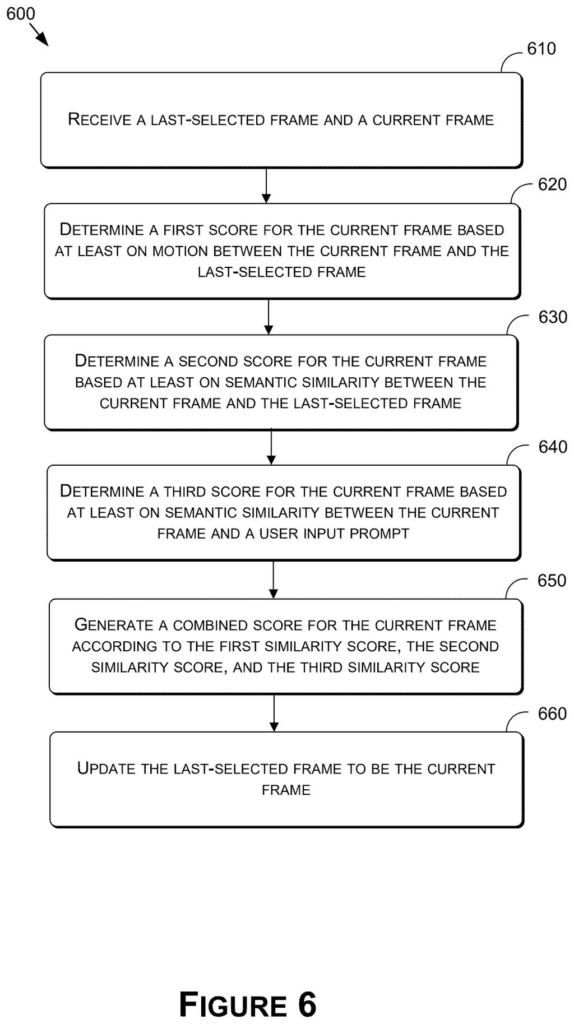
Nvidia's patent describes a smarter gate: before sending a frame to the heavy-duty AI for analysis, the system checks two things. First, how different is this frame from the previous one? Second, how relevant is this frame to whatever task the AI is currently focused on? Only if both scores (combined into a single number) clear a threshold does the full AI engine kick in.
The result is that your device's AI spends its energy on frames that actually contain new or meaningful information, and coasts through the boring ones. That could translate to longer battery life, cooler hardware, and faster responses when something genuinely important happens in front of the camera.
detect a motion between a first frame of image data and a second frame of image data; determine a first similarity score between the first frame and the second frame …
Translation: The system compares consecutive video frames to see if anything has actually changed.
How the scoring system picks frames to send to the neural network
The patent centers on a filtering layer that sits in front of a vision language model (VLM, an AI that can both see images and understand language-style instructions). The filter produces two scores before deciding whether to run the expensive AI:
- Similarity score 1 (temporal): How much did the image change between the previous frame and the current one? A score near zero means the camera is looking at essentially the same thing.
- Similarity score 2 (contextual): How relevant is the current frame to the active processing context, meaning the task or query the AI is currently handling? A frame of an empty hallway scores low if the AI is watching for a pedestrian.
- Motion signal: A separate motion-detection check flags whether anything in the frame moved at all, adding a third input to the decision.
These three signals feed into a combined score. If that combined score clears a threshold (the "frame selection criteria"), the system sends the frame to one or more neural networks for full analysis. If not, the frame is skipped.
The architecture is purely software-level filtering on top of existing neural network hardware. No new chip or sensor is required. The tricky part is tuning the thresholds so the filter never accidentally ignores a frame that matters.
… process the second frame using one or more neural networks responsive to determining that one or more frame selection criteria are satisfied based at least on the combined score.
Translation: AI analysis runs on the new frame only if it passes the system importance checks.
What this means for robots, drones, and always-on AI cameras
For any device that runs AI vision continuously, like a robot, a self-driving car, a security camera, or a drone, this kind of filtering is the difference between a system that can run all day and one that overheats or drains its battery in hours. Processing every frame at full AI intensity is simply not practical at scale.
The patent also points at a broader design shift. As several Nvidia filings on vision-model efficiency this year show, the company is investing in making AI inference cheaper to run, not just more capable. If this filtering approach holds up in practice, it could make always-on AI cameras viable in lower-power edge devices where they currently aren't.
Nvidia's 45th filing we've tracked in the AI chip wars since July follows one on catching circuit congestion early and one on halving AI math steps.
On the ship-path question, this patent sits close to deployable. It describes a software layer, not a new chip or training method, which means it could in principle run on hardware Nvidia already ships for robotics and autonomous vehicles.
The hard part is the threshold tuning. A filter that skips too many frames will miss events; one that skips too few saves almost no compute. Getting that balance right in the real world, across wildly different lighting, motion speeds, and task types, is an engineering problem the patent doesn't solve. It only establishes the framework.
Still, the underlying idea is straightforward and the claim is narrow enough to be credible. This reads like production-minded engineering rather than a speculative research filing.
There are more where this came from
We read every patent application Big Tech publishes and send you the ones worth knowing. Plain English, free, every week.
The drawings
14 drawing sheets from US 2026/0301396 A1 · click any drawing to enlarge


Want this weekly breakdown for a company we don't cover? Patentlyze Pro →
Be the first to weigh in