Get the newsletter
Nvidia · AI / ML · Filed Jun 12, 2026 · USPTO published Oct 1, 2026 · Oct 1 release

Nvidia Patents a Way to Fill in Missing Video Frames Using Motion Data from Past Images

Every time a game or video app renders a frame it didn't fully calculate, there's a gap to fill. Nvidia's latest patent describes a neural-network approach that uses motion data from previous frames to make those filled-in images look convincingly real.
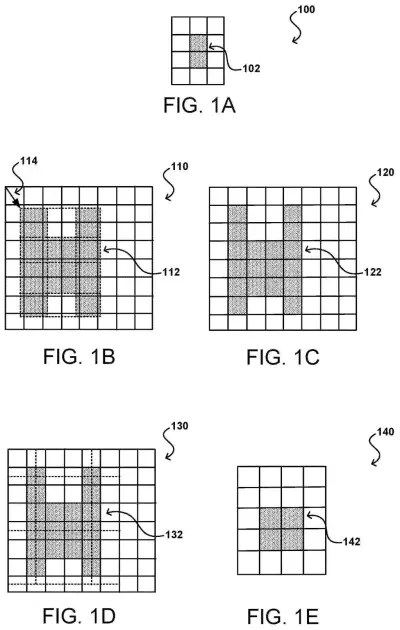
Pixel grids demonstrate how a smaller image is upscaled and combined with a previous frame to create a higher resolution image. Drawing from patent filing US 2026/0301117 A1.
Pixel grids demonstrate how a smaller image is upscaled and combined with a previous frame to create a higher resolution image.All 51 drawings ↓
Publication number
US 2026/0301117 A1(US20260301117A1)
Applicant
NVIDIA Corporation
Filed · Published
Jun 12, 2026 · Oct 1, 2026
Inventors
Gregory Massal, David Tarjan, Jonathan Filip Gustav Granskog
Status when we published
Waiting for an examiner
Document
1 claim
US classification
382/100
Parent application
Continuation of 17/541,628 (filed Dec 3, 2021)(17541628)

How Nvidia's frame-blending trick actually works

A graphics chip renders a scene. But instead of calculating every pixel from scratch, it looks back at recent frames and uses the motion of objects moving through them to guess what the current frame should look like. That's the core idea here.

Nvidia's patent describes a processor that takes motion information from a stored prior frame, scales it up (a process called upsampling), and combines it with the motion data from the frame being built right now. The result is a new image that reflects how things have moved over time, not just where they are in a single snapshot.

You probably already benefit from earlier versions of this kind of technology if you play PC games: features like DLSS generate high-resolution frames without rendering every pixel at full cost. This patent appears to push that idea further by making the historical motion data more useful in the blend.

From the filing · CLAIM 1
upsample motion data from a buffer for a prior image; and cause an image to be generated based, at least in part, on motion data for a current image and the upsampled motion data for the prior image.

Translation: It scales up old movement data to help build a new video frame.

How the processor upsamples past motion data into new frames

The patent centers on a processor with dedicated circuits that do two things in sequence. First, they take motion data stored in a buffer for a previous image and upsample it (meaning they scale it up to match the resolution of the current frame being generated). Second, they combine that scaled-up historical motion data with the motion data for the frame being built right now, and use the combined result to generate the output image.

Motion data here refers to vectors that describe how objects moved between frames: pixel A was here in the last frame and is now there. By stretching that data to cover a higher-resolution grid, the system can make informed decisions about where object edges and textures should land in the new frame.

The patent describes a neural network doing the heavy lifting of the blend. The network takes both data sources as input and produces a reconstructed image that accounts for the trajectory of objects across time, not just their current position.

Key components mentioned in the claim:

  • A buffer storing motion data from prior frames
  • An upsampling step to match current-frame resolution
  • A generation step that fuses current and historical motion data
  • One or more neural networks orchestrating the reconstruction
From the filing · THE ABSTRACT
… one or more objects in an image are caused to be generated based, at least in part, on applying one or more offsets to a motion of the one or more objects relative to one or more prior images.

Translation: It creates objects in a frame by shifting their past movements.

What this means for AI-rendered graphics and video quality

The problem this addresses is real and expensive: rendering every pixel of every frame at full quality demands enormous processing power, and it scales badly as resolution and frame rates rise. AI-assisted frame generation has become one of the main ways GPU makers try to close that gap, and getting the temporal part right (how well the system uses information from past frames) is where a lot of the quality difference between good and bad implementations shows up.

For you as a user, better temporal blending means fewer visual artifacts: less flickering around fast-moving objects, sharper edges during camera pans, and smoother video at frame rates your hardware couldn't otherwise hit. the pattern in Nvidia's AI-rendering filings suggests the company is treating temporal accuracy as a core engineering problem, not a secondary polish pass.

Nvidia's 36th filing we've tracked in the GPU rendering race since July builds on quieting multi-chip talk and routing data per chip.

Source: US 2026/0301117 A1 at the USPTO (PDF). Full patent text and figures are in the official publication.

Get our take in your Top Stories

Liked this breakdown? Add Patentlyze as a preferred source on Google, and our plain-English take shows up more often in your Top Stories the next time Nvidia patent news breaks.

There are more where this came from

We read the new patents from Big Tech, carmakers and more and send you the ones worth knowing. Plain English, free, every week.

The drawings · 51 sheets

51 drawing sheets from US 2026/0301117 A1 · click any drawing to enlarge

Pixel grids for image upscaling., drawing sheet 1 from US 2026/0301117 A1
Sheet 1 Pixel grids for image upscaling.
Image processing with pixel grids., drawing sheet 2 from US 2026/0301117 A1
Sheet 2 Image processing with pixel grids.
Image upscaling and blending process., drawing sheet 3 from US 2026/0301117 A1
Sheet 3 Image upscaling and blending process.
Image processing system architecture., drawing sheet 4 from US 2026/0301117 A1
Sheet 4 Image processing system architecture.
Image processing system with motion., drawing sheet 5 from US 2026/0301117 A1
Sheet 5 Image processing system with motion.
Image processing method steps., drawing sheet 6 from US 2026/0301117 A1
Sheet 6 Image processing method steps.
Motion vector data processing., drawing sheet 7 from US 2026/0301117 A1
Sheet 7 Motion vector data processing.
Historical motion vector processing., drawing sheet 8 from US 2026/0301117 A1
Sheet 8 Historical motion vector processing.
Show the other 43 sheets
Nvidia Patents a Way to Fill in Missing Video Frames Using Motion Data from Past Images patent drawing, sheet 9
Sheet 9
Nvidia Patents a Way to Fill in Missing Video Frames Using Motion Data from Past Images patent drawing, sheet 10
Sheet 10
Nvidia Patents a Way to Fill in Missing Video Frames Using Motion Data from Past Images patent drawing, sheet 11
Sheet 11
Nvidia Patents a Way to Fill in Missing Video Frames Using Motion Data from Past Images patent drawing, sheet 12
Sheet 12
Nvidia Patents a Way to Fill in Missing Video Frames Using Motion Data from Past Images patent drawing, sheet 13
Sheet 13
Nvidia Patents a Way to Fill in Missing Video Frames Using Motion Data from Past Images patent drawing, sheet 14
Sheet 14
Nvidia Patents a Way to Fill in Missing Video Frames Using Motion Data from Past Images patent drawing, sheet 15
Sheet 15
Nvidia Patents a Way to Fill in Missing Video Frames Using Motion Data from Past Images patent drawing, sheet 16
Sheet 16
Nvidia Patents a Way to Fill in Missing Video Frames Using Motion Data from Past Images patent drawing, sheet 17
Sheet 17
Nvidia Patents a Way to Fill in Missing Video Frames Using Motion Data from Past Images patent drawing, sheet 18
Sheet 18
Nvidia Patents a Way to Fill in Missing Video Frames Using Motion Data from Past Images patent drawing, sheet 19
Sheet 19
Nvidia Patents a Way to Fill in Missing Video Frames Using Motion Data from Past Images patent drawing, sheet 20
Sheet 20
Nvidia Patents a Way to Fill in Missing Video Frames Using Motion Data from Past Images patent drawing, sheet 21
Sheet 21
Nvidia Patents a Way to Fill in Missing Video Frames Using Motion Data from Past Images patent drawing, sheet 22
Sheet 22
Nvidia Patents a Way to Fill in Missing Video Frames Using Motion Data from Past Images patent drawing, sheet 23
Sheet 23
Nvidia Patents a Way to Fill in Missing Video Frames Using Motion Data from Past Images patent drawing, sheet 24
Sheet 24
Nvidia Patents a Way to Fill in Missing Video Frames Using Motion Data from Past Images patent drawing, sheet 25
Sheet 25
Nvidia Patents a Way to Fill in Missing Video Frames Using Motion Data from Past Images patent drawing, sheet 26
Sheet 26
Nvidia Patents a Way to Fill in Missing Video Frames Using Motion Data from Past Images patent drawing, sheet 27
Sheet 27
Nvidia Patents a Way to Fill in Missing Video Frames Using Motion Data from Past Images patent drawing, sheet 28
Sheet 28
Nvidia Patents a Way to Fill in Missing Video Frames Using Motion Data from Past Images patent drawing, sheet 29
Sheet 29
Nvidia Patents a Way to Fill in Missing Video Frames Using Motion Data from Past Images patent drawing, sheet 30
Sheet 30
Nvidia Patents a Way to Fill in Missing Video Frames Using Motion Data from Past Images patent drawing, sheet 31
Sheet 31
Nvidia Patents a Way to Fill in Missing Video Frames Using Motion Data from Past Images patent drawing, sheet 32
Sheet 32
Nvidia Patents a Way to Fill in Missing Video Frames Using Motion Data from Past Images patent drawing, sheet 33
Sheet 33
Nvidia Patents a Way to Fill in Missing Video Frames Using Motion Data from Past Images patent drawing, sheet 34
Sheet 34
Nvidia Patents a Way to Fill in Missing Video Frames Using Motion Data from Past Images patent drawing, sheet 35
Sheet 35
Nvidia Patents a Way to Fill in Missing Video Frames Using Motion Data from Past Images patent drawing, sheet 36
Sheet 36
Nvidia Patents a Way to Fill in Missing Video Frames Using Motion Data from Past Images patent drawing, sheet 37
Sheet 37
Nvidia Patents a Way to Fill in Missing Video Frames Using Motion Data from Past Images patent drawing, sheet 38
Sheet 38
Nvidia Patents a Way to Fill in Missing Video Frames Using Motion Data from Past Images patent drawing, sheet 39
Sheet 39
Nvidia Patents a Way to Fill in Missing Video Frames Using Motion Data from Past Images patent drawing, sheet 40
Sheet 40
Nvidia Patents a Way to Fill in Missing Video Frames Using Motion Data from Past Images patent drawing, sheet 41
Sheet 41
Nvidia Patents a Way to Fill in Missing Video Frames Using Motion Data from Past Images patent drawing, sheet 42
Sheet 42
Nvidia Patents a Way to Fill in Missing Video Frames Using Motion Data from Past Images patent drawing, sheet 43
Sheet 43
Nvidia Patents a Way to Fill in Missing Video Frames Using Motion Data from Past Images patent drawing, sheet 44
Sheet 44
Nvidia Patents a Way to Fill in Missing Video Frames Using Motion Data from Past Images patent drawing, sheet 45
Sheet 45
Nvidia Patents a Way to Fill in Missing Video Frames Using Motion Data from Past Images patent drawing, sheet 46
Sheet 46
Nvidia Patents a Way to Fill in Missing Video Frames Using Motion Data from Past Images patent drawing, sheet 47
Sheet 47
Nvidia Patents a Way to Fill in Missing Video Frames Using Motion Data from Past Images patent drawing, sheet 48
Sheet 48
Nvidia Patents a Way to Fill in Missing Video Frames Using Motion Data from Past Images patent drawing, sheet 49
Sheet 49
Nvidia Patents a Way to Fill in Missing Video Frames Using Motion Data from Past Images patent drawing, sheet 50
Sheet 50
Nvidia Patents a Way to Fill in Missing Video Frames Using Motion Data from Past Images patent drawing, sheet 51
Sheet 51
Patent filing page

More in AI image & video

All 226 AI image & video patents →
Watchlists this filing belongs to

All watchlists →
Reader comments

No comments yet

Start the discussion

Real name or a handle, either is fine. Comments are read by a person before they appear, so allow a little time. Keep it about the filing.