
Qualcomm Files Patent to Keep AI Apps From Bogging Down Your Wi-Fi Router
Your Wi-Fi router has one small chip, and an AI app that gets greedy can leave your connection slow and jumpy. Qualcomm's filing describes a software referee that rations that chip between AI jobs and the network's own work.
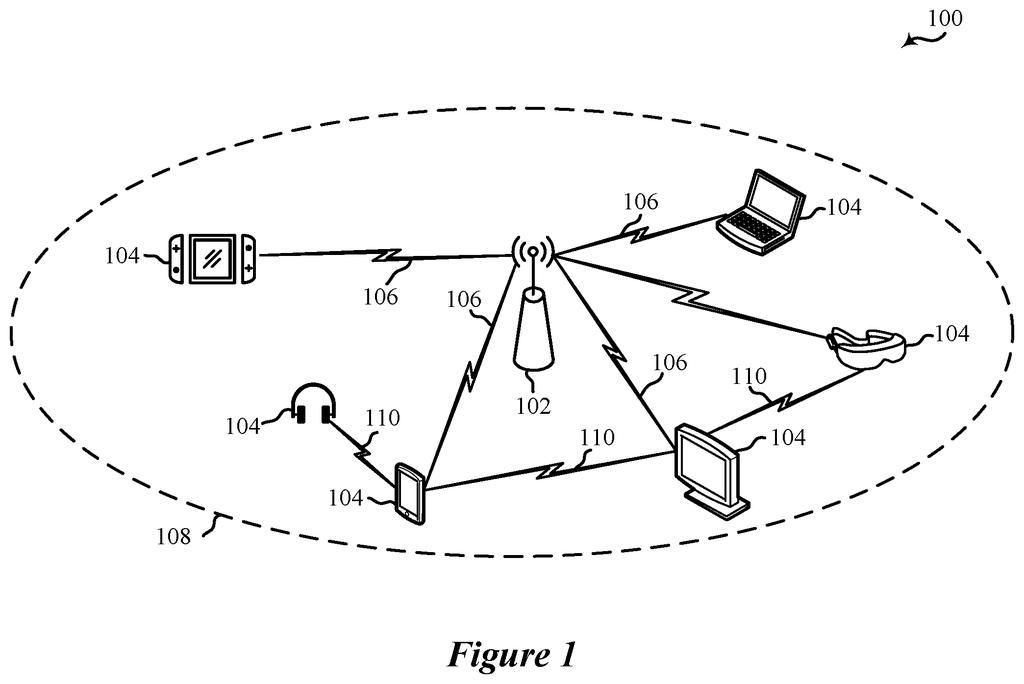
What Qualcomm's router AI referee actually does
Today, your Wi-Fi router has one small chip doing a lot of jobs: reading incoming data, tracking signal strength, passing your video call along. Add an AI app that wants to scan a security camera feed, and that app can eat so much of the chip's power that your connection turns slow and unpredictable. Qualcomm's filing describes a referee that is meant to prevent this.
The referee is software that sits between the AI apps and the hardware. Each app says how urgent its task is and how much computing it needs. The referee also watches how the network is doing: how fast data is flowing, how long it is waiting, how much is backed up. It then hands out the chip's power so the network stays within its limits. If the router can't take on a job, the job can wait in line or move to a nearby device or the cloud.
An owner or operator can even adjust the balance, favoring AI speed or network speed.
receive, via the at least one transceiver, a plurality of workload requests corresponding to a plurality of artificial intelligence (AI) workloads associated with an access point (AP) …
Translation: The router takes in multiple task requests for its built-in artificial intelligence features.
How the scheduler picks which AI job runs next
The system, which the filing calls a network AI operating system, runs on the router (or on another connected device acting for it). When an AI app asks for work, it sends details such as how urgent the job is, how fast it needs an answer, and what kind of chip it wants. The system adds these up into a compute demand (a running total of how much processing the pending jobs need).
It then reads four network measurements: packet rate (how much data is flowing), quality of service (the priority level of traffic), packet delay, and buffered traffic (data waiting in line). The main claim covers assigning computing power to both the AI jobs and the router's own networking jobs so those measurements stay within set limits.
The filing also describes several tools for doing this:
- Priority queues: urgent AI jobs go in a fast lane, and a counter makes sure the slow lane still gets a turn.
- Model swapping: less important AI models are unloaded from working memory to make room. One example caps AI at 50 MB for 10 models totaling about 100 MB.
- Cache splitting: a fast on-chip memory can be divided between AI and networking, such as 25/75 or 50/50.
- Offloading: when the router runs hot or full, jobs can go to another device or the cloud.
Other claims cover saving each job's state so work resumes after a crash, and notifying apps when computing power becomes available or disappears.
… assign compute resources to the set of AI workloads in accordance with workload parameters of the set of AI workloads, a compute resource availability at the AP, and/or one or more criteria pertaining to a set of network parameters …
Translation: It splits up its processing power based on how heavy the AI tasks are and how busy the Wi-Fi network currently is.
What this means for AI on home routers
If routers start running AI apps, such as camera analysis or security checks done at home instead of in the cloud, someone has to decide what happens when the AI and your internet traffic want the same chip at the same moment. This filing is Qualcomm's answer: a rulebook that keeps your connection steady while AI jobs still get done on time.
The description even pictures an app store for routers, where outside developers place AI apps on the device. That makes a referee close to a requirement. Without one, each app would grab what it wants, and you would feel the result as lag, dropped video calls, or a router that hiccups when the camera app gets busy.
Qualcomm's 63rd filing we've tracked since July in the AI chip wars watchlist follows earlier work on adapting models across chips and running many camera tasks at once.
Every choice here costs something real. Letting a lower-priority AI job wait delays it. Borrowing a neighbor's device or sending work to the cloud adds travel time. Slowing your connection on purpose to free up room for an AI task means you feel that slowdown.
The complexity cost is just as honest. Queues, shared memory, remote helpers, crash recovery, all of that is more places for things to break, and the filing needs its own rescue machinery to handle when they do.
The trade still reads as worth it. An AI app that grabs whatever it wants leaves your connection slow at random, unpredictable moments. Predictable, small delays that owners can tune to their own preference are a better deal than surprise stalls they cannot explain or control.
Get our take in your Top Stories
Liked this breakdown? Add Patentlyze as a preferred source on Google, and our plain-English take shows up more often in your Top Stories the next time Qualcomm patent news breaks.
There are more where this came from
We read every patent application Big Tech publishes and send you the ones worth knowing. Plain English, free, every week.
The drawings
18 drawing sheets from US 2026/0352570 A1 · click any drawing to enlarge


Show the other 10 sheets


Want this weekly breakdown for a company we don't cover? Patentlyze Pro →
Be the first to weigh in