
Qualcomm
Qualcomm · AI / ML · Filed Apr 7, 2025 · USPTO published Oct 8, 2026 · Oct 8 release
Qualcomm Files Patent for Storing Giant AI Models as Small Edits to a Shared Copy
Giant AI models keep many near-identical expert copies sitting in memory. Qualcomm's patent keeps one shared copy and stores each expert as a small set of differences.
- Publication number
- US 2026/0311068 A1(US20260311068A1)
- Applicant
- QUALCOMM Incorporated
- Filed · Published
- Apr 7, 2025 · Oct 8, 2026
- Inventors
- Mahdi NAZM BOJNORDI
- Status when we published
- Waiting for an examiner
- Document
- 20 claims
- US classification
- 706/10
What Qualcomm's shared-copy AI patent does
Ever kept ten nearly identical copies of the same document, each with a few edits, and wondered why you didn't just save one and note the changes? Many large AI models have a similar habit. They are built from groups of expert sub-models that share the same shape and differ only in their stored numbers, and every copy takes up room in memory.
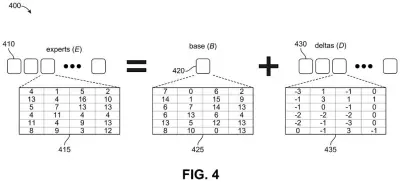
Qualcomm's new patent describes keeping one shared set of numbers and, for each expert, storing only the small differences. In the filing's own example, a stored value of 4 becomes a shared 7 plus a difference of minus 3. Small differences take fewer bits to store, so there is less data to shuffle around.
The conversion happens after the model is trained, so the model would not need retraining. The filing says the pieces get added back together at the processor right before the math happens.
… determine, based on a difference between each expert weight of the respective plurality of expert weights associated with each expert model and the plurality of base values of the shared base, a respective delta map for each expert model …
Translation: It figures out the exact math differences needed to turn the shared foundation into each specific expert model.
How the shared base and delta maps work
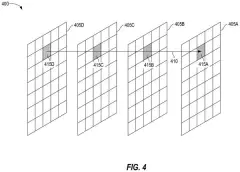
The patent targets Mixture of Experts models, AI systems that split their work across many specialist sub-networks and send each piece of input (called a token) to only a few of them. Every expert has the same structure. Only their weights, the learned numbers inside, differ.
The claimed core has three steps:
- Pick a shared base: one set of base values worked out from the experts' weights.
- For each expert, subtract the base from its weights to get a delta map, a grid of small differences.
- Combine base and deltas to produce each expert's base-delta representation.
The filing also describes optional extras. Experts can be sorted into groups with k-means clustering (a method that piles similar items together) so each group shares a base. Oversized differences can be clamped to a cap, such as negative 2 to 2. The system can also list candidate setups, each defined by how many bases to keep and how many bits each difference gets, then pick the one with the lowest mean absolute error (the average size of the mistakes introduced). In the example, a setup with three bases and 2-bit differences scored best, at about 0.41.
The tradeoff is some extra arithmetic to rebuild the weights in exchange for less memory traffic.
… generate, based on combining the plurality of base values and the respective plurality of delta values associated with each expert model, a respective base-delta representation.
Translation: The system then builds the final model version by putting the shared base together with its unique adjustment map.
Why smaller experts could help phone AI
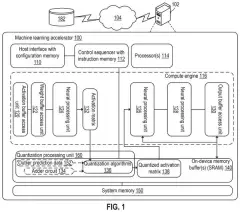
Memory is a major bottleneck for running big AI models. The filing notes that expert models can outgrow a device's main memory, and that jumping between experts strains the data pipe between memory and processor. Storing experts as small differences means less data to move, which is why the filing pitches the idea for phones, laptops and servers alike.
For you, the payoff could be larger AI features running on more modest hardware, if the idea works as described. The filing says no retraining is needed, which would make it easier to apply to models that already exist. The costs are extra work to rebuild weights on the fly and small errors from clamping, so accuracy results on real models would decide whether it holds up.
Qualcomm's 57th filing we've tracked in our AI chip wars watchlist since July adds to a pattern that includes one on phones reporting AI limits and one on partial model updates.
Source: US 2026/0311068 A1 at the USPTO (PDF). Full patent text and figures are in the official publication.
Get our take in your Top Stories
Liked this breakdown? Add Patentlyze as a preferred source on Google, and our plain-English take shows up more often in your Top Stories the next time Qualcomm patent news breaks.
Add Patentlyze on Google
One click.
There are more where this came from
We read the new patents from Big Tech, carmakers and more and send you the ones worth knowing. Plain English, free, every week.
The drawings · 17 sheets
17 drawing sheets from US 2026/0311068 A1 · click any drawing to enlarge


Show the other 9 sheets


More from Qualcomm
All 637 Qualcomm patents →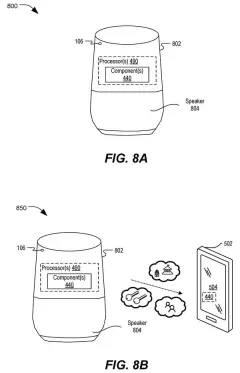
More in AI assistant & agent
All 436 AI assistant & agent patents →
IBM
IBM Patents a Memory-Saving Compression System for AI Text Generation
IBM
IBM Patents Smarter AI Training That Allocates More Memory to Harder-Working Connections
AMD
AMD Patents a Technique to Cut Memory Traffic During AI Chip Processing
Amazon
No comments yet